Bed Frame Cost in Bulk Orders: What Buyers Should Compare
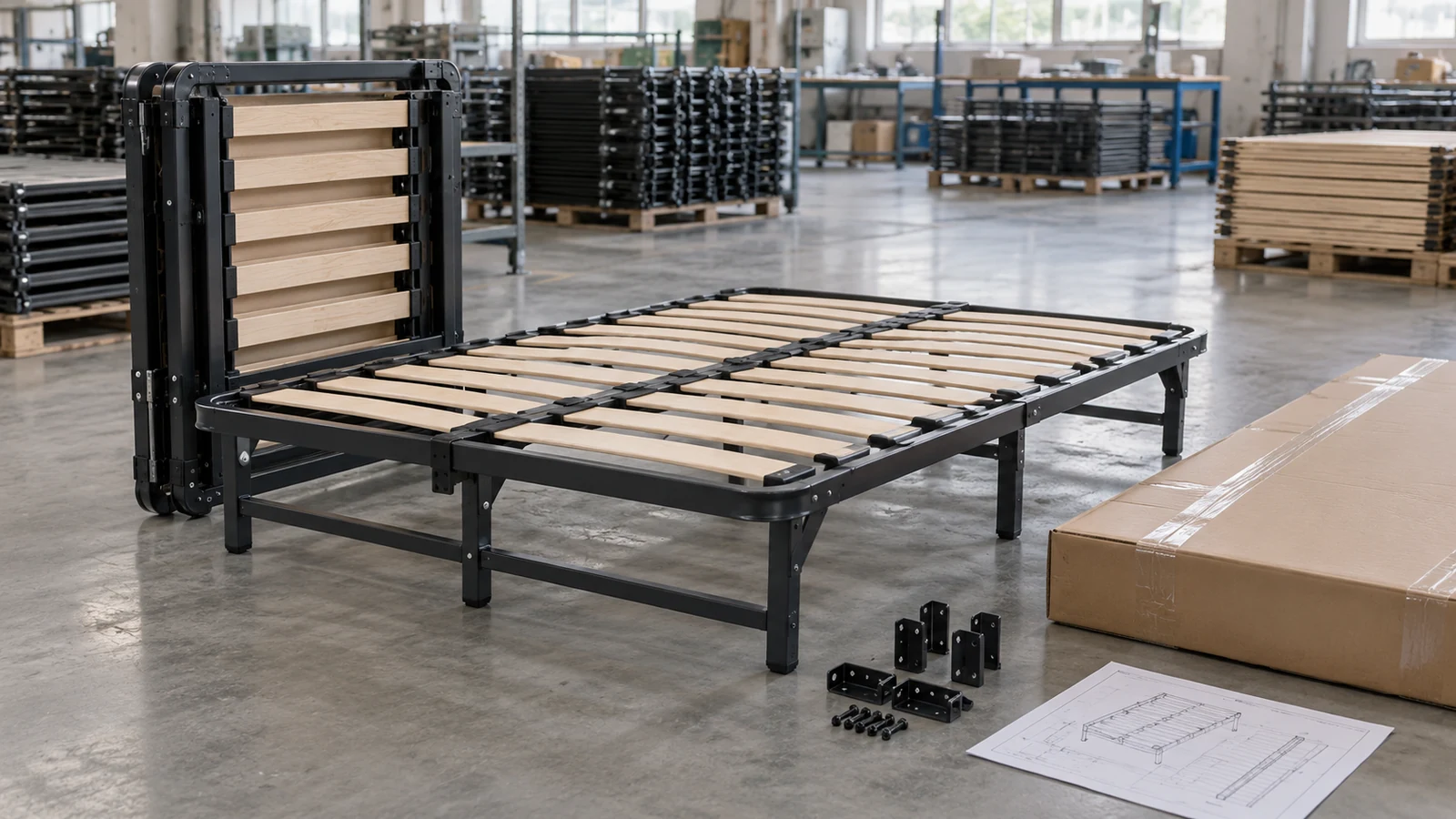
For a B2B buyer, an affordable bed frame is not automatically the frame with the lowest unit quotation. The real cost is shaped by the support structure, slat layout, folding or fixed design, customization level, hardware scope, packing method and assembly work required after delivery. A lower-priced frame can become more expensive if it needs extra rework, ships inefficiently, uses a different accessory scope or cannot be repeated consistently across the batch. The better sourcing question is therefore: which bed-frame design delivers the required support and assembly outcome with the simplest controlled specification and the fewest downstream cost surprises?
Affordable Bed Frames Should Be Compared by Total Procurement Logic
Retail searches often use affordable bed frames and cheap bed frame as near-synonyms. B2B sourcing needs a different definition. An affordable product is one whose structure, manufacturing scope, packing and installation remain aligned with the target cost throughout the project.
That distinction matters because the supplier quotation covers only one stage of the cost chain. A bed frame that is inexpensive to fabricate may occupy more shipping volume. A frame that is compact to ship may require a folding structure and additional connection details. A highly customized frame may improve final furniture assembly but add more parts and more production control. None of these choices is automatically cheaper; the buyer has to compare the full trade-off.
Frame Structure Is the First Major Cost Driver
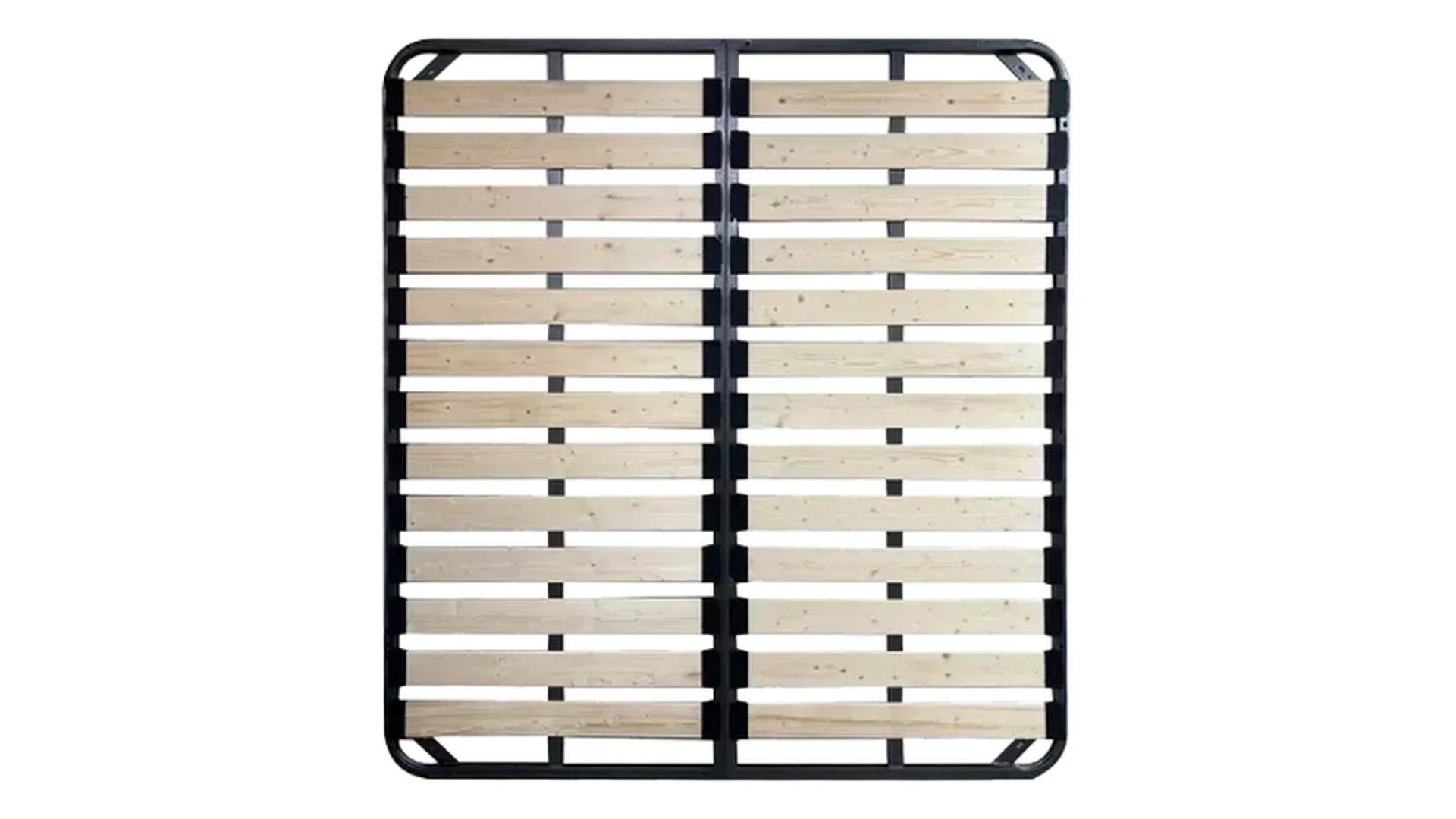
Shilong’s verified product range includes fixed steel-wood support frames, folding frames, double-row layouts, four-row layouts and silent-use support structures. These products illustrate why “bed frame” is not one uniform manufacturing scope.
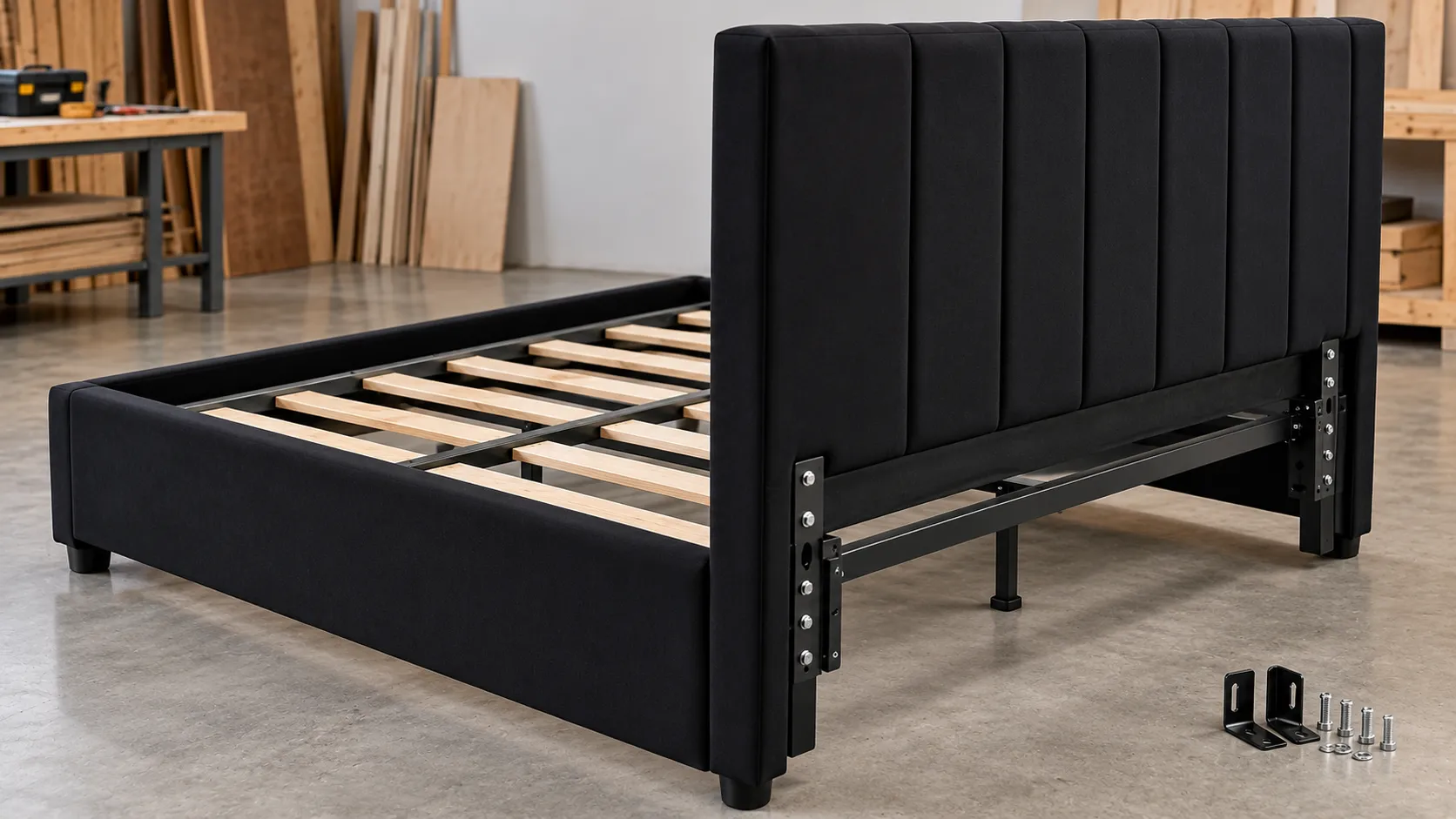
A double-row support frame and a four-row support frame use different structural layouts. A fixed frame and a folding bed frame require different connection logic. A metal-and-wood slat system introduces different components from a simple welded frame. Each decision changes material use, fabrication steps, hardware requirements, assembly sequence and packing form.
This means a buyer cannot evaluate a bed frames affordable quotation without first confirming which structure is being priced. If one supplier quotes a simpler support layout while another quotes a more complex configuration, the lower price may simply reflect a different product scope.
Slat Quantity and Support Layout Change More Than Material Cost
The slat system is easy to overlook because individual slats may appear simple. In a real support frame, however, slat quantity, spacing and support-row arrangement work together with the surrounding metal structure.
Changing slat spacing can affect the mattress-support pattern. Adding support rows can change where cross members, connectors or feet are required. Altering the center support may change assembly order and hardware. As a result, a metal bed support frame should be priced against an approved layout rather than a vague product name.
Shilong’s current steel-wood bed frame pages explicitly support customization of slat quantity, slat spacing, support bars, bracket positions and hardware accessories. Buyers should use those variables to define the quotation basis, but they should not assume an unverified load rating or claim that more slats automatically mean better performance. The correct layout depends on the furniture design and approved support requirements.
When Can a Folding Metal Bed Frame Improve the Cost Structure?
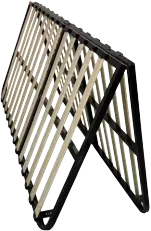
A folding metal bed frame adds a structural decision that a fixed frame does not have: the frame must fold, reopen and connect in a repeatable way. That can add hinges, connector geometry or additional fabrication steps. It would be misleading to assume that folding always reduces the factory price.
The potential economic advantage appears elsewhere. Shilong’s verified folding-frame descriptions emphasize easier handling, storage, packing and transportation. A folded frame may occupy a more manageable shape for warehouse movement or shipping preparation, and it can simplify the way large support structures are handled before final furniture assembly.
The useful comparison is therefore a trade-off:
- Fixed structure: potentially simpler geometry, but may occupy more space during handling and packing.
- Folding structure: potentially more connection complexity, but may improve packed form, storage convenience and final handling.
The right choice depends on the buyer’s logistics and assembly process. Cost reduction should come from the complete workflow, not from assuming one structure is universally cheaper.
Customization Can Remove Downstream Cost—or Add Unnecessary Complexity
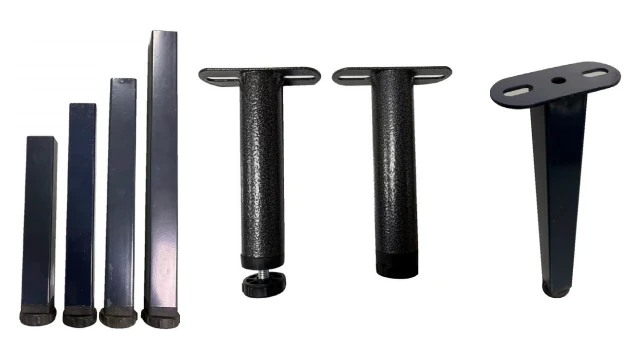
A custom bed frame is often necessary when the support structure must match a specific upholstered bed, solid-wood bed or furniture program. Custom dimensions, hole positions, brackets, feet and slat layout can prevent the buyer from modifying parts later during assembly.
That is valuable customization because it removes downstream mismatch. But customization can also create cost when the specification adds unique parts without a clear production reason. More connector types, more finish variations or multiple near-identical frame sizes can make batch control harder and quotations less comparable.
The procurement goal should be to standardize everything that does not need to change and customize only the interfaces that affect fit, support, assembly or the finished furniture design. That approach usually gives the supplier a clearer manufacturing target and gives the buyer a cleaner cost baseline.
Packaging Is Part of the Affordable Bed Frame Decision
For export and wholesale buyers, packaging is not a downstream detail. Frame geometry determines packed size; folding design can change the packed form; loose accessories need to be counted and protected; and the way slats are bundled can affect handling during furniture assembly.
Shilong’s folding product descriptions specifically identify packing, storage and transportation convenience as reasons for using folding structures. That does not justify claiming a fixed shipping-cost saving, because actual freight depends on order quantity, destination, packing method and transport conditions. It does justify including packing form in the sourcing decision.
An affordable bed frame for bulk orders should therefore be reviewed in two states: the assembled state that has to fit the furniture, and the packed state that has to move through storage and logistics.
Why the Lowest Quotation May Not Be the Lowest-Cost Option
| Cost Factor | What Can Make Quotations Look Lower | What B2B Buyers Should Normalize |
|---|---|---|
| Frame layout | Simpler or different support structure | Approved row layout, frame geometry and support concept |
| Wood slats | Different quantity or spacing | Slat count, spacing and material scope shown on the drawing |
| Hardware | Fewer connectors, feet or brackets included | Complete accessory list and connection positions |
| Customization | Standard dimensions assumed instead of project dimensions | Approved size, hole positions and interface requirements |
| Folding design | Different hinge or connection concept | Final folding geometry and assembly method |
| Surface treatment | Different finishing scope | Finish requirement defined in the RFQ |
| Packaging | Minimal or different packing method | Packing form, accessory packing and shipment preparation scope |
| Sample approval | No clear link between sample and batch configuration | Production configuration tied to the approved sample/drawing |
The practical sequence is simple: normalize technical scope first, then compare price. If the structural assumptions are different, the quotations are not yet competing for the same product.
Sample Approval Protects the Cost Target
Sample approval is often treated as a quality step, but it is also a cost-control step. A sample can reveal whether the specified frame dimensions, slat arrangement, support rows, connection points and accessories actually fit the final bed structure before the same configuration is repeated across the batch.
If a mismatch is discovered after production, the buyer may need extra hardware, frame modification or assembly rework. Those costs are not visible in the original unit price. By contrast, a sample that becomes the approved reference helps align what was quoted with what will be manufactured.
For folding products, the sample should also verify the open and folded states, connection points and assembly sequence. The Folding Double Row Bed Frame is a relevant reference because its verified product scope combines a double-row metal frame, wood slats, folding storage, easier packing, configurable slat quantity, connector position, feet and bracket matching. It should be evaluated as one structural option rather than as a universal low-cost answer.
Build an RFQ That Makes Cost Drivers Visible
A useful affordable-bed-frame RFQ should include the variables that materially change manufacturing and delivery scope. At minimum, define the application, overall dimensions, support layout, slat arrangement, fixed or folding requirement, connection holes, accessories, surface treatment, sample basis, quantity and packaging requirement.
Each of those fields has a reason. Dimensions define the frame geometry. Support layout affects structural components. Folding changes connection design and packed form. Accessories determine what is included in the quotation. Surface treatment changes the processing scope. Packaging defines how the finished frame is prepared for bulk delivery.
That is the difference between buying a “cheap bed frame” and sourcing an affordable bed frame for repeat business. The goal is not the lowest number on the first quotation; it is a controlled specification that can be manufactured, packed and assembled consistently without adding avoidable cost later.
Furniture factories, bed brands, wholesalers and OEM/ODM buyers can review Shilong’s bed frame product category to compare fixed, folding and steel-wood support structures. Once the required structure and packing logic are clear, the contact and RFQ page can be used to submit drawings, dimensions, application details and order requirements for quotation.