No-Squeak Bed Frames: How to Assess Joints, Slats and Support
A no-squeak bed frame depends on more than the material used to build it. Most bed noises occur when parts move, rub or shift against one another under load. Loose joints, moving bed slats, uneven support legs and contact with the surrounding bed structure can all create unwanted sounds. Even the mattress may be responsible for a noise that seems to come from the frame.
The best way to reduce bed frame squeaks is to identify the source before changing the structure. A quieter frame needs stable connections, properly seated slats, reliable support points and consistent assembly. For furniture manufacturers and OEM buyers, these factors matter as much as the overall frame design.
This guide explains where bed noises originate, how to investigate them and what to consider when specifying a quiet metal or steel-wood bed frame.
Is the Noise Coming from the Bed Frame or the Mattress?
A squeaking bed does not always mean that its frame has a problem.
The mattress, slatted base, metal skeleton, upholstered surround and floor form one connected system. When someone sits, turns or gets out of bed, movement passes through several parts. A sound originating at one contact point may appear to come from somewhere else.
For example, a spring mattress can create noise internally. Wooden slats can rub against support rails. A metal frame may creak at a connection, while a support leg can produce a similar sound where it meets the floor.
Before investigating hardware, determine when and where the sound occurs.
Distinguish Mattress Noise from Frame Noise
Begin with the normal assembled bed.
Listen for changes when the bed is occupied and when pressure shifts from one area to another. Avoid jumping on the frame or applying loads beyond the product’s intended use.
If the manufacturer permits a separate inspection of the mattress and support system, compare the sounds under appropriate conditions. Removing the mattress may make the slats and frame easier to inspect, but an unloaded frame does not reproduce the same forces as an occupied bed.
The observations below help narrow the investigation.
| Noise observation | Possible source | What to check |
|---|---|---|
| Noise appears mainly when the mattress compresses | Mattress components or interaction with the support surface | Mattress condition and its intended support requirements |
| Noise is concentrated near the bed corners | Frame joints, connecting brackets or side rails | Fastener condition and connection alignment |
| Noise comes from beneath the mattress | Slats, slat holders or support rails | Slat seating, contact points and visible movement |
| Noise occurs near the middle of the bed | Center rail, center support or middle legs | Support alignment and floor contact |
| Noise appears when the bed shifts sideways | Frame connections, support feet or surrounding bed body | Lateral movement and contact between parts |
These observations are diagnostic clues, not proof of a particular defect.
A useful inspection records both the sound and the movement that produces it. If noise occurs only when the complete bed is assembled, the interaction between components may be more important than any individual part.
Why Do Bed Frame Joints Start Squeaking?
Bed frame joints transfer forces between rails, brackets and support members.
When a person moves, those forces change direction and magnitude. A connection that does not maintain the intended contact condition may allow small amounts of relative movement.
That movement can produce squeaking, clicking or creaking.
Movement at Bolted and Removable Connections
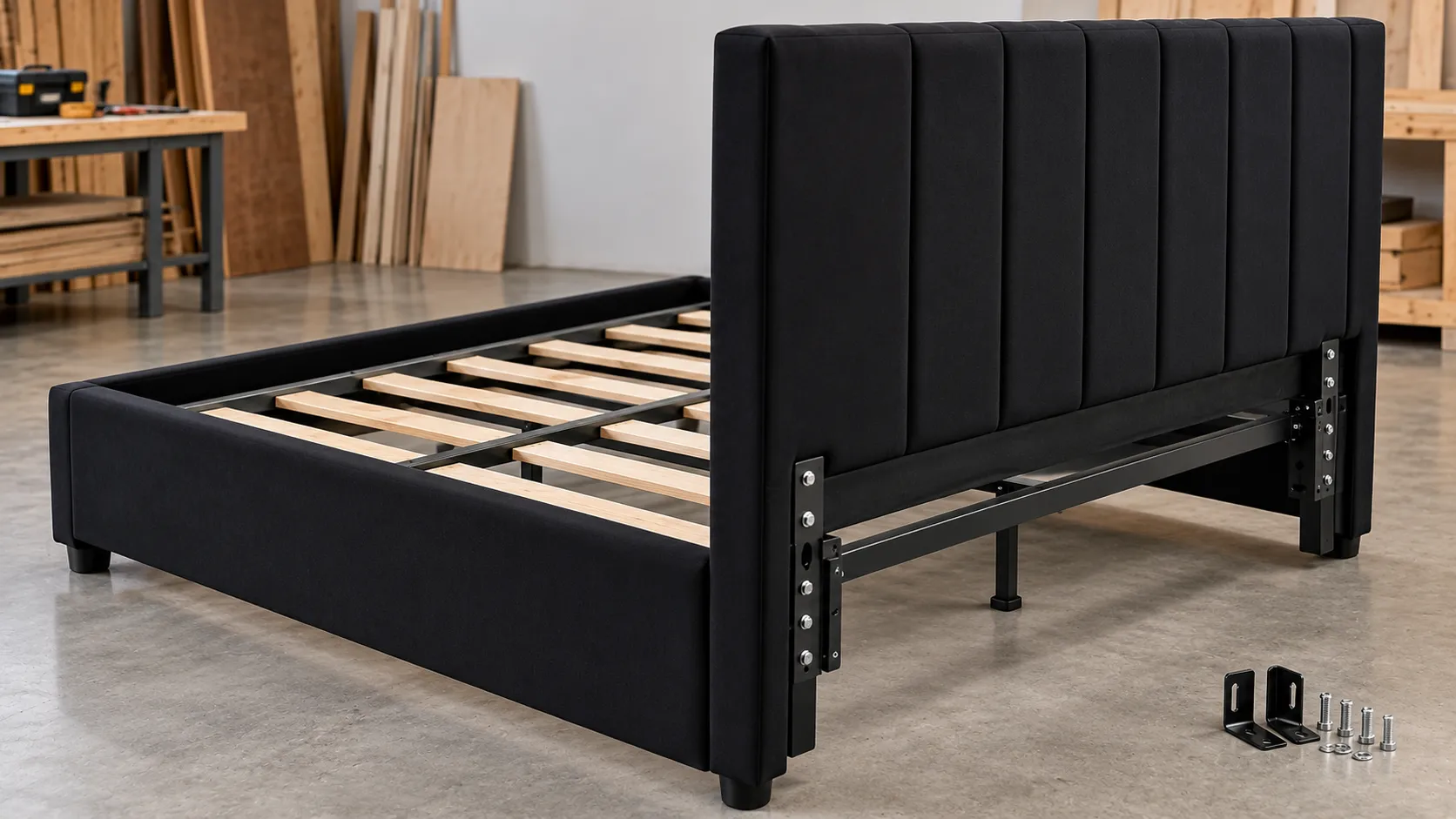
Many metal bed frames use bolts, brackets and detachable connections so they can be packed and assembled efficiently.
These joints must hold the intended relationship between parts after assembly.
If a connection is loose, the parts may move against each other under changing loads. A poorly aligned joint can also produce unwanted contact, even if its fasteners appear to be present and secure.
Common conditions worth checking include:
- Fasteners that are not installed or tightened according to the assembly instructions.
- Brackets that do not sit correctly against their mating surfaces.
- Connecting parts that have become distorted or damaged.
- Differences between the approved assembly arrangement and the actual installation.
- Movement between the support frame and the surrounding furniture structure.
A fastener should not be tightened beyond its specified limit in an attempt to eliminate noise. Excessive tightening may damage threads, distort a component or affect the joint.
If the assembly instructions do not provide the needed information, use the manufacturer’s service guidance rather than guessing.
Friction Between Metal, Wood and Hardware
Squeaking can also result from friction at contact surfaces.
For example, a wooden support slat resting on a metal rail may move slightly as the load changes. If the contact is not controlled, the surfaces can rub and produce noise.
The issue is not simply that wood touches metal. The important question is whether the design allows unwanted movement at that interface.
Metal-to-metal connections can behave similarly. Small movements between adjoining surfaces may produce a sound even when the overall frame looks stable.
Some bed designs use retaining components or suitable separation materials to control movement at specific interfaces. These must be selected for the actual assembly.
Adding a random pad, adhesive strip or lubricant is not a reliable universal solution. It may interfere with the intended fit, affect the support position or create a new maintenance problem.
For OEM projects, the position and function of each contact interface should be understood before changing its design.
How Do Bed Slats and Support Legs Affect Noise?
Bed slats carry mattress loads and transfer them into the supporting frame.
Their placement, retention and contact with the supporting rails affect how the assembled bed behaves during use.
This is particularly relevant to steel-wood bed frames, which combine a metal skeleton with wooden support components.
Slat Movement and Contact with Support Rails
A slat needs to remain correctly positioned as the mattress load changes.
If the slat can shift against its support, the movement may generate rubbing or tapping sounds. An incorrectly seated slat or damaged retaining component can also affect its contact with the rail.
During inspection, consider whether:
- Each slat is positioned according to the assembly instructions.
- Its ends rest correctly on the intended supports.
- Retainers or locating components are installed correctly.
- A slat has visible cracks, distortion or other damage.
- Unwanted movement occurs between the slat and its supporting surface.
Slat spacing is important for mattress support, but spacing alone does not determine whether a bed is quiet. Two frames with similar slat spacing can behave differently because their end supports and retention arrangements are different.
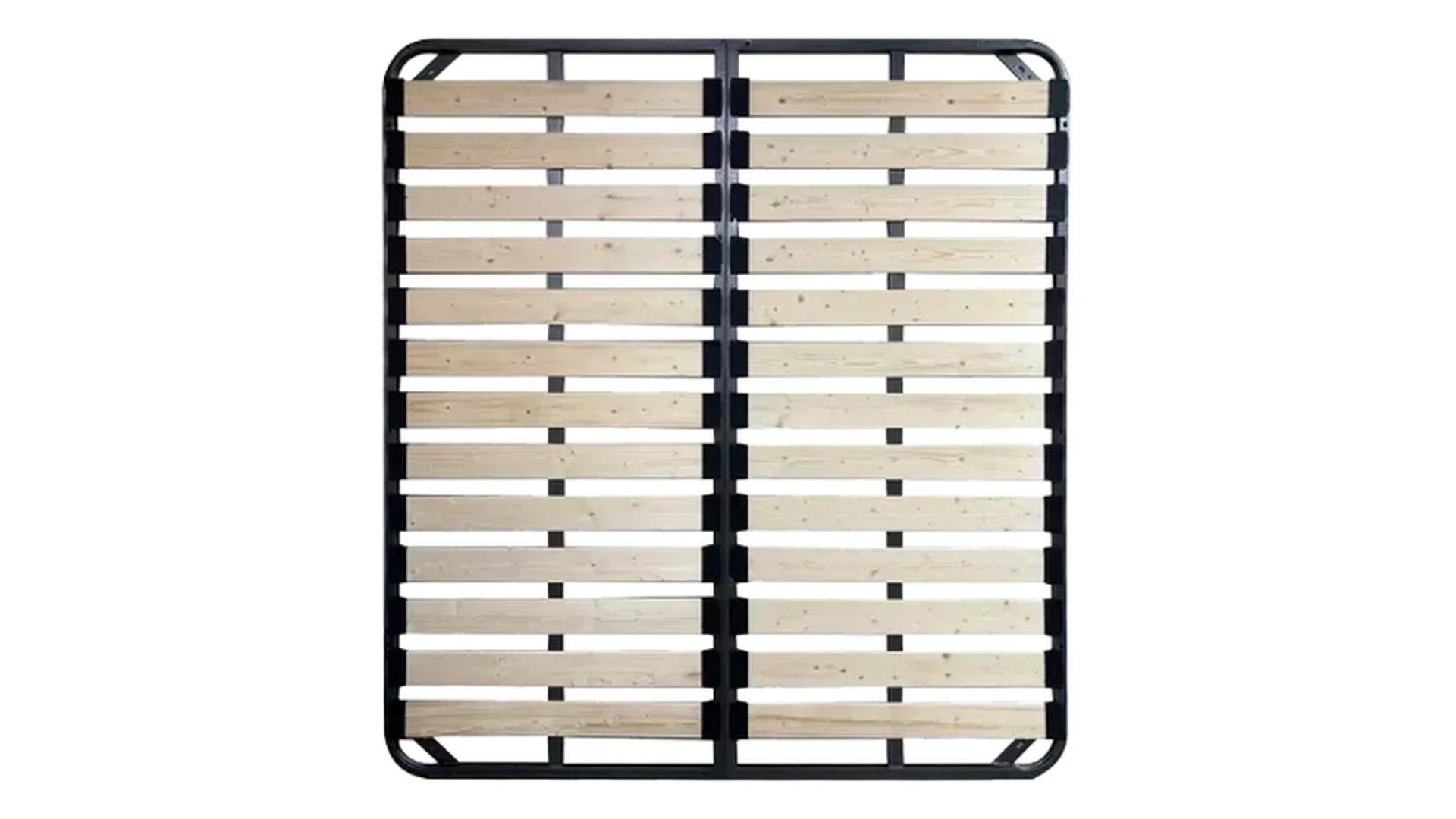
Shilong’s 10CM Board Wide Silent Bed Frame is presented as a metal support structure with evenly arranged slats and configurable support and hardware arrangements.
It provides a relevant example of a bed-frame construction to evaluate. However, its product name should not be interpreted as a guarantee of zero noise under every installation condition.
Center Supports, Legs and Floor Contact
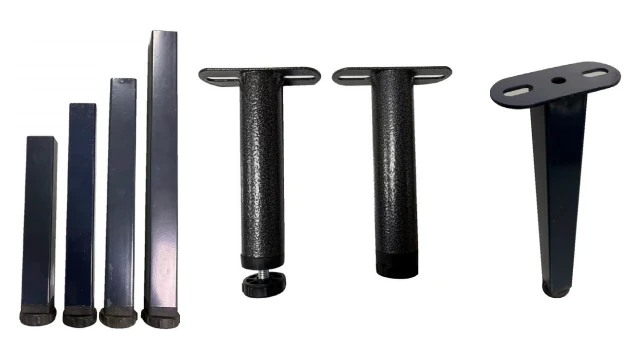
Support legs complete the load path from the mattress and frame to the floor.
If a leg is incorrectly installed, does not maintain the intended contact or rests on an uneven surface, the assembled bed may move differently as the load shifts.
A center support that is not positioned correctly can also change how the frame and slats respond.
When investigating noise, check whether:
- The support legs are installed in their intended positions.
- The frame stands as designed without abnormal rocking.
- All required support points contact the floor as specified.
- Floor irregularities or adjacent furniture are contributing to the sound.
- The support members show signs of damage or unusual deformation.
Do not remove a support leg or alter its position simply to eliminate a sound. Support components may be necessary for the intended load distribution.
A quieter bed should maintain the required structural support while reducing unwanted contact movement.
How to Check a Squeaky Bed Frame
Once the likely source is identified, the next step is a controlled inspection.
The purpose is not to modify as many components as possible. It is to determine whether the problem is related to assembly, component condition, contact between parts or another element of the complete bed.
Step 1: Record When the Noise Occurs
Identify the part of the bed where the noise seems strongest.
Note whether it appears when someone sits, changes sleeping position or moves the bed laterally.
Also record whether the sound occurs with the normal mattress and surrounding bed structure installed.
These details make later checks more meaningful.
Step 2: Inspect the Visible Assembly
With the bed in a safe condition for inspection, compare visible connections against the relevant assembly instructions.
Look for missing hardware, loose components, displaced slats or obvious signs of damage.
Inspect the feet and the contact between the metal support frame and any wooden or upholstered surrounding structure.
Do not dismantle load-bearing joints or folding mechanisms without the applicable service instructions.
Step 3: Check the Relevant Connection
If a particular joint appears to be the source, examine its alignment and fastening condition.
Any adjustment should follow the instructions for that model.
If the connection is damaged, simply tightening it may not address the underlying problem.
Likewise, if a slat moves because a retaining component is missing, applying a lubricant to the contact surface does not restore the intended retention.
Step 4: Recheck Under Comparable Conditions
After an authorized correction, repeat the relevant observation.
Use the same mattress, floor arrangement and comparable normal-use conditions where practical.
Compare the location and frequency of the sound rather than relying on a general impression that the bed feels quieter.
If the noise remains, reconsider the initial diagnosis.
Step 5: Escalate Structural Problems
Visible cracks, deformed structural members, damaged fastener threads or failed support points require more than routine noise treatment.
Stop using a bed that shows signs of unsafe structural damage and obtain appropriate technical assessment.
Unapproved drilling, welding or changes to load-bearing connections should not be used as general squeak-reduction methods.
What Design Details Help Reduce Bed Frame Noise?
For manufacturers and OEM buyers, resolving squeaks after delivery is only part of the problem.
The more valuable approach is to examine the structure during design and sample development.
A no-squeak bed frame cannot be defined only by a product label. It requires attention to how the components fit, how loads move through the structure and how consistently the frame can be assembled.
Joint Fit and Contact Control
A connection should perform its structural function without creating avoidable movement between components.
Review the connection geometry, mating surfaces and the position of the fasteners.
The design should also allow the installer to assemble the connection correctly without forcing parts into position.
If separation or retaining components are proposed, their material, location and suitability need to be established for the actual construction.
Slat Retention and Support Arrangement
A slat support system should maintain the intended arrangement during normal use.
For steel-wood frames, examine the relationship between the wooden slats, metal support rails and any locating components.
The aim is to control unintended movement without compromising mattress support.
The correct approach depends on the slat type, supporting structure and mattress requirements. No single retaining arrangement is suitable for every bed design.
Assembly Repeatability in Folding and KD Frames
Knock-down (KD) and folding frames introduce another consideration: the final product may be assembled outside the factory.
The customer may handle separate frame sections, fasteners, supports and other components.
A design that behaves well in one carefully assembled sample may be more difficult to reproduce if the assembly sequence is unclear or the mating components are easily misaligned.
For these products, the sample review should consider:
- Whether the components can be identified and positioned correctly.
- Whether the required hardware is clearly specified.
- Whether assembly instructions show the correct connection sequence.
- Whether the intended support arrangement is maintained after assembly.
- Whether repeated authorized assembly affects the inspected interfaces.
Folding joints require particular attention to their intended movement and locking conditions. A folding mechanism should not be modified solely to remove a noise without assessing its function.
Shilong’s custom metal bed base range provides a relevant starting point for discussing support layout and hardware arrangements in custom furniture projects. The specific noise-control details of an ordered configuration must be established through its drawings and sample review.
How Should Buyers Evaluate a Quiet Bed Frame Sample?
A quiet frame should be assessed as an assembled product rather than through a material description alone.
An advertised “silent” design may still produce different results when installed with another mattress, bed surround or floor condition.
Buyers should therefore define a comparable inspection arrangement.
| Evaluation area | What to record | Why it matters |
|---|---|---|
| Frame configuration | Model, drawing revision and support layout | Ensures the tested frame matches the intended product |
| Assembly | Hardware set and installation method | Helps identify differences caused by assembly |
| Mattress | Type and support requirements | Mattress interaction may affect noise |
| Supporting surface | Floor condition and contact arrangement | Helps distinguish frame noise from floor contact |
| Movement | Normal-use action that produces a sound | Allows the observation to be repeated |
| Sound location | Joint, slat area, support leg or other location | Directs investigation toward a specific interface |
| Follow-up | Change made and result of the repeat check | Helps determine whether the identified cause was addressed |
A buyer may also require quantitative acoustic measurements, but these need a defined procedure, suitable equipment, environmental conditions and an agreed acceptance criterion.
A measured sound level without those conditions cannot serve as a universal rating for bed-frame quietness.
Shilong offers bed-frame structures for upholstered, wooden and customized furniture applications. Buyers evaluating its bed frame products can use model-specific drawings and assembled samples to review the support arrangement and connection details.
For an OEM project, a meaningful sample review should determine not only whether a sound is present, but where it originates, under what conditions it occurs and whether the proposed structure addresses that cause.
Choosing a Bed Frame That Remains Quiet in Use
A well-designed bed frame should combine the required mattress support with reliable joints, properly seated slats and stable floor contact.
Noise reduction begins with identifying and controlling unwanted movement. Simply specifying thicker steel, additional fasteners or a product labelled “silent” does not prove that every assembled bed will be free of squeaks.
For furniture brands and project buyers, the key is to evaluate the complete assembly—including the mattress interface, support members, fittings and surrounding furniture—under representative conditions.
Shilong provides metal and steel-wood bed support structures for furniture production and customization projects. Buyers can contact Shilong with their bed frame drawings, support requirements and assembly details to discuss a suitable structural configuration and the evidence needed for sample approval.