Bed Frame Slats: Spacing, Support, and Mattress Fit
Bed frame slats support a mattress by spanning the frame and transferring its load into the surrounding structure. A suitable slat system depends on more than the number of boards: the gaps must meet the mattress requirements, the slats must fit their end supports, and the frame must carry the load through its intended rails, center supports, and legs. Checking those relationships helps you distinguish a compatible base from boards that simply fit inside a bed. Whether you are comparing complete beds, reviewing a support frame for a furniture project, or assessing a replacement slat, start with the mattress instructions and the assembled frame. Then compare the actual support layout, dimensions, and connections rather than relying on a size label or product photograph.
What Do Bed Frame Slats Do?
Bed frame slats form part of the surface beneath the mattress. Each slat rests on, or connects to, supporting parts of the frame. Together, the slats and the structure below them carry the mattress and sleepers. The spaces between the slats are therefore part of the support arrangement, not simply a visual detail.
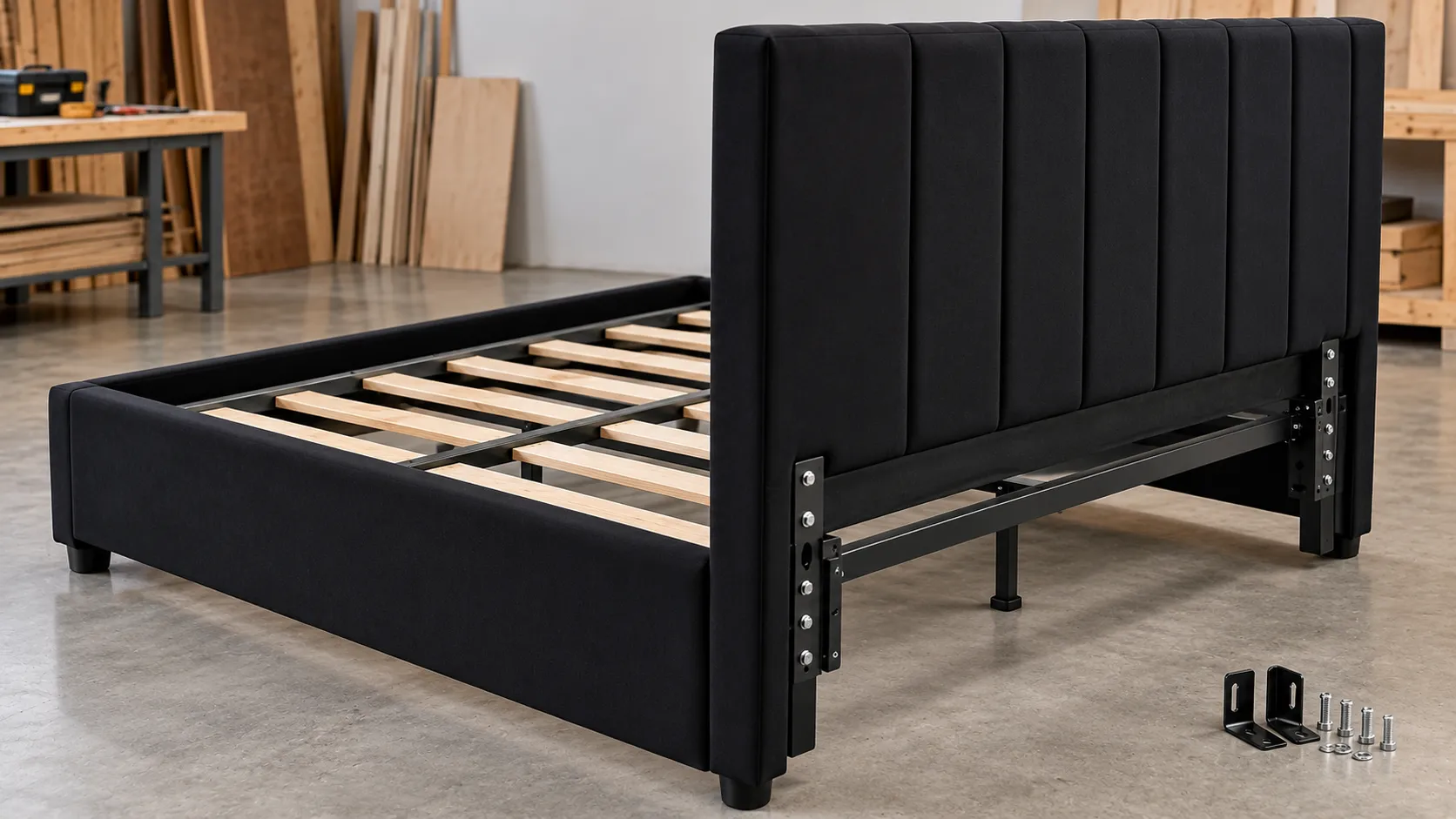
It helps to separate three components when reading a product description. The slats are the individual supporting members. The surrounding frame holds their positions and provides their bearing points. Legs, brackets, and any center structure connect that support system to the rest of the bed and the floor. A suitable slat cannot compensate for a missing connection elsewhere in this system.
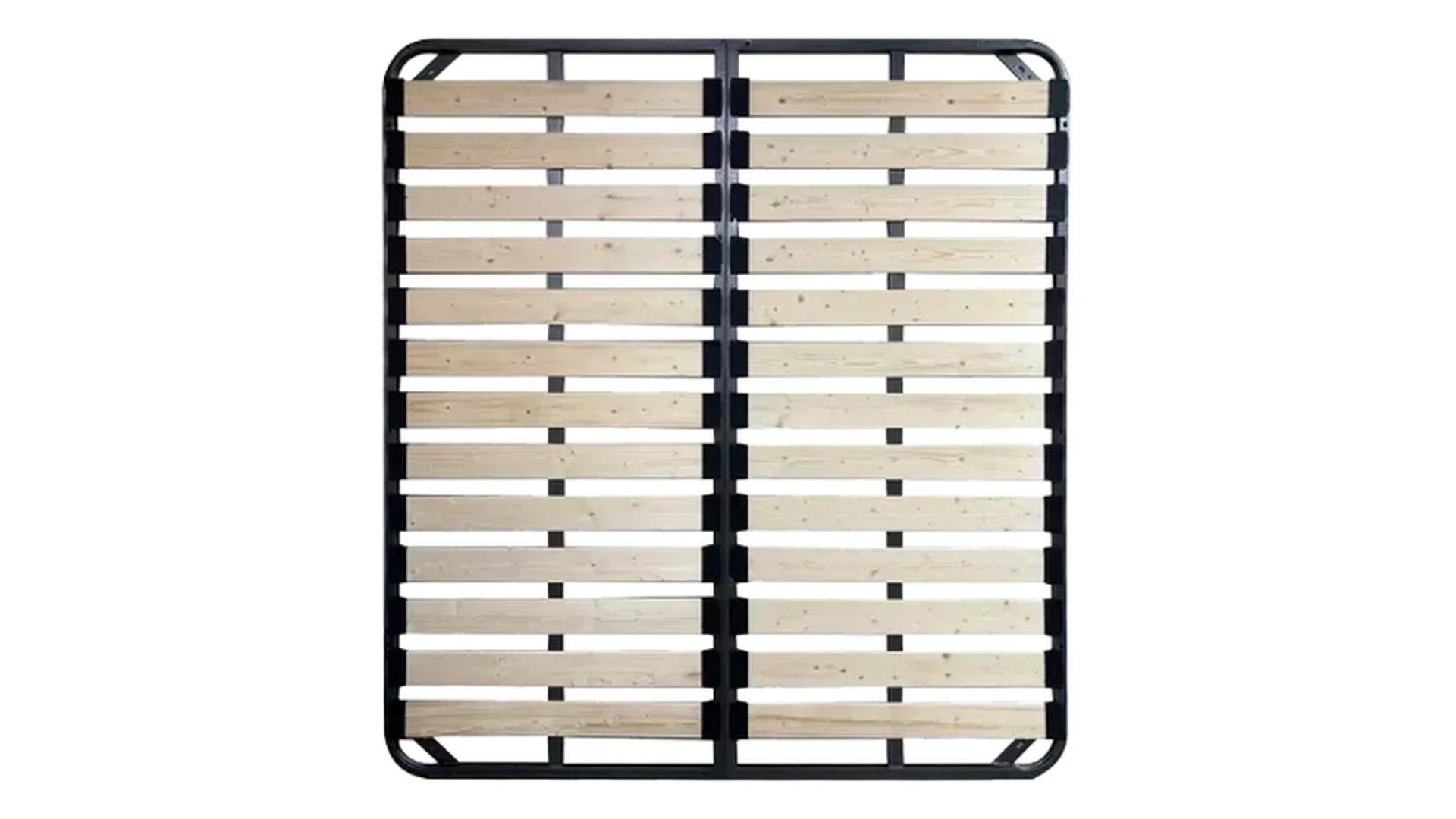
Shilong’s folding double-row bed frame combines wood slats with a metal support structure. A wooden slat bed frame can therefore use different materials for its mattress-facing surface and its supporting framework. Compare those components separately when reviewing the material specification and the assembled bed.
Flat and Sprung Slats: What Changes?
Flat and sprung slats describe different support arrangements. Flat slats have a substantially straight profile in their intended unloaded position. Sprung slats use a designed curve and flex within a compatible support system. The profile, end holders, and installation orientation need to work together.
These labels do not identify every material or construction detail. A flat slat is not necessarily a single piece of solid timber, and the word “sprung” does not specify a wood species. Check the actual product description before making a material comparison.
| Comparison | Flat slats | Sprung slats |
|---|---|---|
| Unloaded profile | Substantially straight supporting members. | Curved members installed in their specified orientation. |
| Designed response | Provide an even support surface. Their flex depends on the slat and frame construction. | Use curved, flexible members to provide elastic movement beneath the mattress. |
| Fitting requirements | Need the specified seating, attachment, or retaining arrangement. | Need compatible holders and the intended engagement of the curved slat ends. |
| Mattress compatibility | The complete layout must meet any requirements for flat support. | The mattress must permit the proposed sprung support system. |
The two systems can respond differently beneath the same mattress, but neither label establishes a load rating or guarantees a particular comfort level. If a mattress calls for flat support, treat that as a selection condition. Replacing flat slats with sprung slats, or vice versa, requires checking the support type and fittings as well as the dimensions.
How Far Apart Should Bed Slats Be?
There is no single maximum gap for every mattress. Between two slats, a section of the mattress underside has no direct support from the frame; a wider gap leaves a larger section unsupported. Different mattress constructions can have different base requirements. Start with the instructions for the actual mattress model, and compare any stated maximum gap with the clear opening between neighboring slats in the assembled bed.
Distinguish the Clear Gap from the Center-to-Center Distance
Slat width is measured across the top supporting face, perpendicular to the slat’s long axis. The clear gap is the open space between the facing edges of adjacent slats. Center-to-center distance, also called pitch, measures from the center of one slat to the center of the next. These measurements answer different questions.
For illustration only, a uniform layout with 60 mm wide slats and a 70 mm clear gap has a 130 mm center-to-center distance. The 130 mm figure is not the open gap. These example dimensions demonstrate the calculation; they are not a recommended specification.
When someone supplies a “slat spacing” measurement, ask which dimension it represents. On a drawing, label the clear gap explicitly instead of using an unexplained dimension between repeated parts.
Check the Assembled Layout
Measure several openings rather than assuming every gap is identical, and record the largest clear gap. Check the spaces near the head and foot of the support area, and examine any change in layout around joints or separate frame sections. A regular pattern in the middle does not describe every opening beneath the mattress.
Adding more slats may reduce open gaps, but the revised layout also needs suitable seats, fittings, and structural support. Extra loose boards do not resolve an incompatible holder or an unsupported section of frame. If the proposed change differs from the original design, confirm the complete arrangement before treating smaller gaps as proof of compatibility.
Which Slat Dimensions Must Match the Frame?
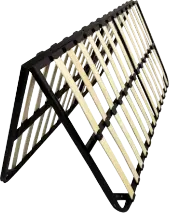
A bed-size name is not a replacement-slat specification. Two beds intended for the same mattress size can use different internal structures, holders, and slat lengths. Measure the parts that actually receive the slat, using the frame’s drawing or component specification where available.
| Dimension or detail | What to confirm | Why it matters |
|---|---|---|
| Length | The length needed to reach and engage both end supports, with the specified assembly clearance. | Both ends must seat correctly; overall bed width does not define that fit. |
| Width | The holder opening, bearing area, and resulting clear gaps. | A different width can change both the fit and the spacing pattern. |
| Thickness | The holder depth, retention method, and intended support level. | Thickness affects the fit and bending response, alongside material and unsupported span. |
| End profile | The original end shape and matching cap, pocket, bracket, or fixing. | Nominally similar slats may use different connections. |
For a replacement, identify the original component and its connection before comparing alternatives. Record the dimensions and photograph the end support. A loose slat measurement is useful, but it should be checked against the installed position and the condition of its holder.
For a new frame, confirm the slat and fitting dimensions as a matched set. The required end engagement and clearances should come from the selected design. Measuring only the visible opening between two holders can overlook the portion of each slat end that sits inside them.
Dimensional fit establishes whether a component can sit in the intended position. The support arrangement must still establish how it carries load.
How Do Center Supports and Slat Fixings Work Together?
The unsupported span is the distance along a slat between its bearing points. For otherwise comparable slats under the same loading, a shorter unsupported span generally bends less. A correctly positioned center support can provide another bearing point and shorten the section that must bridge the frame without support.
That benefit depends on the structure below it. The center member must receive load from the slats and transfer it through its specified connections or legs. A rail visible beneath the slats should not be counted as an effective support if the intended contact or connection is missing.
Center structures also differ. A frame may use slats that span between outer rails, separate slat sections supported at the center, or another documented layout. The number of rows does not, on its own, tell you the unsupported span or load capacity.
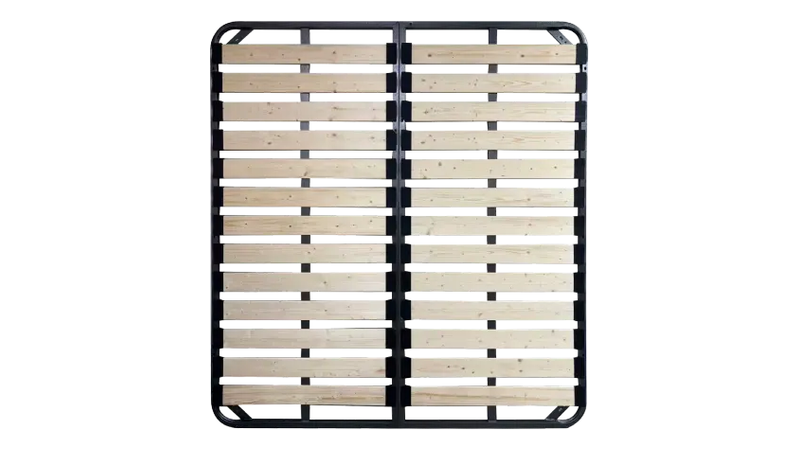
For Shilong’s folding four-row bed frame, row layout, slat spacing, and connection-hole positions are configuration details to confirm together. Comparing it with a double-row arrangement means examining the actual bearing points and fittings, rather than assuming that a larger row count makes one frame stronger.
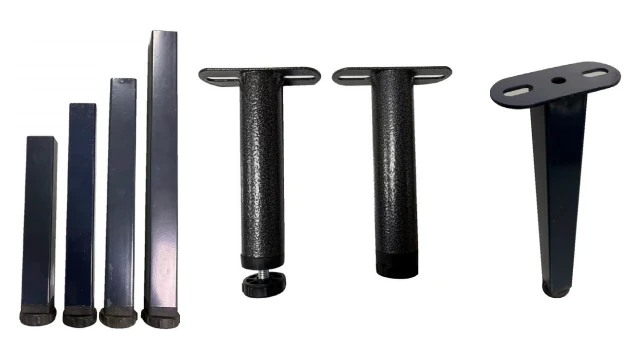
Follow the support path below the slats as well. Some center members transfer load through connections to the surrounding frame; others use specified legs beneath them. Where adjustable bed frame support legs are part of the design, follow the frame instructions so the intended feet engage the floor without lifting or distorting the frame. A center leg left above the floor cannot provide its intended floor support.
Fixings keep components in their intended positions. Check that caps, holders, brackets, and other specified retainers are present and correctly seated. A well-supported slat still needs its intended retention arrangement. Conversely, a tight fitting does not replace a required bearing point beneath the structure.
How to Check Slats Against Your Mattress Requirements
A slatted bed frame can support a mattress without a box spring when the frame is designed for direct support and meets the mattress maker’s requirements. However, some beds use cross supports intended to carry a separate foundation. Those supports should not be treated as a mattress-ready platform simply because they are described as slats.
A traditional box spring contains springs, while a rigid foundation provides a non-spring supporting base. These are different constructions, and the mattress instructions determine which is permitted. If an extra foundation is required, confirm both its compatibility with the mattress and the frame’s ability to carry it. Adding another layer does not correct a damaged frame or an unsupported center.
- Identify the exact mattress and bed arrangement. Record the mattress model and dimensions, and establish whether it will rest directly on the slats or on a separate foundation.
- Read the support requirements. Note the permitted support type and any stated rules for slat gaps, slat dimensions, center support, and the complete base. Keep any conditions attached to those requirements.
- Compare the actual geometry. Check clear gaps, end openings, slat dimensions, and intended bearing locations. Use the assembled configuration rather than a photograph of a similar model.
- Check the supporting components. Confirm the specified holders, connections, center members, and legs. Identify missing, damaged, or mismatched parts before treating the layout as complete.
- Resolve any unanswered condition. If the instructions omit a relevant detail or the proposed combination differs from the documented design, ask for confirmation using the actual mattress and frame information.
This sequence separates three questions: does the mattress permit the support arrangement, do the slats fit the frame, and is the full structure assembled as intended? All three need an answer. Meeting one dimension does not establish the other two.
For a furniture project, Shilong’s bed frame range provides slatted support-frame options to compare with the mattress requirements and the surrounding bed structure.
To discuss a suitable bed frame configuration, share the mattress dimensions, its manufacturer’s support requirements, and a drawing of the bed structure. Those details connect the slat layout to the finished bed and provide a practical starting point for confirming the frame.