The 2026 New Paradigm of Bed Frame Customization: Platformization Reshapes the Entire "Design-Production-Delivery" Chain
Introduction
In 2026, the global custom furniture market continues to expand at a compound annual growth rate of 10.59%. Bed frame customization is no longer just about size adjustments—it is an industrial transformation integrating platform-based collaboration, data interoperability, and personalized experience. This article provides international clients with an in-depth analysis of the latest trends in 2026 bed frame customization, revealing how platformization is restructuring the entire “design-production-delivery” chain, enabling every customer to own their exclusive high-quality sleep space with unprecedented efficiency and transparency.
Chapter 1: Three Core Trends in Bed Frame Customization for 2026
Trend 1: Comprehensive Upgrade from “Function Fulfillment” to “Scenario Experience”
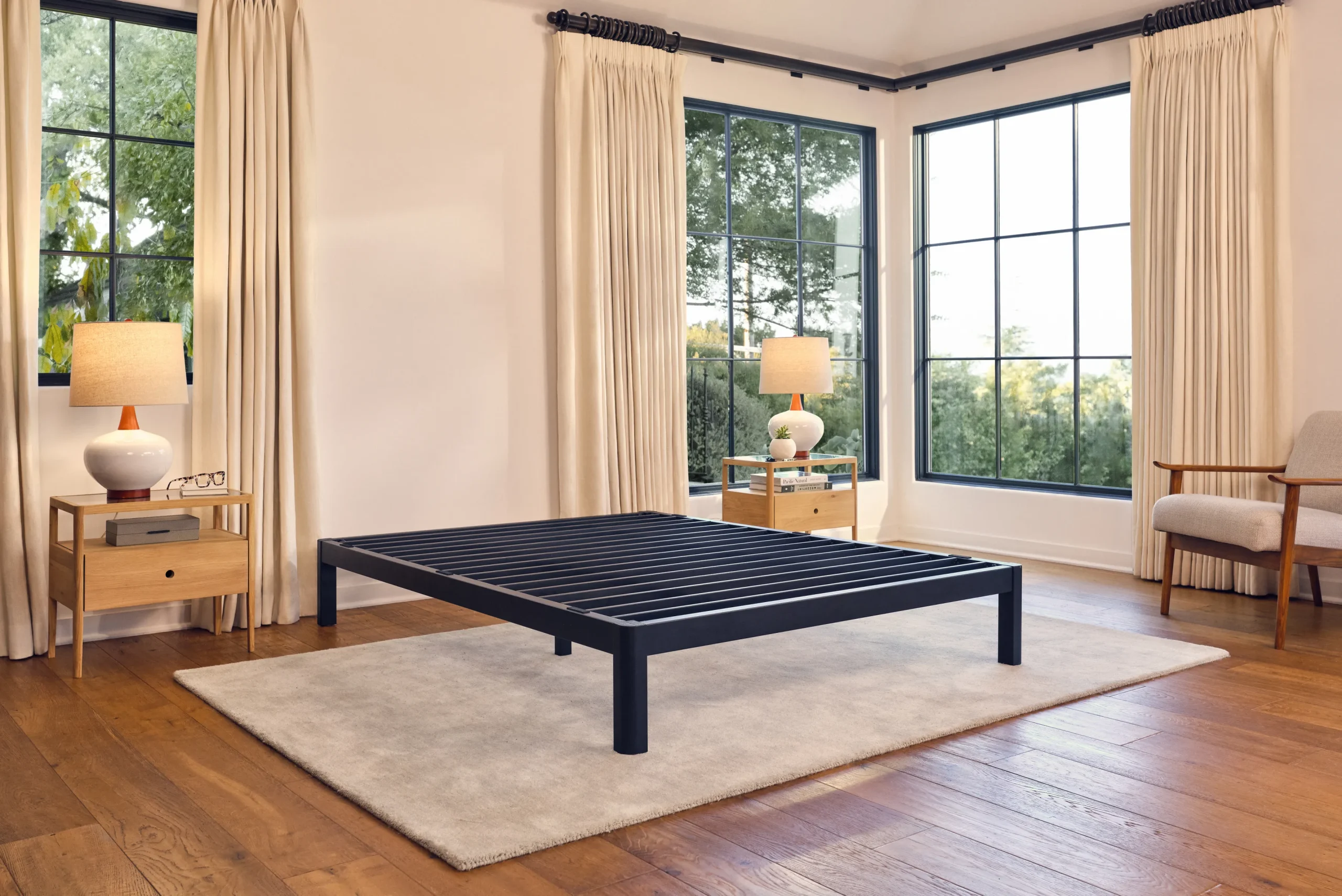
In 2026, consumers are no longer satisfied with a bed frame that merely supports sleep. Market research shows that the core demands for custom bed frames have shifted toward a trinity of “style integration, quality controllability, and delivery cycle guarantee”—what we call “scenario experience.” Whether it is Nordic minimalism, Italian light luxury, or neo-Chinese style, whether for master bedrooms, guest rooms, or children’s rooms, bed frame customization must offer stronger adaptability and aesthetic integration capabilities—truly achieving “one bed, one scene, whole-home harmony.”
Trend 2: Safety and Durability as the Foundation, Green Certification as “Hard Currency”
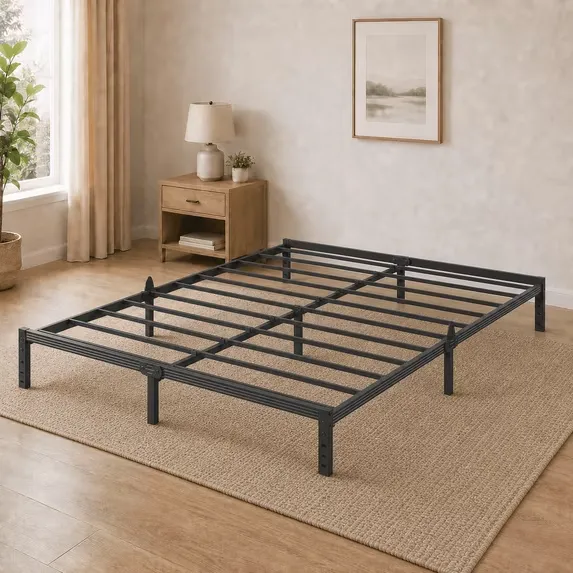
With stricter global environmental regulations and heightened consumer safety awareness, the 2026 bed frame customization market considers safety and durability as a fundamental industry requirement. Thickened steel frames, integrated molded structures, anti-slip/collision-proof designs, and eco-friendly water-based coatings have become standard. More importantly, under the “dual carbon” goals, carbon footprint accounting is becoming a mandatory “passport” for exports and large-scale procurement. Custom bed frames using FSC-certified wood, low-VOC coatings, and sustainable processes will gain priority favor from international clients.
Trend 3: Deep Penetration of Platformization, Customization Enters the “One-Stop” Era
This is the most transformative change in 2026. Digital platforms are consolidating the traditionally fragmented customization process into an efficient closed loop. Through one-stop customization platforms, clients simply submit their floor plan, style preferences, and size requirements online to receive a complete matching solution and accurate quote within an extremely short time. This “fully online, fully transparent” experience completely breaks down the four major pain points of traditional customization: “high communication costs, long design cycles, opaque pricing, and uncontrollable final results.”
Chapter 2: Platformization — Building the “High-Speed Highway” from Design to Production
2.1 From “Blueprint” to “Finished Product”: The One-Click Production Revolution
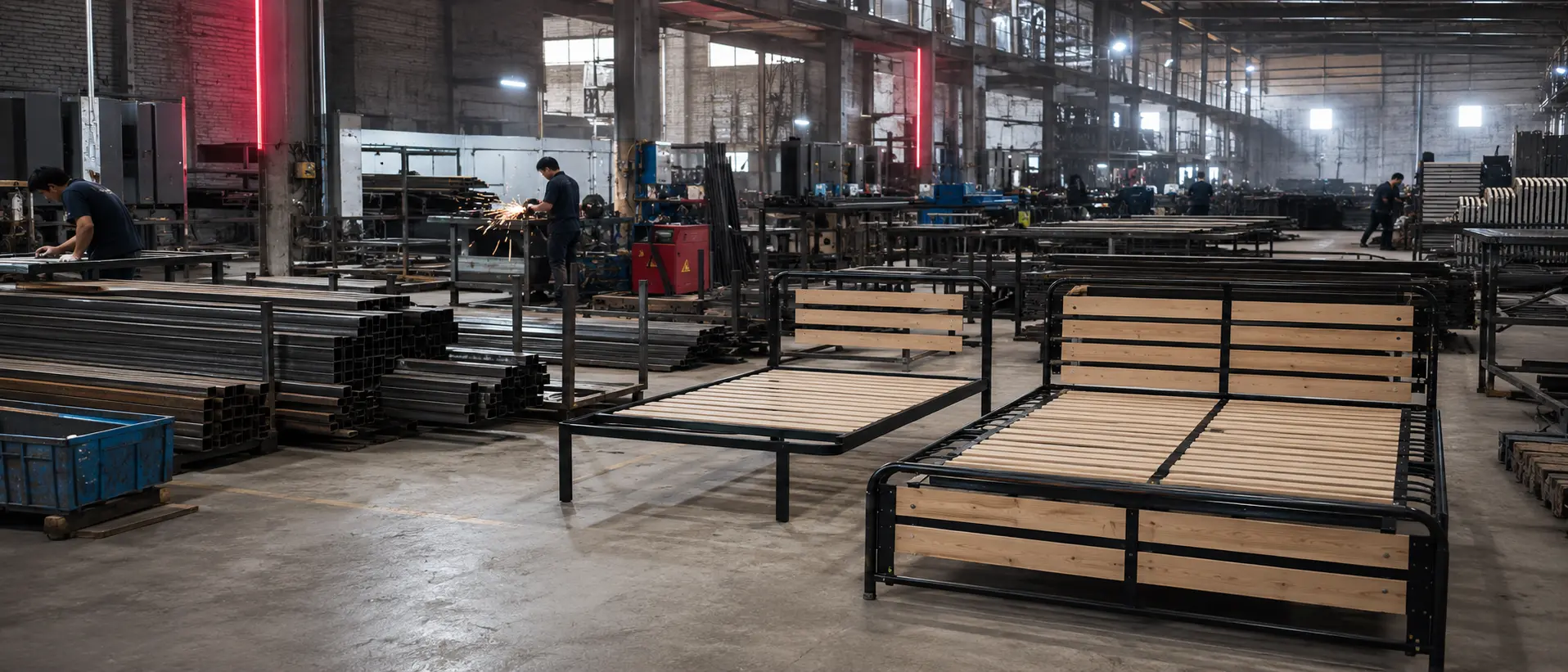
The core value of platformization lies in eliminating the information silos between design and production. Integrated design platforms like form.bar allow clients to freely adjust the shape, size, material, and color of bed frames in a 3D interface, with the system checking producibility in real-time and automatically generating quotes. Once the order is confirmed, production data is sent directly to the nearest CNC machining center, enabling “localized agile production.”
Three major advantages of this model:
-
Rapid Delivery: Eliminates traditional sampling and repetitive communication, reducing delivery cycles by over 70%.
-
Cost Transparency: Every modification shows real-time pricing, keeping budgets under control throughout the process.
-
Eco-Friendly & Low-Carbon: Localized production significantly reduces logistics-related carbon emissions. Research shows this model can reduce CO₂ emissions by 55% compared to traditional models.
2.2 3D Visual Configuration: Making Customization “What You See Is What You Get”
In 2026, leading furniture retailers have fully adopted 3D cloud platform technology, allowing customers to customize material, color, dimensions, and detailed craftsmanship of bed frames in-store or via mobile devices, with instant previews in interactive 3D models. From headboard design to leg style, from wood grain direction to hardware finish—every detail is clearly visible. This immersive experience eliminates the most frustrating “imagination gap” in custom furniture, significantly boosting purchase confidence and conversion rates.
2.3 Data-Driven Flexible Supply Chain
Another layer of platformization value lies in real-time data flow and reverse empowerment. Customization platforms aggregate preference data from global clients, helping factories accurately forecast material demand and optimize production scheduling, thereby achieving a “demand-driven” flexible manufacturing model. For international clients, this means more stable delivery schedules, lower inventory backlog risks, and faster after-sales response times.
Chapter 3: A Guide for International Clients to Avoid Pitfalls in Custom Bed Frame Sourcing
3.1 Structural Framework: Don’t Be Deceived by Surface Finishes
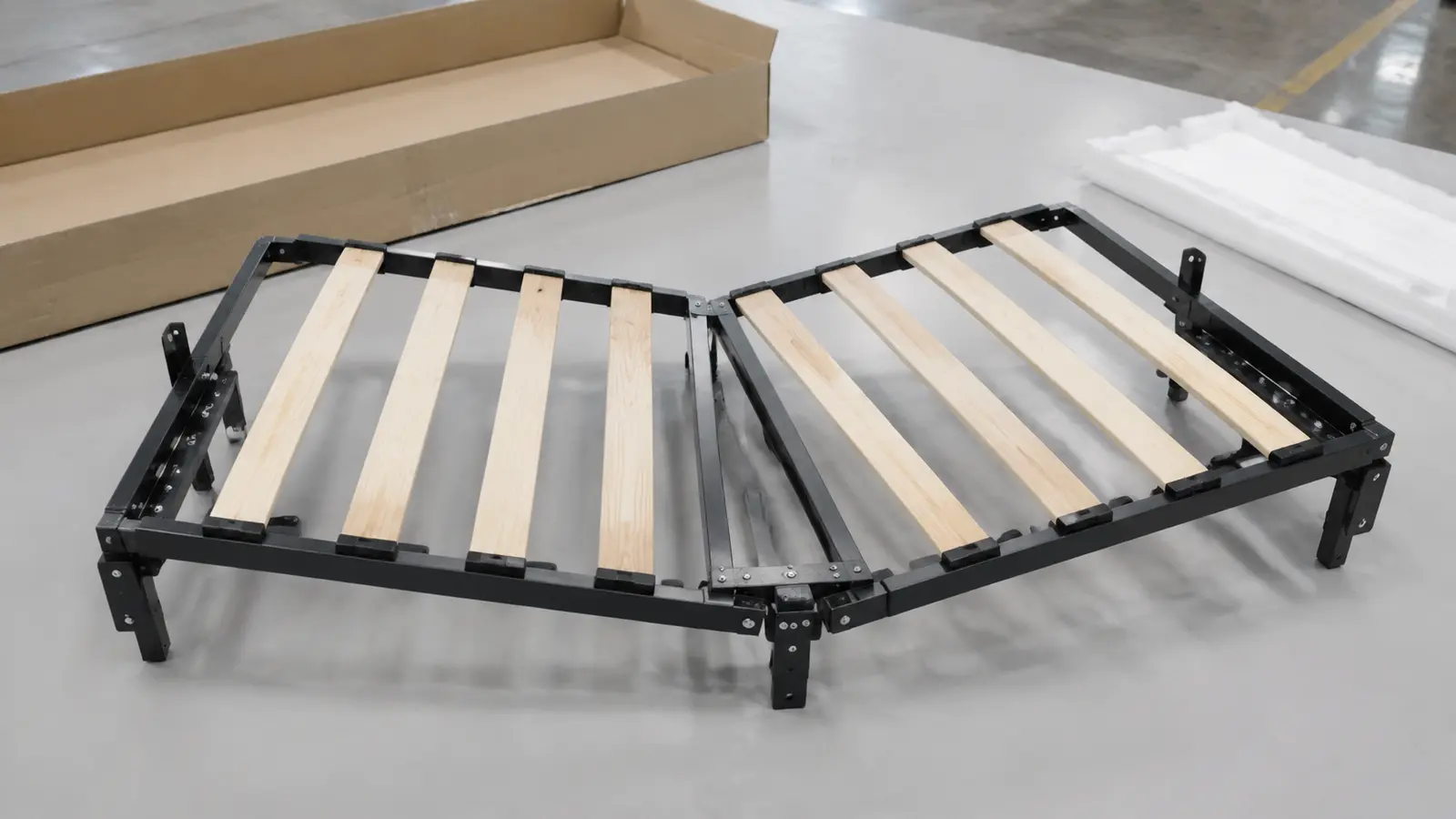
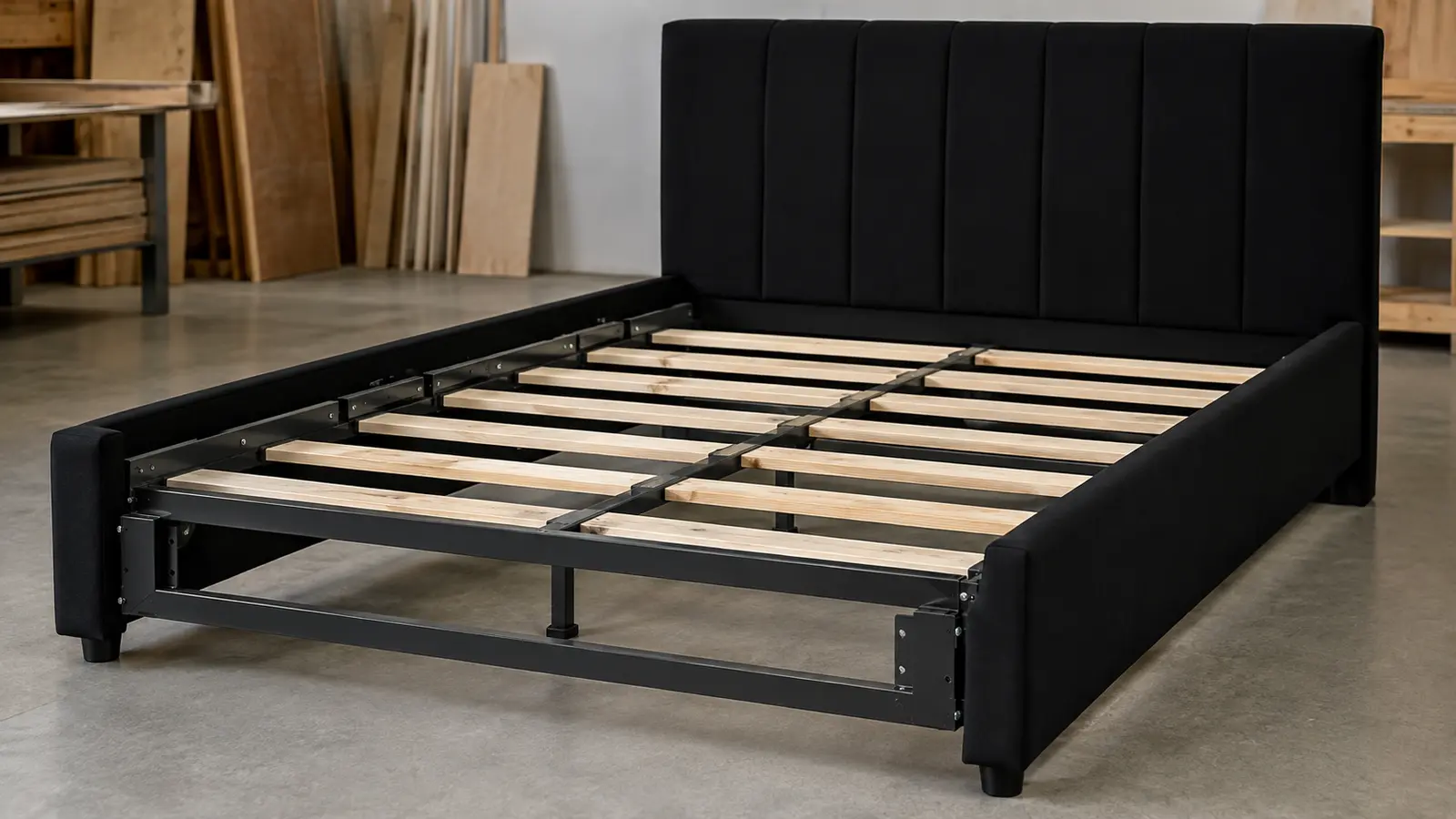
We recommend that international clients inspect the slatted base or bed boards at the semi-finished stage when evaluating factories. Quality solutions typically use multi-layer plywood that has passed static bending strength tests or solid wood finger-jointed panels, with connectors made of cold-rolled steel and nylon self-locking nuts, ensuring no squeaking or loosening even after long-term use.
3.2 Wood and Coating: Both Environmental Protection and Durability Are Essential
As a long-term furniture item, the wood moisture content should ideally be controlled at 8%-12% to effectively prevent cracking and deformation. For coatings, we recommend prioritizing water-based paints or wood wax oil finishes, which offer higher environmental standards while preserving the natural wood grain. Request the factory to provide wood origin certificates and coating environmental test reports to ensure compliance with mainstream European and American market access standards.
3.3 Platform Data Security and System Maintenance
When choosing platform-based customization services, clarify whether the factory works with an in-house developed software system or a procured generic solution. Generic public cloud solutions may pose data privacy risks and server response latency issues. Be sure to confirm the system’s long-term maintenance commitments and data processing agreements to ensure your project data, design drawings, and custom specifications are fully protected.
Conclusion: Embrace the New Era of “Platformization” Customization
Bed frame customization in 2026 is no longer traditional made-to-order manufacturing but a value reconstruction driven by platformization. For international clients, this means lower communication costs, shorter delivery cycles, more transparent pricing, and a sleep experience that better matches individual needs. Choosing a customization partner that embraces this trend means seizing the initiative in the fierce global market competition. In 2026, let us redefine quality sleep through a more efficient, more transparent, and more eco-friendly approach.