Common Bed Frame Sourcing Problems and How B2B Buyers Can Avoid Them
Common Bed Frame Sourcing Problems and How B2B Buyers Can Avoid Them
Subtitle: Clear drawings, sample review, hardware matching, and packing confirmation can reduce sourcing risk before custom bed frame bulk orders.
Introduction
Custom bed frame sourcing can become difficult when product details are unclear. Many problems happen not because the product is too complex, but because size, structure, support layout, hardware, surface finish, or packaging was not confirmed early enough. For B2B buyers, avoiding these problems starts before the quotation stage.
Furniture factories, wholesalers, and bed brands often need bed frames that match a specific bed body or furniture collection. A small change in frame size, slat spacing, support position, or hardware mounting point can affect the final product. This is why buyers should prepare detailed information before discussing a custom bed frame order.
Problem 1: Sending Only a Product Name
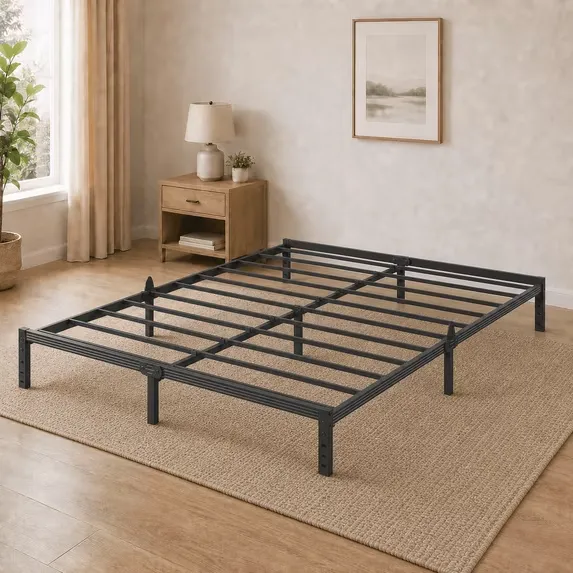
One common problem is sending only a product name. An inquiry such as "please quote bed frame" is too general. Bed frames can be folding, silent-use, steel wood, suspended, functional, or customized for different furniture systems. Without drawings, dimensions, photos, or application details, the supplier cannot accurately evaluate the structure or price.
The better approach is to send the bed type, size, application, product photo, drawing, sample reference, required quantity, and packing method. Even if the information is not complete, it gives the supplier a better starting point.
Problem 2: Ignoring Slat Layout and Center Support
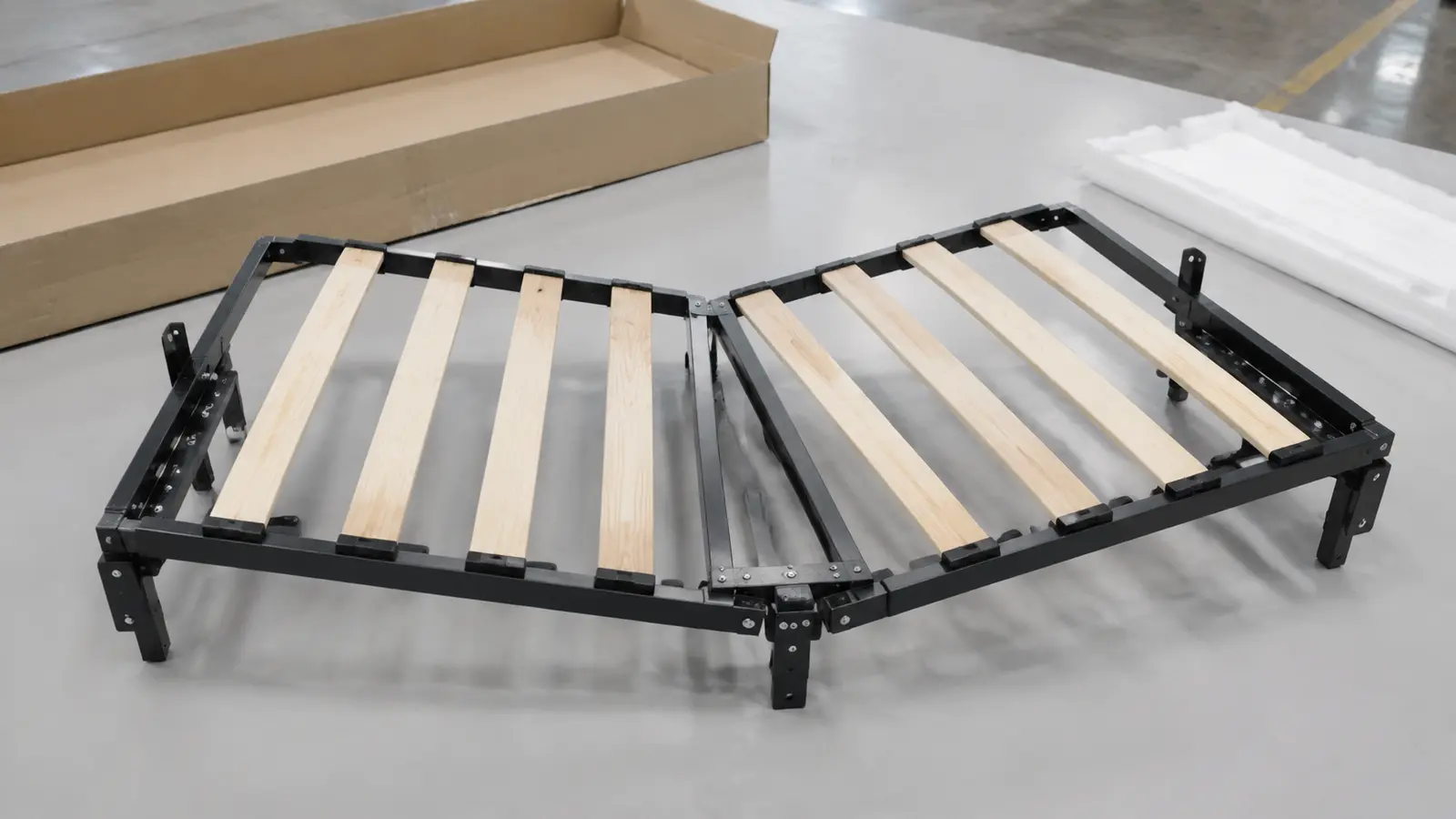
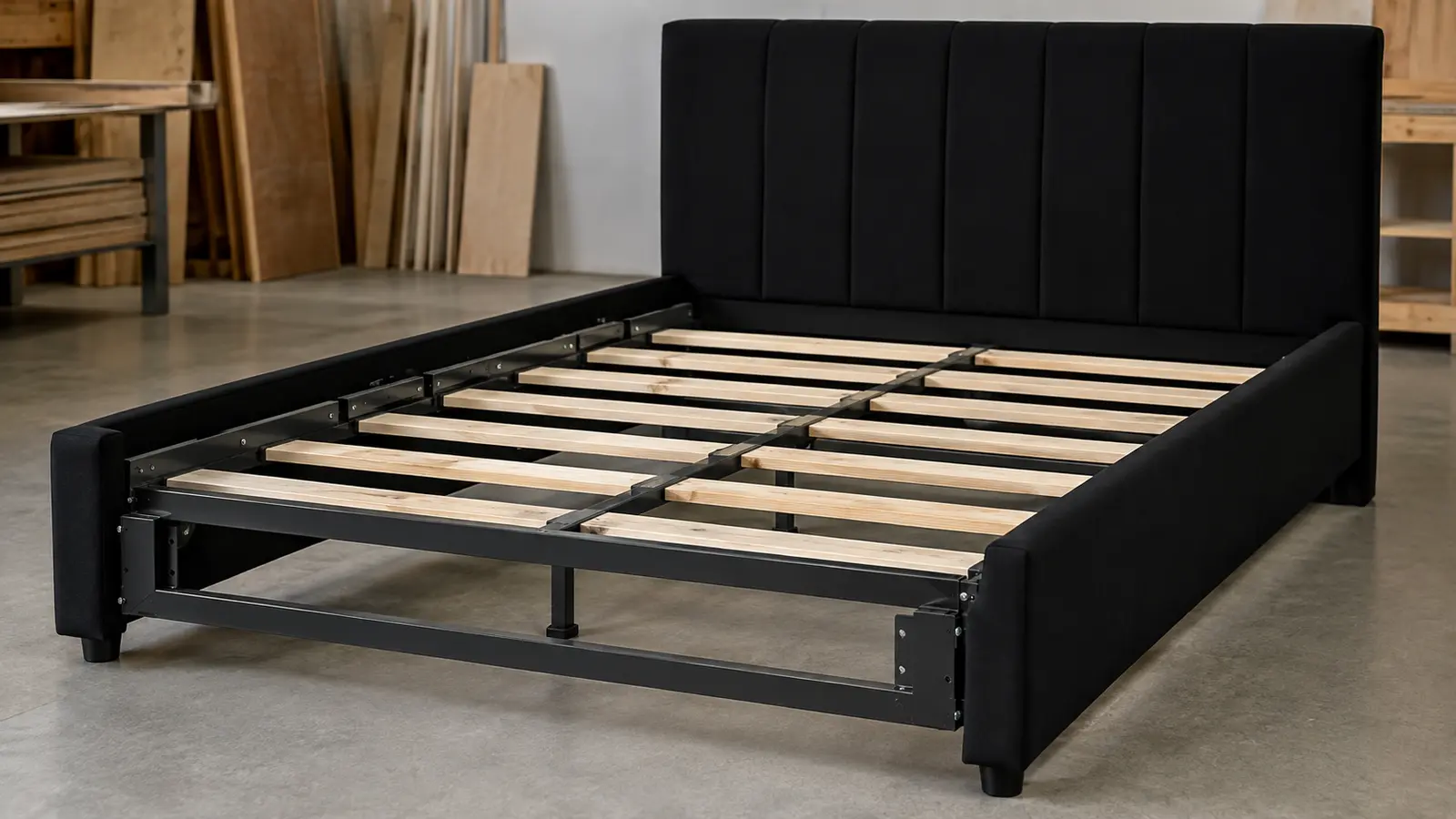
Wooden slats affect mattress support and comfort. The quantity, spacing, and connection method should match the bed body and target use. If the slats are not suitable, the final bed may not provide the expected support. This can create complaints even if the metal frame itself looks strong.
Center support is also important. Some bed frames need middle support legs, bed poles, or reinforced center rails. If the center area is weak, the frame may shake or feel unstable. Buyers should confirm bed size, support direction, and whether additional support hardware is required.
Problem 3: Confirming Hardware Too Late
Hardware being confirmed too late is another frequent issue. Gas springs, T-shaped feet, straight feet, corner brackets, and bed poles should be discussed during the structure review stage. If hardware is added after the frame is already designed, the hole position, bracket structure, or frame layout may need adjustment.
This can delay sample production and create unnecessary communication. Buyers should include hardware requirements in the first inquiry whenever possible.
Problem 4: Underestimating Packaging
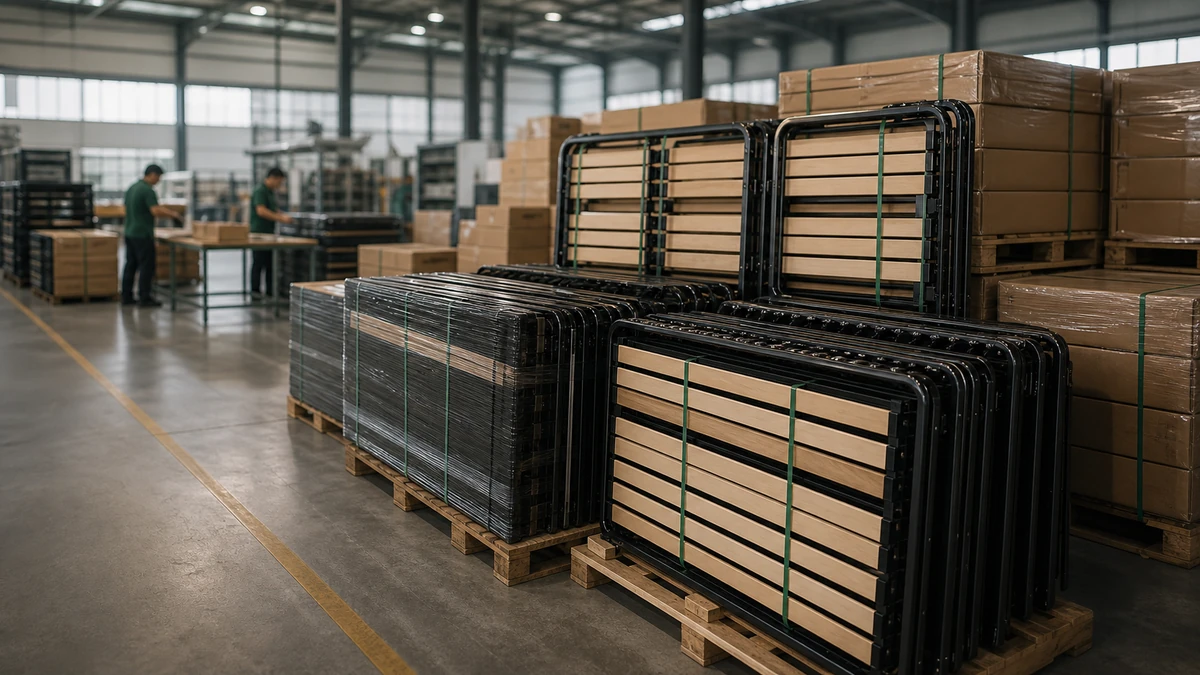
Packaging is often underestimated. For furniture factories and wholesalers, packaging affects transport, storage, and assembly. A frame that is difficult to pack may increase logistics pressure. A folding structure may help, but the folding direction, accessory packing, carton size, and protection method should be planned in advance.
Surface finish and appearance should also be confirmed. Metal frames may require different surface treatments depending on product style and market requirement. Buyers should discuss color, finish, and visible parts before production.
Problem 5: Focusing Only on the Sample
A good sample is important, but B2B buyers need repeatable production. The supplier should be able to maintain consistent size, welding, slat spacing, hardware fitting, and packing across batch orders. Repeatable quality matters more than a single perfect sample.
For long-term buyers, it is helpful to build a standard inquiry checklist. This checklist can include size, material, structure, slat layout, hardware, finish, packaging, and inspection requirements. Using the same checklist for every new product makes supplier communication faster and helps the purchasing team compare different solutions more clearly.
Call to Action
Before placing a custom bed frame order, buyers should prepare drawings, sample photos, dimensions, hardware requirements, order quantity, surface finish, and packaging needs for supplier review.