Shilong Builds a Clear Workflow from Sample Review to Batch Bed Frame Production
Shilong Builds a Clear Workflow from Sample Review to Batch Bed Frame Production
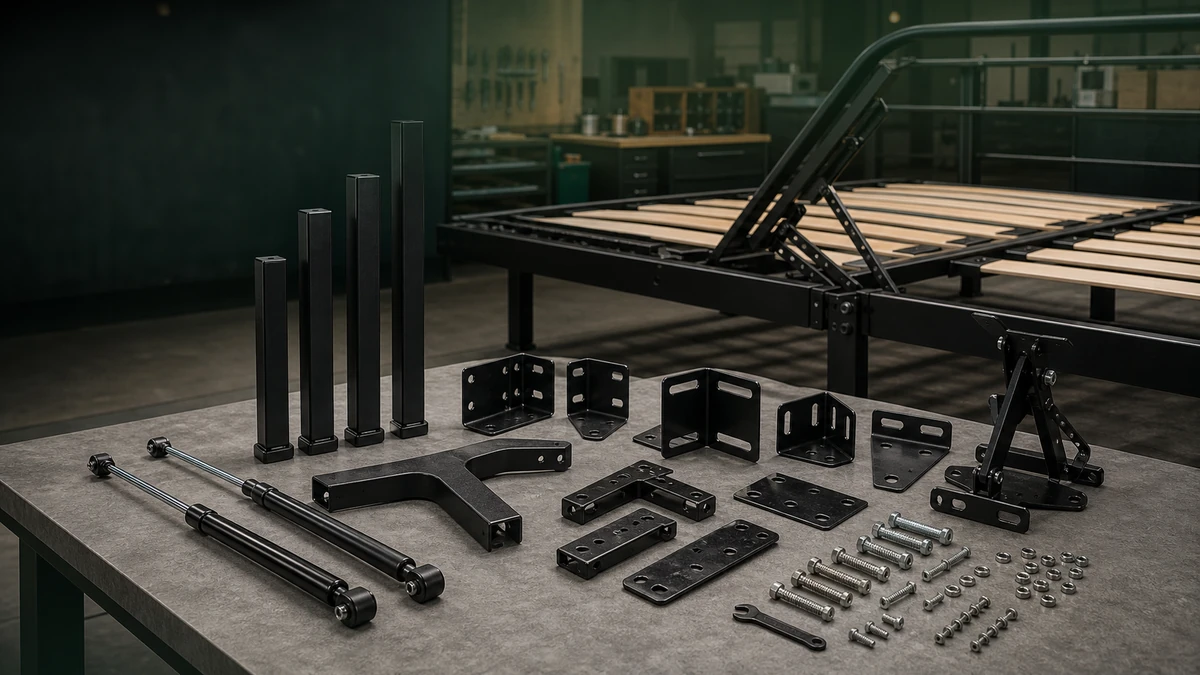
Subtitle: A practical customization process helps furniture buyers turn product ideas, reference samples, and drawings into repeatable bed frame manufacturing.
Introduction
Many custom bed frame projects start with a simple reference. A customer may send a sample photo, an existing product, a rough drawing, or a target size. At the beginning, the project may not have complete technical information. This is common in OEM/ODM furniture manufacturing. The important step is to turn that reference into a clear and practical production plan.
Foshan Shilong Metal Products Factory supports customers from sample review to batch bed frame production. The process is designed for B2B buyers such as furniture factories, bed brands, wholesalers, and project customers that need stable supply and custom bed frame structures. Shilong focuses on bed slat frames, folding bed frames, steel wood bed frames, suspended bed frames, functional bed frame structures, and related hardware accessories.
Step 1: Requirement Confirmation
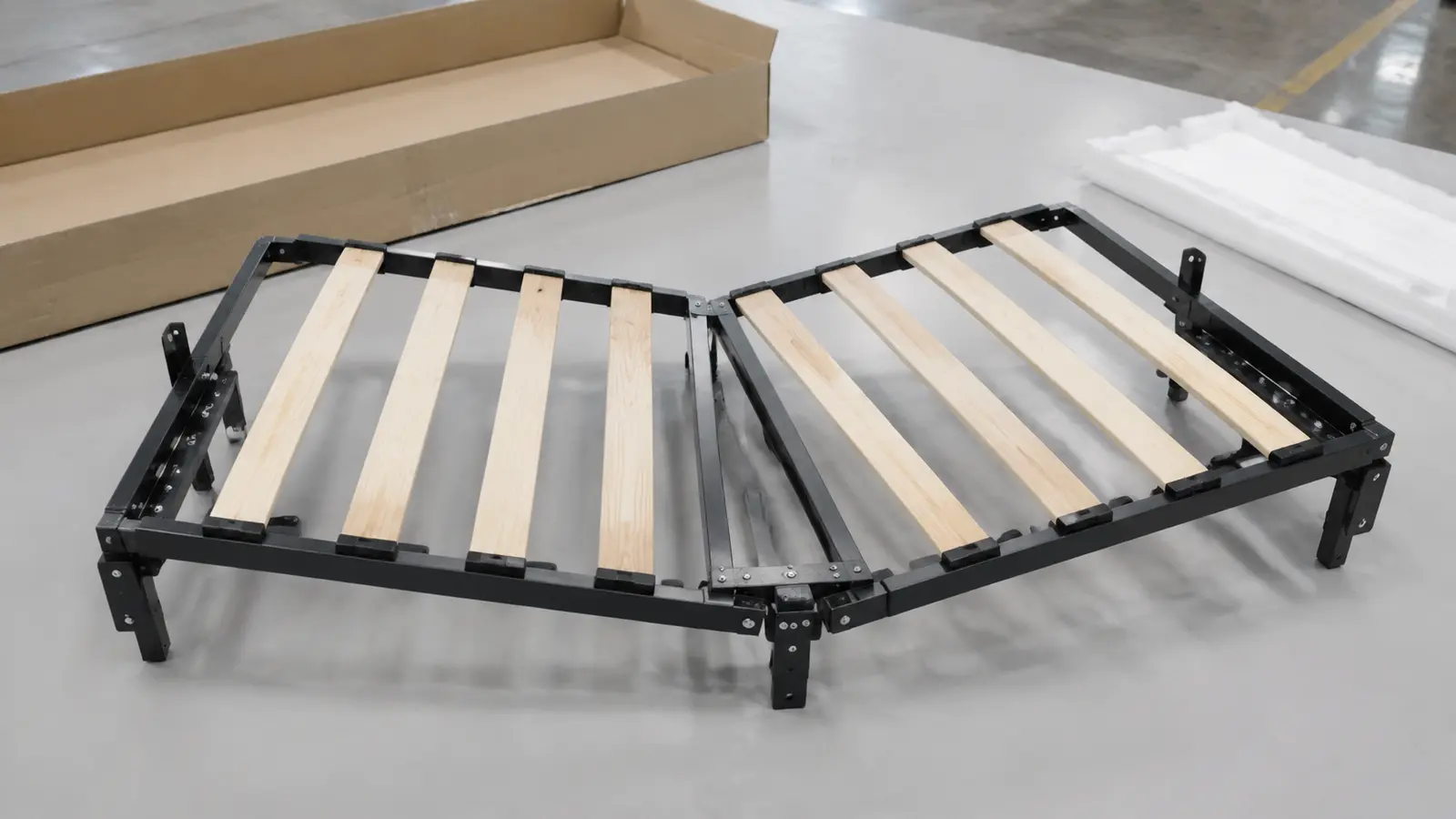
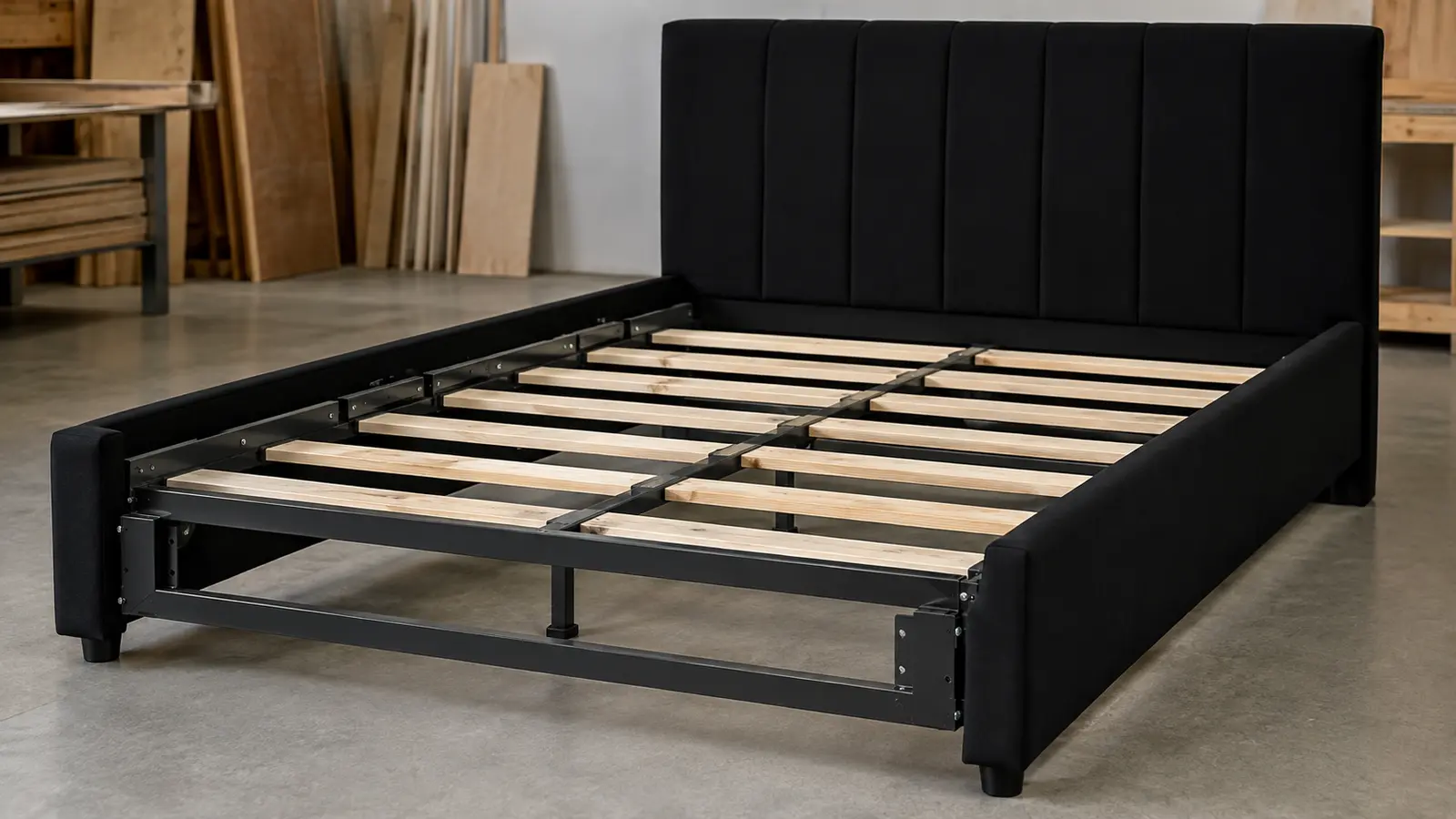
The first step is confirming the real product requirement. Customers should provide the bed type, size, application, quantity, and target market if possible. A bed frame for an upholstered bed may require a different support structure from a solid wood bed. A folding bed frame may need special attention to hinge position and packing size. A functional storage bed may need gas springs and reinforced support points.
These differences affect production planning. If the buyer can provide product photos, drawings, samples, or clear dimensions, the factory can evaluate the project more accurately. This helps reduce repeated changes and improves communication before quotation.
Step 2: Drawing or Sample Review
If the customer has drawings, Shilong can check the frame structure, slat layout, support position, and hardware matching. If the customer has only a photo or sample, it can still be used as a reference while missing details are discussed. During this stage, practical questions are important.
What is the required bed size? How many slats are needed? Does the frame need to fold? Are support legs required? Will the product use gas springs, corner brackets, bed poles, or T-shaped feet? These details help confirm whether the product is suitable for mass production.
Step 3: Structure and Material Matching
A reliable bed frame is not only about the visible shape. The outer frame, center support, slat spacing, connection points, support feet, and accessories all affect product performance. For steel wood bed frames, the metal frame and wooden slats must work together. For suspended bed frames, support structure and installation points need careful discussion.
For customized furniture projects, the bed frame should also match the customer's assembly method and packing plan. If the frame is hard to install or difficult to pack, it may create extra pressure after production.
Step 4: Sample Adjustment Before Bulk Production
The sample stage helps confirm whether the frame matches the customer's bed body and assembly method. If changes are needed, they should be made before batch production. This can reduce later waste and avoid repeated communication after the order begins.
After confirmation, the project can move to batch production. At this stage, repeatable quality becomes more important than a single perfect sample. Size control, welding consistency, surface finish, slat matching, hardware fitting, and packaging should all be reviewed.
Long-Term Cooperation for B2B Buyers
For customers with repeat orders, stable production and clear communication are essential. Shilong encourages customers to send detailed requirements early. Drawings, samples, photos, dimensions, quantity, hardware needs, and packing requirements all help the factory provide practical manufacturing suggestions for custom bed frame projects.