Slatted Bed Frames: How Slat Spacing Affects Mattress Support
A slatted bed frame supports a mattress through a series of slats connected to a surrounding frame. Slat spacing matters because the gaps leave areas of the mattress without direct support. Yet the right gap is not a universal measurement: it depends on the mattress maker’s requirements, slat width and stiffness, unsupported span, center supports, and the full bed structure. Furniture buyers should compare a slat layout with the specified mattress before approving a bed frame for production. A steel-wood frame can use wood slats and a metal perimeter, but the quality of their connections matters as much as the number of slats. This guide explains how to review those relationships without assuming that closer spacing alone produces a stronger bed.
What Does a Slatted Bed Frame Actually Support?
The mattress rests on the slats, which transfer its load into side rails, center rails, brackets, frame connections and ultimately the floor. The support system must work as a complete assembly. A flexible slat may bend as intended, but an excessive span or poorly secured end may allow movement that was not part of the design. A rigid slat may still perform badly if a center support is missing.
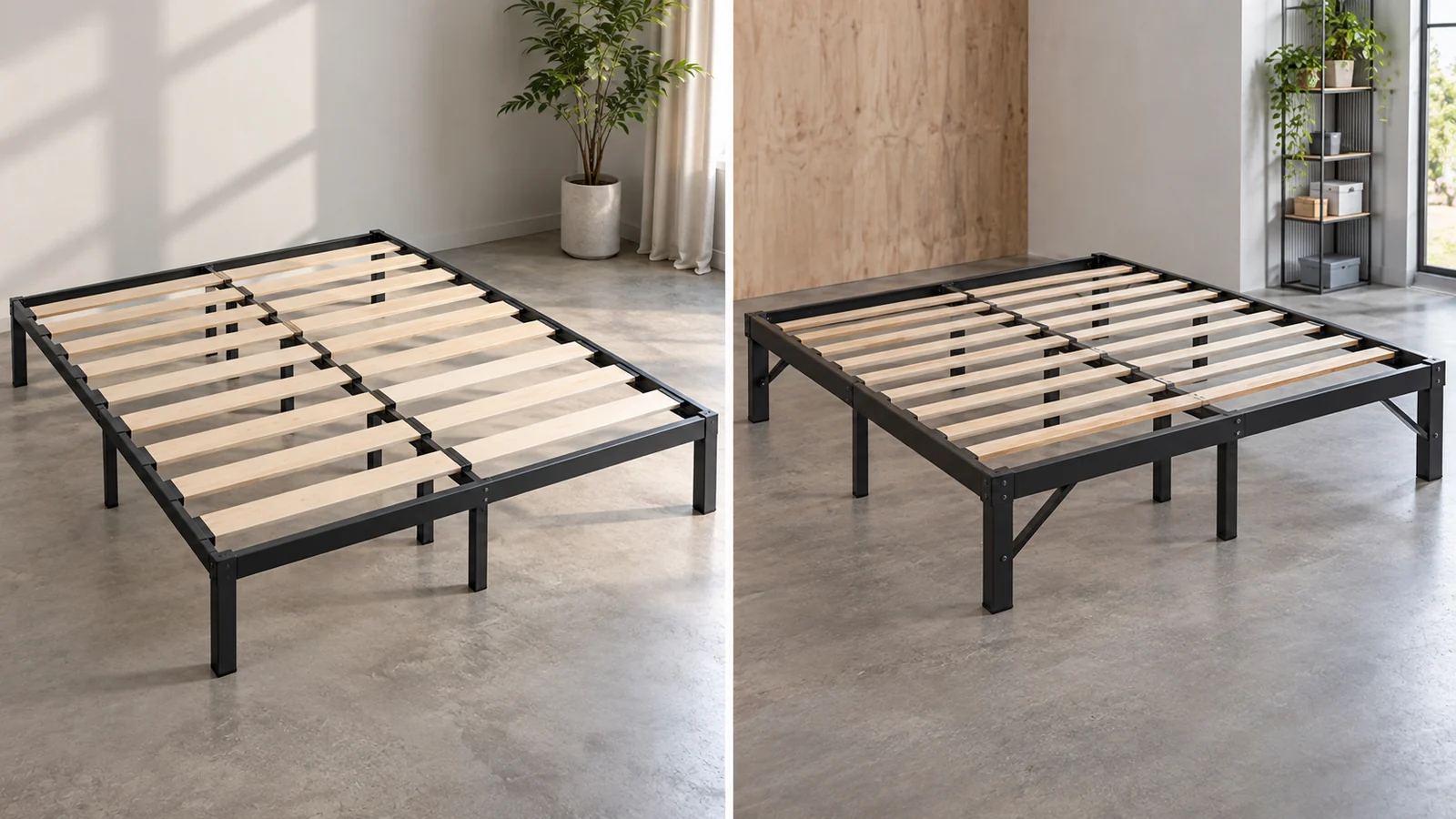
Shilong’s 10cm Steel-Wood Pine Bed Frame is described as a metal frame combined with wood slats, with customizable slat quantity, spacing, support bars and hardware positions. Its product name does not establish a 10 cm slat gap. Drawings must state each dimension clearly.
Why Does Slat Spacing Matter for Mattress Support?
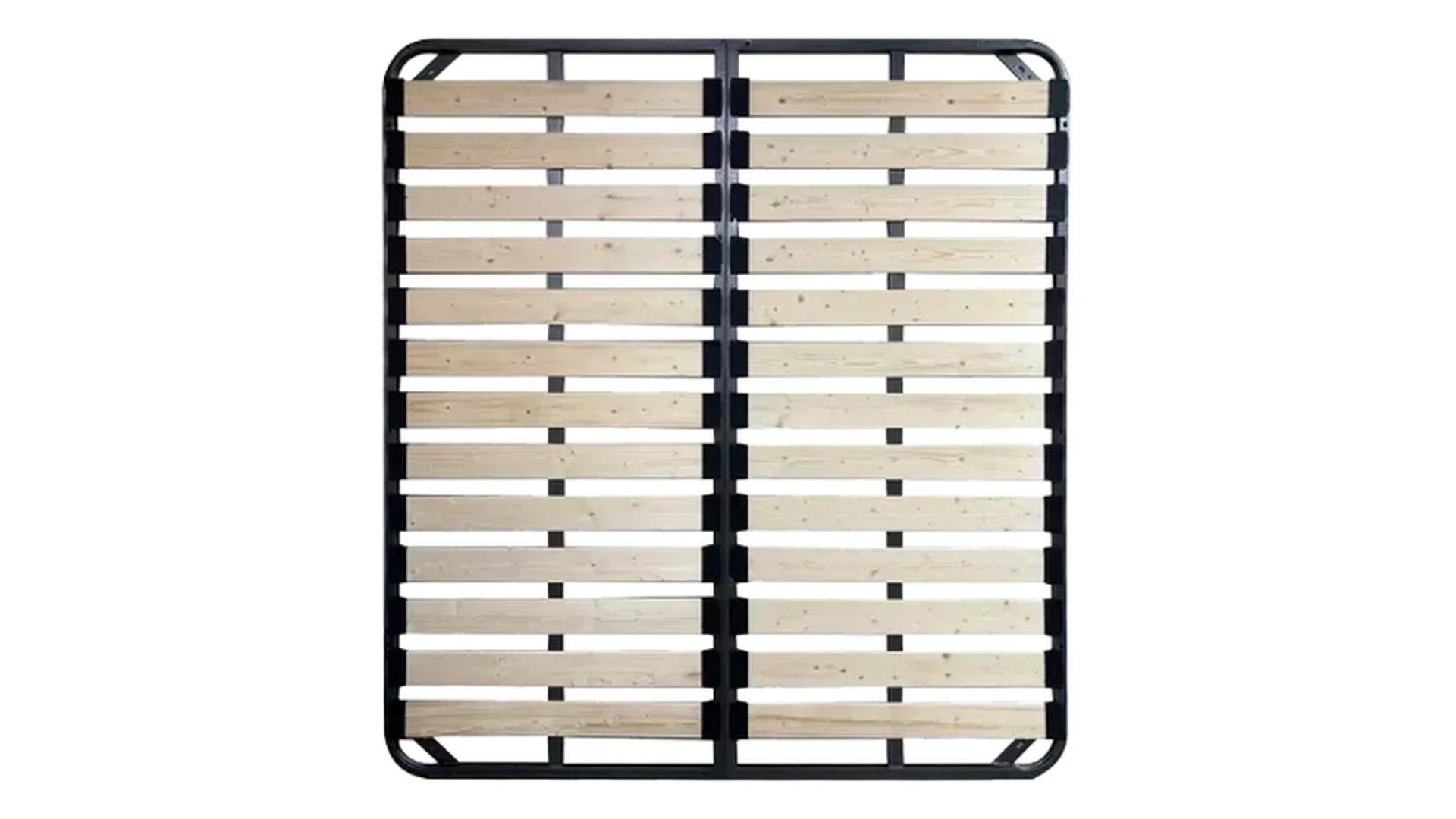
Slat spacing is the unsupported gap between adjacent slats. If gaps exceed the mattress supplier’s allowed support conditions, parts of the mattress may flex into the spaces. The result depends on mattress construction and loading, so a spacing acceptable for one mattress cannot automatically be transferred to another.
Compare the Gap with Mattress Requirements
Foam, hybrid and spring mattresses may use different support designs. Review the actual mattress maker’s installation or warranty guidance; do not assume that one fixed gap works across all models. Where those limits are unavailable, request written confirmation before deciding a production layout.
Distinguish Clear Gap from Center-to-Center Pitch
For parallel slats of equal width, the center-to-center pitch equals the clear gap plus one slat width. Drawings that state only “slat spacing” can be interpreted differently by purchasing, fabrication and inspection teams. Record both the measured gap and the nominal slat width.
Why Tighter Spacing Is Not Always Enough
More slats may reduce unsupported mattress areas, but they do not correct an unstable center rail, weak end brackets, excessive slat bending or loose hardware. Evaluate the complete load path rather than treating slat count as a stand-alone strength rating.
| Design factor | Why it matters | What buyers should verify |
|---|---|---|
| Clear gap | Changes unsupported mattress area | Mattress maker’s maximum allowed spacing |
| Slat width and thickness | Influence bending behavior | Cross-section and material specification |
| Unsupported span | Changes deflection under load | Distance between actual bearing points |
| Slat end connection | Controls slipping and local movement | Clips, brackets or other retainers |
| Center support | Changes how loads reach the floor | Rail, joint and leg placement |
How Do Slat Width, Material and Span Change the Result?
Slat Cross-Section and Material
Slats with similar lengths but different widths, thicknesses or materials can respond differently to bending loads. Width alone does not establish strength. For timber, material characteristics, knots, moisture and the direction of bending may all be relevant. For steel supports, cross-section, gauge and connection geometry matter. A drawing should identify the approved construction rather than simply call the slats “heavy duty.”
Span and Center Rails
A slat’s effective span is the distance between its support points. A wider frame may require different center support arrangements, but whether it does depends on design and loading. Shilong’s 15cm Steel-Wood Pine Bed Frame is presented with a multi-point wood-slat support layout and options for bracket positions and matching feet. Those are model-specific design options, not published load-test results.
Fasteners and End Supports
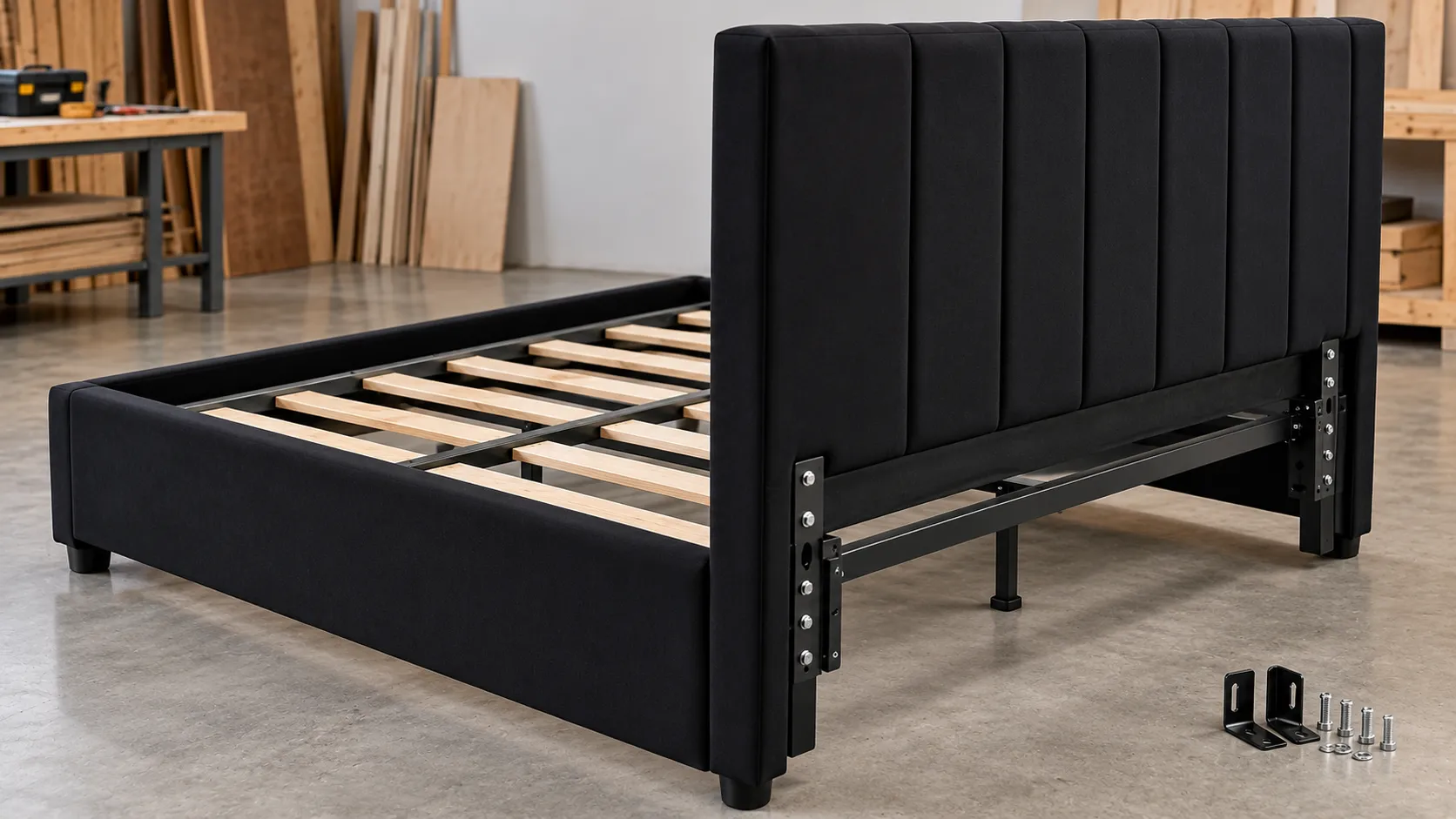
A stable slat must remain in its intended position as the bed is assembled and used. Confirm end seating, retention method, metal-to-wood contact, and whether screws or clips can be inspected or replaced. A suitable slat layout can still make noise or shift if the connection detail is poorly matched.
Should Slat Layout Change for Queen and King Beds?
A larger mattress can change frame width, slat span, center-rail layout and loading patterns. Do not scale a smaller bed frame drawing without checking these effects. A queen-size and king-size slatted bed frame may need different support details even if their slat spacing remains similar.
For each size, record the mattress support area, clear gaps, slat length, center support location and locations where the frame attaches to the surrounding furniture. Market-specific mattress dimensions also need checking: size names alone do not guarantee equal millimeter dimensions across destinations.
What Causes Uneven Support, Movement or Squeaking?
A perceived bed-support problem may involve the slat system, but it may also originate from the surrounding furniture, fasteners, floor or mattress. Diagnose the load path in order rather than simply adding more slats.
| Observed issue | Possible causes | Useful check |
|---|---|---|
| Uneven mattress support | Large clear gaps, differing slat levels, missing support | Compare layout with mattress requirements and drawing |
| Slats shifting | Poor end retention or mismatched brackets | Inspect clips, seating depth and end fit |
| Repeated squeaking | Movement at joints or metal-wood contact points | Check fasteners, contact surfaces and frame alignment |
| Excessive local bending | Long spans, unsuitable slat section or loading | Review supports and approved structural design |
Where damage or instability is suspected, stop using the affected frame until it is assessed. The table identifies inspection paths, not a remote diagnosis of a particular product.
What Should Furniture Manufacturers Confirm Before Approval?
Start with the mattress specification and the bed’s interface drawing. A buyer cannot approve slat spacing from a product photo alone. Shilong describes drawing-based adjustments to slat layout, bracket locations and metal frame configuration, which can be discussed against a project drawing.
- Define the mattress interface. Specify mattress size, supported area and the mattress maker’s relevant support limits.
- Freeze the slat geometry. Give slat width, thickness, material, count, clear gaps and span dimensions.
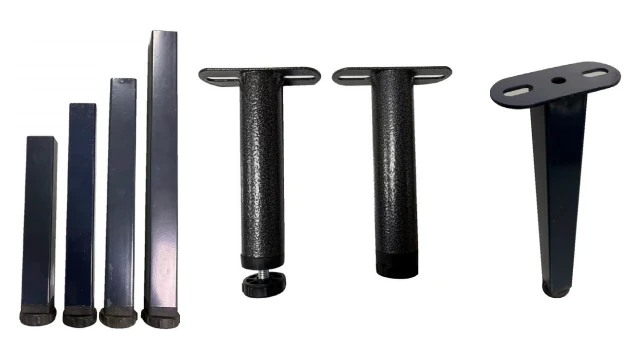
- Document the support path. Show side rails, center rail, intermediate supports, feet and their connections.
- Review assembly details. Identify brackets, clips, fasteners, tolerances and compatibility with the outer bed body.
- Agree on sample acceptance. Inspect dimensions, slat retention, alignment, assembled condition and any required project-specific strength or durability tests.
Shilong’s steel-wood product examples are useful for discussing possible configurations, but any load rating or mattress compatibility claim must be verified for the selected assembly.
Frequently Asked Questions
Is there one slat gap suitable for every mattress?
No. Maximum permitted spacing varies with mattress construction and manufacturer guidance. Confirm the selected mattress’s requirements instead of using one universal figure.
Can wooden slats be combined with a metal frame?
Yes. A steel-wood frame uses slats and metal supports together, provided the chosen connections, span and support layout suit the intended mattress and use.
Does a higher slat count always mean a stronger bed frame?
No. Slat count is only one variable. Material, cross-section, span, end retention and center support can also control the assembly’s performance.
Final Considerations
The right slatted bed frame is the one whose gaps, slat dimensions, support points and connection details match the mattress and bed design. For a Shilong steel-wood bed-base inquiry, share your mattress requirements, drawings, frame size and target quantity so the relevant configuration can be reviewed before production.