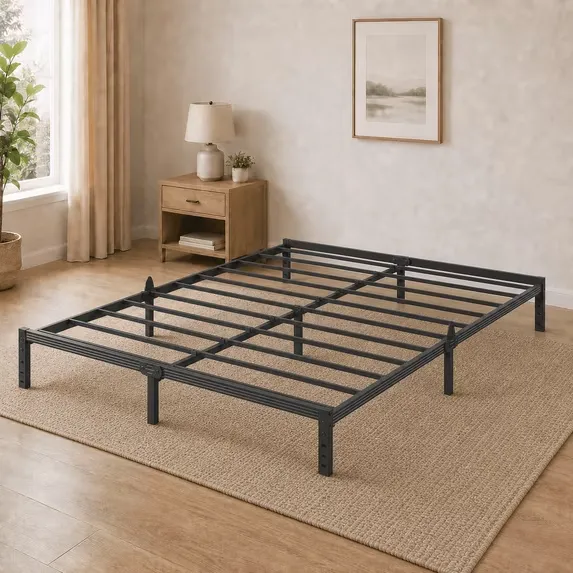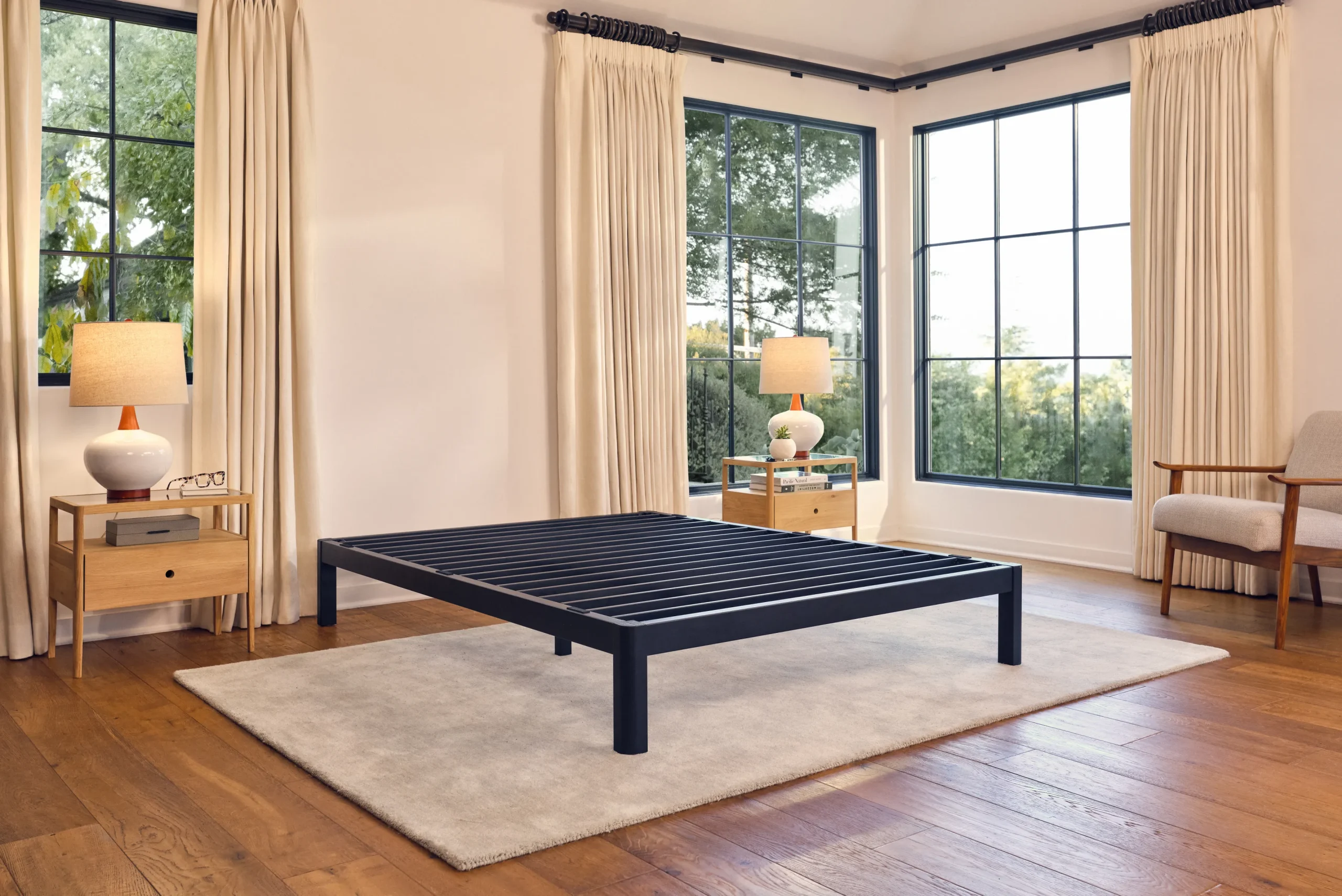
How Should Buyers Evaluate a 15cm Steel-Wood Pine Bed Frame for Black Upholstered Bed Frame Projects?
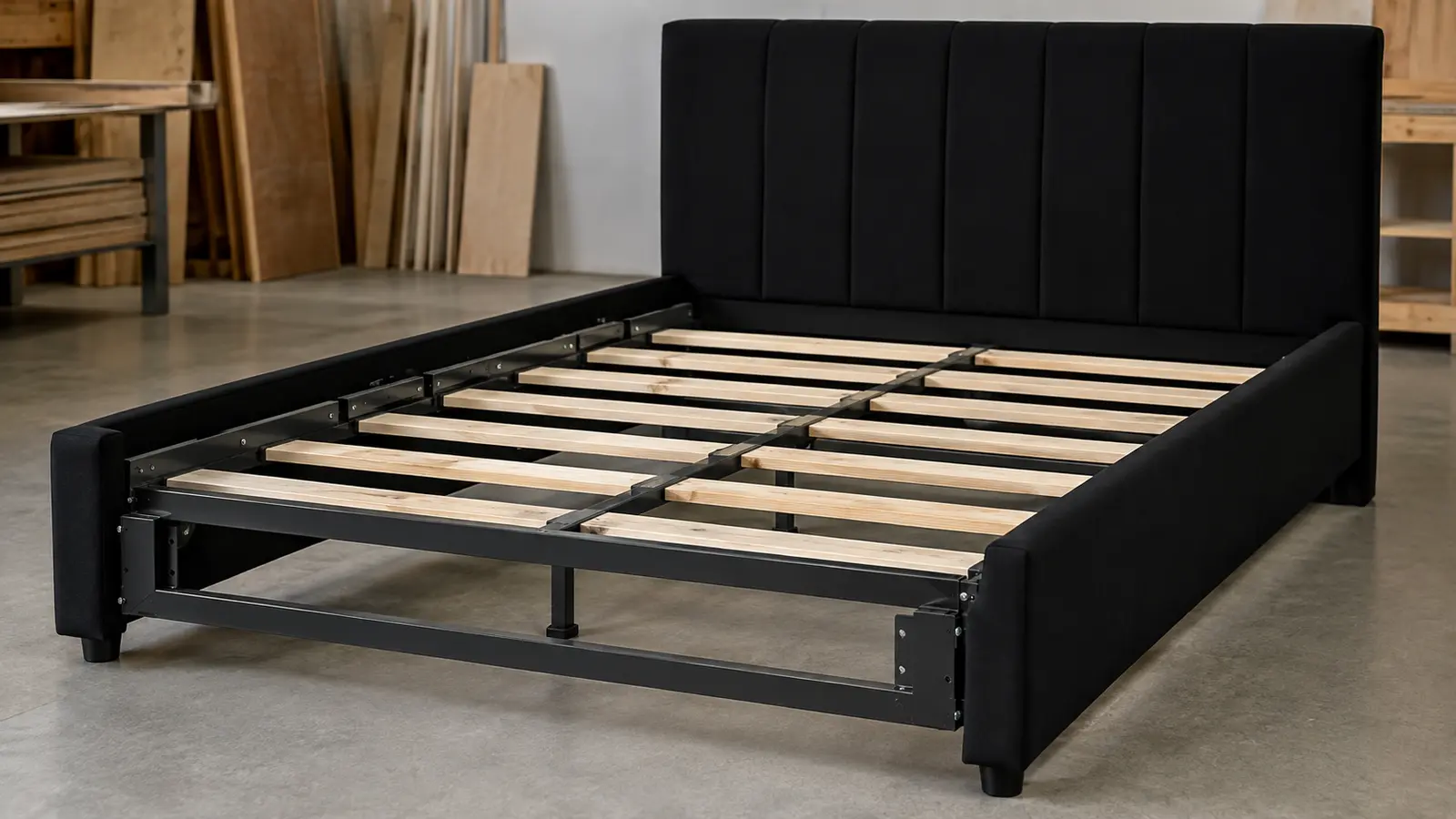
A 15cm steel-wood pine bed frame should be evaluated as an internal load-bearing system, not as a decorative accessory selected by color alone. For a black upholstered bed frame project, buyers should first map the finished-bed envelope, mattress support height, upholstery clearance, rail and headboard interfaces, center support path, and assembly sequence. They should then confirm the steel frame geometry, wood slat layout, feet and bracket positions, surface treatment, and sample acceptance method. The “black upholstered” description identifies the finished bed style; it does not automatically define the hidden support frame’s finish or dimensions.
This distinction matters because many sourcing problems begin with a visually complete furniture concept but an incomplete support specification. Two steel-wood frames may look similar in a product photo yet behave differently after they are installed inside upholstered side rails. A practical selection process must connect the frame to the full bed system and to the buyer’s production workflow.
Start With the Finished Bed, Not the Standalone Frame
The finished bed drawing should be the first reference. It establishes the mattress opening, the position of the upholstered rails, the height of the mattress support plane, and the zones occupied by fabric, foam, boards, fasteners, and decorative components. If a buyer only sends a nominal mattress size, the supplier still cannot reliably determine the frame’s outside dimensions or mounting points.
International measurement guidance for beds and mattresses treats dimensional fit as a relationship between components. That principle is useful even when a project follows a customer-specific drawing: a nominal label is not a substitute for actual component dimensions and tolerances. Buyers should state whether dimensions refer to the mattress, the clear opening, the support frame, or the completed upholstered bed.
Before comparing offers, define at least four reference planes:
- the finished floor level;
- the top of the steel-wood support structure;
- the intended mattress support surface; and
- the visible top edge of the upholstered side rail.
These references prevent a common error: approving a frame that fits the plan view but places the mattress too high, too low, or too close to the upholstery. The 15cm product description should therefore be reconciled with the project drawing rather than interpreted as the complete finished-bed height.
Translate the Upholstered Bed Design Into Support Requirements
For initial supplier screening, buyers can review Shilong’s bed frame product category to understand the available support-frame formats. The next step is not to choose by appearance; it is to convert the bed concept into a load path.
The load path runs from the mattress to the wood slats, then through the steel frame and center support points to the floor or the surrounding bed structure. The exact arrangement depends on the project. A larger sleeping surface, a split base, a particular mattress construction, or restrictions under the bed can change where support is needed. Buyers should not assume that a familiar slat count or center-leg arrangement is universal.
A useful drawing review asks:
- Where do the frame’s perimeter members bear against or attach to the upholstered shell?
- Which members carry the center region, and where do their feet meet the floor?
- Do brackets, feet, or fasteners conflict with fabric returns, staples, corner blocks, or dust covers?
- Can each connection be reached during assembly without damaging the upholstery?
- Does the mattress supplier impose any maximum gap or support-layout requirement?
The answer should be recorded in an interface drawing. That drawing becomes more valuable than a generic load claim because it shows how the component will actually be installed.
Evaluate Steel and Pine as One Hybrid Structure
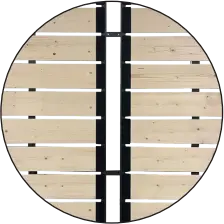
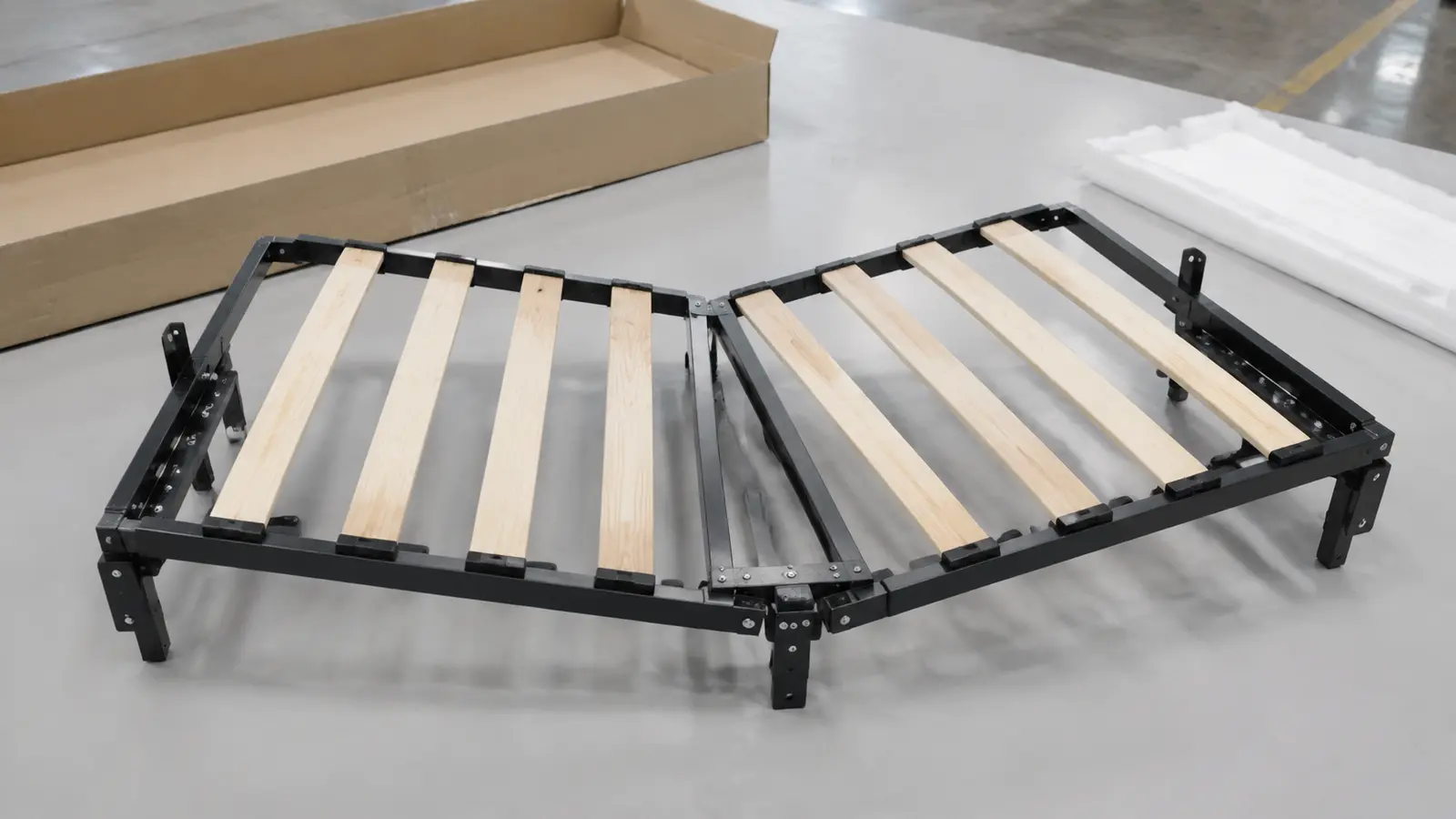
The steel frame and pine slats do different jobs. Steel establishes geometry and transfers loads through joints, brackets, and legs. Pine provides a distributed mattress support surface while helping control component weight and assembly complexity. Evaluating either material in isolation can hide interface risks.
For the steel portion, buyers should specify member locations, connection geometry, hole or bracket positions, feet, and the required surface treatment. If the internal frame will be visible during assembly or through an open underside, appearance expectations should also be stated. A black exterior fabric does not prove that a black steel finish is required; finish color and treatment must be written into the RFQ when they matter.
For the pine slats, confirm quantity, width, thickness, spacing, end support, retention method, and any permitted natural variation. Wood changes dimension as its moisture condition changes, so slat fit should allow for the expected production, transport, and service environment. The buyer does not need to invent a universal moisture value. Instead, the parties should agree on the material condition, inspection method, sampling point, and tolerance appropriate to the destination and the furniture design.
The 15cm steel-wood pine bed frame combines a metal structure with multi-point wood-slat support and can be configured around frame size, support layout, slat quantity and spacing, bracket position, feet, and surface treatment. Those options make the project drawing essential: customization is useful only when the requested configuration is unambiguous.
Use an Interface Matrix to Compare Suppliers
A quotation becomes easier to compare when each important project input has a matching supplier return. The following matrix can be adapted to a black upholstered bed program.
| Buyer input | Supplier return | Approval evidence |
| Finished-bed and mattress-opening drawings | Frame envelope and support-plane dimensions | Marked drawing with tolerances |
| Upholstery build-up and restricted zones | Bracket, foot, and fastener positions | Interface overlay or assembly mock-up |
| Mattress support requirements | Slat count, spacing, retention, and center layout | Dimensioned slat-layout drawing |
| Finish and visible-surface expectations | Proposed steel surface treatment and color | Approved finish sample or reference |
| Assembly sequence and tool access | Connection method and hardware list | Pilot assembly record |
| Performance requirement for the completed bed | Component checks and sample support | Agreed test plan and report format |
This approach also exposes missing information early. If a supplier returns a price without confirming the interface drawing, the offer may cover a generic frame rather than the project-specific configuration.
Compare Quotation Scope Before Comparing Unit Price
Two quotations are comparable only when they include the same frame configuration and verification work. Check whether the price covers the specified feet and brackets, connection hardware, wood slats, surface treatment, packing method, drawing confirmation, and sample scope. If one offer excludes hardware or assumes a different slat layout, a lower unit price does not represent the same deliverable.
Ask the supplier to list assumptions and exclusions next to the quotation. The return should identify the drawing revision, proposed materials, finish, included accessories, packing basis, sample charge if applicable, and documents that will accompany sample approval. Commercial terms such as quantity, destination, and requested delivery schedule should also be stated as project inputs rather than presented as permanent supplier capabilities.
Variation control matters after approval. A change to slat count, foot position, bracket geometry, or steel finish can affect fit even if the product name remains unchanged. The purchase order should reference the approved drawing and sample, and any later substitution should require written review before production.
Control Noise, Loosening, and Assembly Variation at the Interfaces
Buyers often focus on static strength, but customer complaints may arise from squeaks, movement, uneven support, or repeat assembly difficulties. These issues usually develop at interfaces: slat-to-frame contact, removable joints, fastener holes, leg connections, or contact between the support structure and the upholstered shell.
A sample review should therefore include more than a visual inspection. Assemble the frame using the intended hardware and tool access. Install it in a representative upholstered shell, confirm that the support plane is level, check for contact with concealed staples or fabric, and apply the project’s agreed functional checks. If the bed is designed for repeated knock-down assembly, repeat the relevant assembly sequence and inspect the connections afterward.
Do not treat a component inspection as proof of the whole bed’s performance. Bed stability, strength, and durability methods generally apply to the assembled product. Upholstery construction, rail joints, headboard geometry, feet, mattress support, and optional functions can all affect the result. The buyer should identify the applicable market requirements and decide which party owns completed-bed validation.
Approve a Golden Sample Before Bulk Production
A golden sample should represent the approved geometry, slat layout, hardware, finish, and assembly method. It should be linked to a revision-controlled drawing and bill of materials. Photographs can help document the sample, but they should not replace measurements or revision identifiers.
During approval, record critical-to-fit dimensions such as the outer frame envelope, support height, center-member position, bracket locations, foot locations, and slat spacing. Also record what is not controlled. Natural wood color, for example, should not become an unwritten rejection criterion when the slats are concealed and only structural and dimensional requirements have been agreed.
For bulk inspection, the buyer and supplier should agree on sampling, measuring tools, reference surfaces, and treatment of borderline readings. A tolerance without a measurement method can still create a dispute. The most useful acceptance sheet is short, drawing-based, and tied to how the frame fits the completed bed.
What Should the RFQ Include?
A productive RFQ for this project should include the finished-bed drawing, mattress opening, required support height, upholstery build-up, prohibited installation zones, steel-frame envelope, pine-slat layout, center-support arrangement, feet and bracket details, connection hardware, surface-treatment requirement, packaging concept, destination, order quantity, sample expectation, and completed-bed test responsibility. If the black finish applies only to the upholstery, say so; if the concealed steel also needs a specified color, identify it separately.
Shilong supports drawing-, sample-, and project-based customization for bed support frames. Buyers can send the interface drawing and expected application through the bed frame project inquiry form. A useful first message should state the target bed dimensions, upholstery construction, mattress support requirements, slat and bracket preferences, quantity, and the evidence needed for sample approval. That gives the supplier enough context to confirm feasibility and return a quotation against the correct scope.
Conclusion
The right 15cm steel-wood pine bed frame is the one that fits the completed black upholstered bed, transfers loads through a defined support path, avoids upholstery and hardware conflicts, and can be inspected against agreed evidence. Buyers should resist selecting by nominal size, exterior color, or a product photo. A finished-bed drawing, interface matrix, representative sample, and controlled RFQ create a much more reliable basis for sourcing.