How Should Buyers Define Custom Floating Bed Frame Requirements Before Production?
Direct Answer: A custom bed frame RFQ should define the finished furniture concept, mattress and bed-body interfaces, required support function, installation method, target materials, finish, packaging and acceptance evidence. Separate fixed requirements from supplier-proposed solutions, issue controlled drawings and require every quotation assumption to be stated. This gives engineering, sampling and production one consistent project baseline.
Many custom projects start with a reference photo, a mattress size and a request for a price. That may be enough for an initial discussion, but not for a reliable quotation. A floating frame supplier still needs to understand what must remain invisible, what carries the load, which parts connect to the surrounding furniture, how the product will be assembled and what the buyer will inspect.
The RFQ should not force the buyer to finish the supplier’s engineering work. It should define the commercial and functional boundary clearly enough for the supplier to propose a structure without guessing the product concept. Buyers reviewing Shilong’s custom bed frame product range can use the following sequence to turn an idea, sample or drawing into a comparable sourcing package.
What should the buyer define before asking for a structure?
Start with the finished furniture, not the metal skeleton. Describe the bed type, target user environment, mattress, surrounding wood or upholstered body, headboard, footboard, storage or lifting functions, visual objective and assembly location. State whether the frame will be installed in a factory, by a dealer, by a project team or by the end customer.
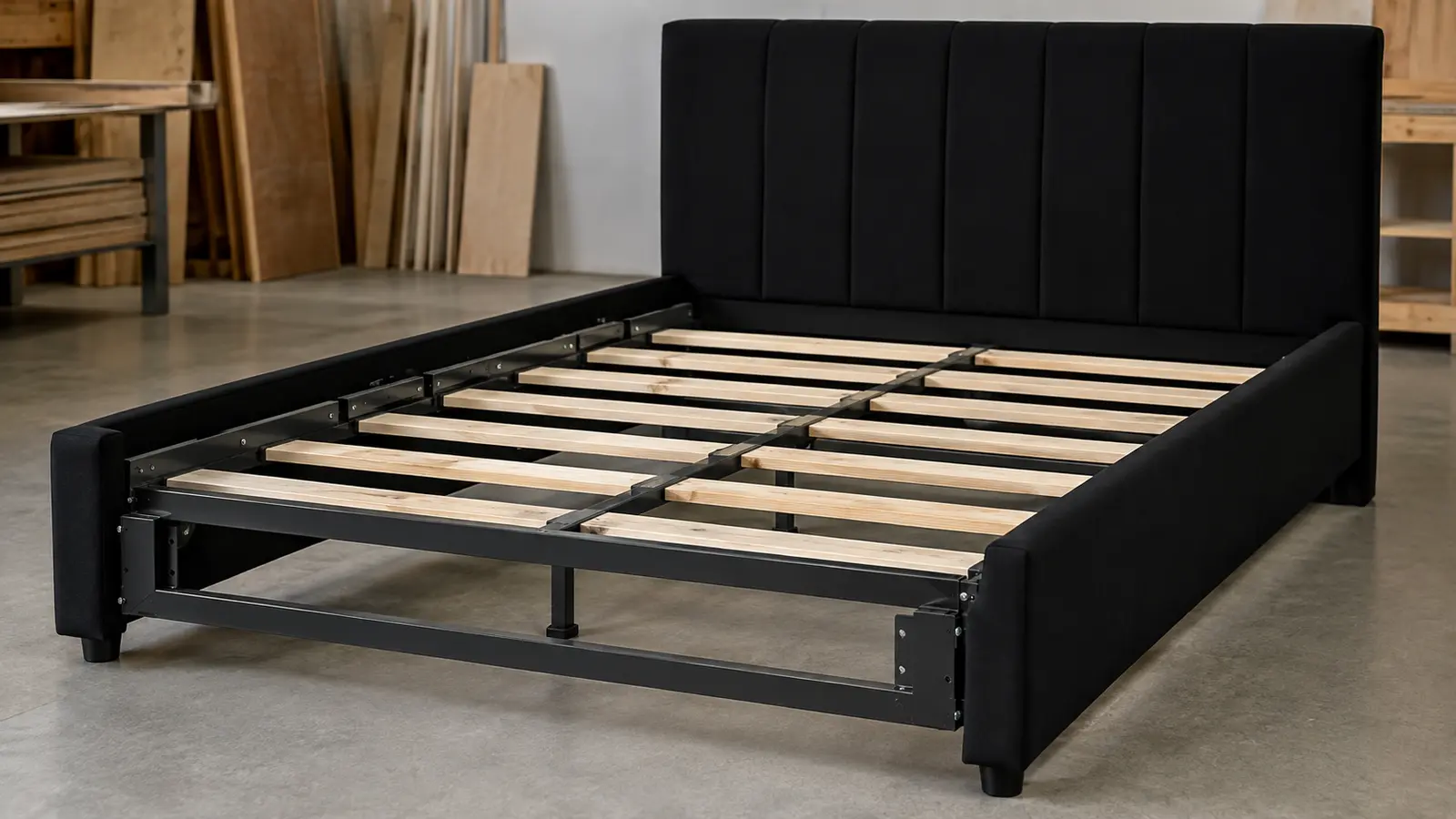
For a suspended appearance, define the viewing requirement. Does the frame need to look clear from the front only, from three sides or from a low side angle? Is a recessed support base acceptable? Can feet be visible behind an upholstered plinth? These questions determine what the supplier can propose.
The buyer should also establish target order context without turning an early estimate into a promise. Provide expected quantity range, destination, sales channel and packaging format so the supplier can assess manufacturing and logistics assumptions. Unconfirmed volume should be marked as an estimate.
How should fixed, target and supplier-proposed requirements be separated?
Custom projects move faster when requirements are classified:
| Requirement class | Typical examples | Supplier response |
| Fixed | Mattress interface, finished envelope, connection points, destination utilities where applicable | Confirm compliance or state a deviation |
| Target | Frame weight, packing volume, assembly time, visual setback, finish appearance | Propose a value and explain the trade-off |
| Supplier-proposed | Tube layout, hidden reinforcement, joint design, production-friendly bracket | Submit drawing, material and verification approach |
| Optional | Alternative slat system, folding feature, matching feet or accessory pack | Quote separately without changing the compliant base offer |
This classification prevents two opposite mistakes. An over-prescriptive RFQ can lock in an inefficient structure before the supplier reviews manufacturability. An under-defined RFQ allows every supplier to price a different product. The buyer should control interfaces and outcomes while leaving room for a documented structural proposal.
Which files form a usable custom bed frame RFQ package?
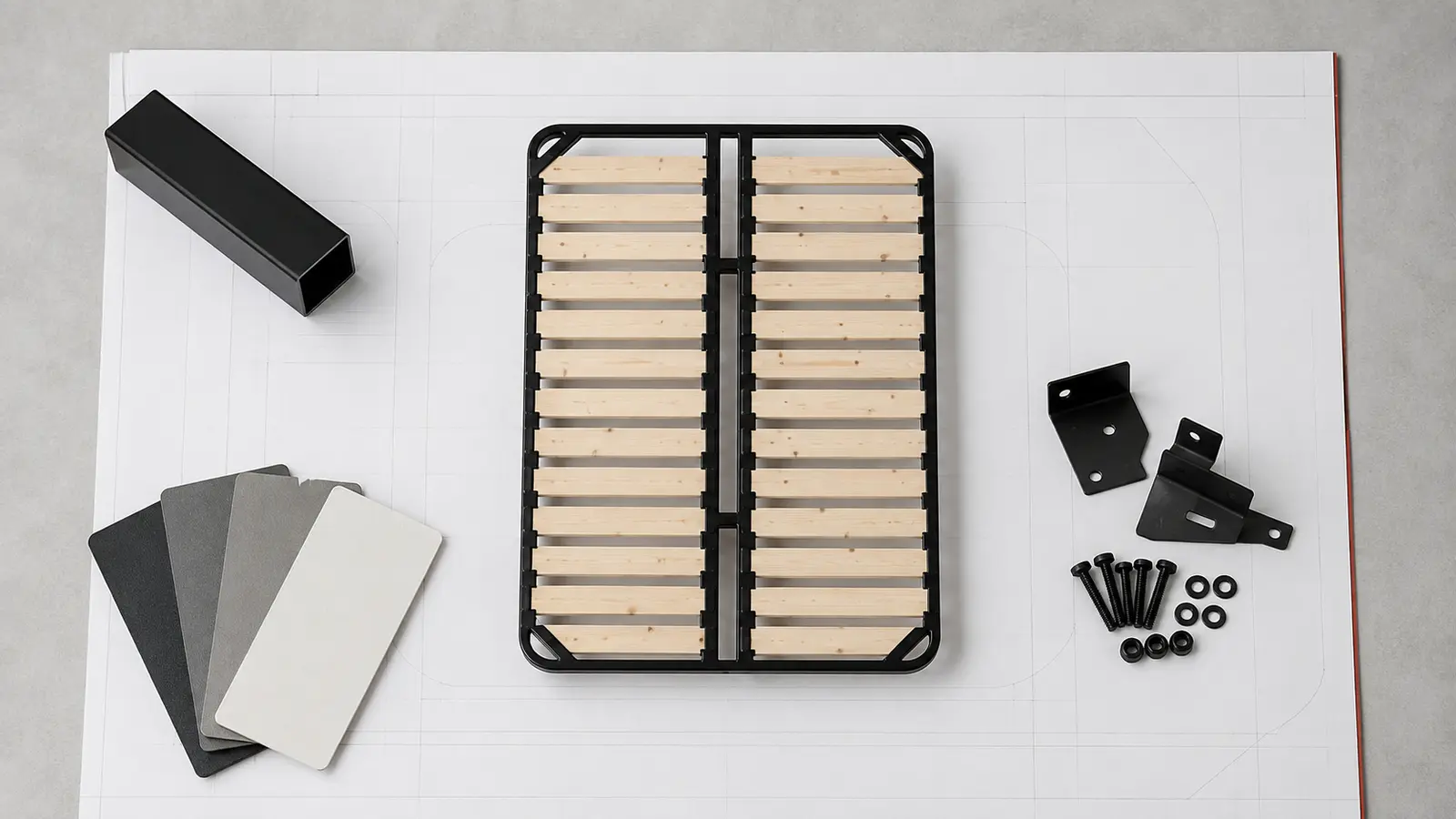
A complete package usually needs several views and schedules rather than one general drawing:
- Concept sheet: finished-bed renderings or photos with the intended visual effect and identified reference-only features.
- Envelope drawing: overall finished dimensions, mattress position, platform height and surrounding furniture boundaries.
- Interface drawing: holes, slots, brackets, mating panels, upholstery thickness and fastener access.
- Functional requirement sheet: support behavior, noise expectation, movement restrictions, assembly method and test boundary.
- Finish schedule: color reference, gloss, visible areas and acceptable comparison sample.
- Packing brief: carton limits, part grouping, hardware kit, labeling and protection requirements.
Each file should carry a revision and date. A PDF may control released dimensions, while editable files are supplied for engineering work. The RFQ should identify which document wins if the rendering, sample and drawing conflict. Without that hierarchy, a supplier may follow the most visually prominent reference rather than the approved requirement.
How should buyers describe the target floating frame?
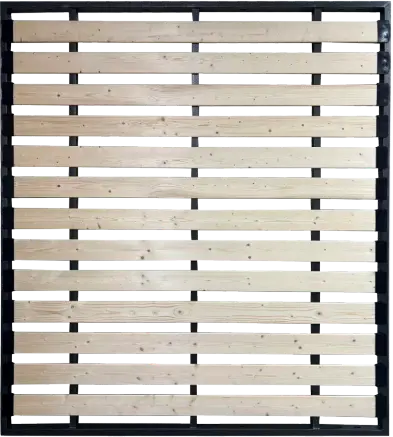
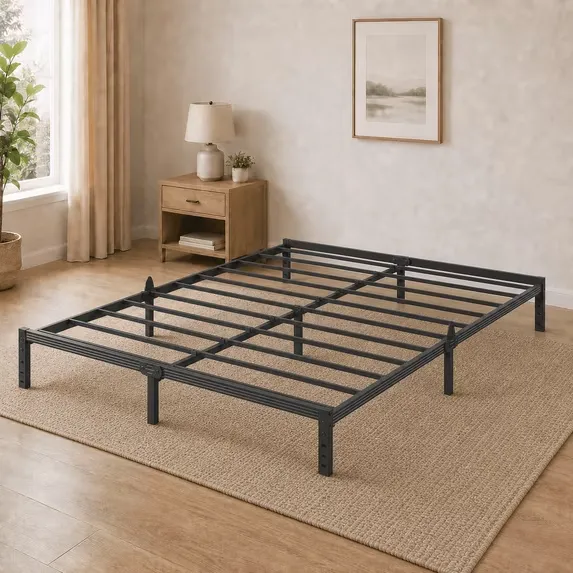
The Shilong floating bed frame is presented as a customizable metal skeleton for visible or hidden support layouts, with frame size, support structure, installation points, hardware and finish available for project review. The RFQ should translate those customization fields into questions that the supplier can answer.
Ask the supplier to mark the proposed hidden support footprint, primary load paths, cross-members, slat arrangement, feet, brackets and assembly joints. Require a side section and underside view. If the complete bed includes upholstery, wood panels or a mechanism, provide their connection geometry rather than asking the skeleton supplier to infer it from a photograph.
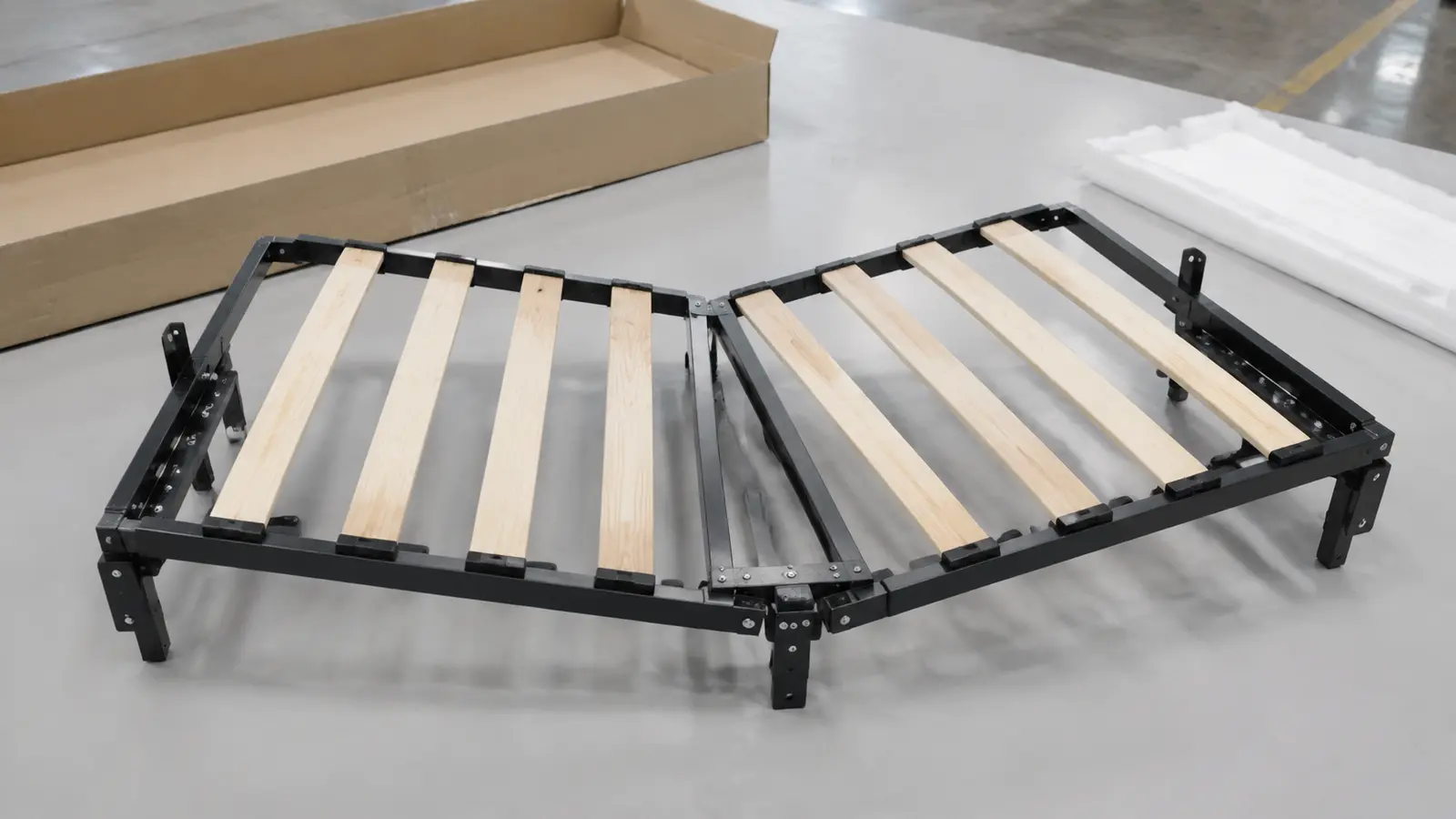
Do not combine “floating,” “folding,” “silent” and “easy to assemble” as unexplained feature requests. Each feature changes structure. If folding is required for packing, define the fold direction, locked condition, hinge location, maximum package size and assembly sequence. Shilong’s folding four-row bed frame illustrates a different structural route intended to combine support distribution with folding handling. It is a useful reference for defining a function, not a substitute for a project drawing.

What must be clear enough for a comparable quotation?
Every supplier should price the same revision and return the same response schedule. Require the quotation to identify included frame parts, slats, feet, brackets, connectors, fasteners, surface finish, sample work, inspection, labeling and packing. Optional alternatives should remain separate.
Ask suppliers to state assumptions and deviations beside the relevant RFQ line. A quotation marked “according to drawing” is incomplete if the supplier changed a tube, hole pattern or packing method during review. The marked-up drawing and commercial offer should describe the same configuration.
Quotation quantities also need a boundary. Tooling, fixtures, sample cost, unit packing and production price may depend on the assumed order. Buyers should request each item separately where relevant rather than compare one combined total. No production quantity, tooling life, lead time or packing efficiency should be treated as confirmed until the supplier states it for the reviewed design.
The published overview of one-stop custom bed frame manufacturing can help procurement map the design, production and delivery stages. The RFQ still needs explicit deliverables and approval gates for the current project.
How should the sample plan be written before the sample is made?
A sample is most valuable when the buyer knows what it must prove. Define whether the first sample is for structure, assembly, visual finish, packaging or all four. A finish-only sample should not be mistaken for structural approval; a handmade structure may not prove the repeatability of production fixtures.
The sample review should record:
- Drawing and bill-of-material revision used
- Measured critical dimensions and interface results
- Assembly steps, tools, time observations and access issues
- Stability, movement, noise and the agreed load-test condition
- Finish comparison and visible defect review
- Packing trial, component protection and hardware count
- Deviations accepted, rejected or requiring another sample
The article describing Shilong’s sample-review to batch-production workflow is relevant because sample approval should create controlled production inputs. The buyer should still specify the inspection records and acceptance authority required by its own project.
How should revisions be controlled after quotation?
Custom furniture designs often change after the first quotation. Upholstery thickness may increase, a headboard bracket may move or packaging limits may require a folding joint. Every change should receive a revision identifier, reason, owner and impact review.
The supplier should state whether a revision changes unit price, tooling, sample status, test needs, packing or schedule. The buyer should not approve changes through isolated chat images that never reach the controlled drawing set. A simple change log prevents the production team from building an earlier version while purchasing refers to a later quotation.
After sample approval, define the changes that require renewed approval. A finish supplier substitution, tube-section change, revised bracket or new fastener may affect appearance, assembly or performance even when the overall dimensions remain unchanged.
What packaging details belong in an engineering RFQ?
Packaging affects structure when the frame must fold, separate into modules or meet carton limits. Give the supplier the maximum package envelope, handling orientation, stacking expectation and distribution route. Identify surfaces that cannot rub and components that need edge or corner protection.
Specify whether hardware is packed by bed, by carton or in bulk. Each kit should correspond to the assembly instruction and include a counting method. Mixed frame sizes or mirrored components need clear identification. A packaging drawing should show part position, protection and carton quantity rather than only the outside box.
If the buyer wants a smaller package, ask the supplier to show the structural consequence. More joints can reduce package length but add hardware, assembly steps and possible movement points. The RFQ should expose this trade-off before the folding concept is approved.
Representative Scenario — Not a Claimed Customer Case
Business Background: A furniture brand wants a custom floating bed frame for an upholstered collection sold through flat-pack channels.
Problem: Three suppliers quote from the same rendering, but one assumes a welded one-piece skeleton, one proposes a folding frame and one excludes the wood slats and hardware. The prices cannot be compared.
Cause: The RFQ shows the finished appearance but does not classify packaging limits, assembly responsibility, support components or included parts.
Solution: The brand releases an envelope and interface drawing, identifies the carton target as a design requirement, lists every included component and asks suppliers to propose the hidden support structure. Fixed requirements, optional alternatives and deviations are returned in one schedule.
Buyer Decision Value: Engineering can compare structural proposals while procurement compares a common commercial scope. The selected sample has clear objectives instead of becoming the first time the project requirements are discussed.
What should buyers send with the RFQ?
- Finished-bed concept and intended application
- Mattress, bed-body and headboard dimensions
- Top, side, section and underside drawings
- Fixed interfaces and supplier-proposed design areas
- Support, movement, noise and test requirements
- Material and finish expectations
- Assembly and packaging constraints
- Required sample, inspection and documentation outputs
- Estimated quantity, destination and requested trade boundary
Send the package through the Shilong custom bed frame enquiry page and request a marked-up engineering response before comparing final prices. The supplier should identify missing information, assumptions and proposed changes rather than quoting from an unqualified reference image.
Frequently Asked Questions
Can a custom bed frame be quoted from a photograph?
A photograph can start a concept discussion, but it does not define hidden supports, dimensions, interfaces, materials, assembly or packing. A reliable quotation needs a controlled requirement package.
Which requirements should buyers keep fixed?
Keep finished-envelope constraints, mattress and bed-body interfaces, required functions, acceptance boundaries and market-specific needs fixed. Allow the supplier to propose internal structure where appropriate.
Should a buyer provide CAD files or PDF drawings?
Both may be useful. Identify the controlled PDF revision for approval and provide editable files for engineering collaboration. State which file takes precedence if information conflicts.
What should be separated in a custom quotation?
Separate base frame, optional structure, slats, hardware, finish, tooling or fixtures, samples, inspection, packing, spare components and delivery scope where these apply.
When is a folding structure appropriate?
A folding design may help when package dimensions and handling are critical. Buyers must also review added joints, hardware, assembly steps, movement risk and locked-condition performance.
What does a sample approval need to record?
Record the drawing revision, materials, critical measurements, assembly result, test condition, finish, packing trial and every accepted deviation. Photographs alone are not a complete approval record.
Which changes require a new sample?
The rule should be agreed before production. Changes to load paths, materials, joints, interfaces, finish systems or packaging that can affect function or appearance may require renewed review or testing.