Which Floating Bed Frame Specifications Should Buyers Freeze Before Production?
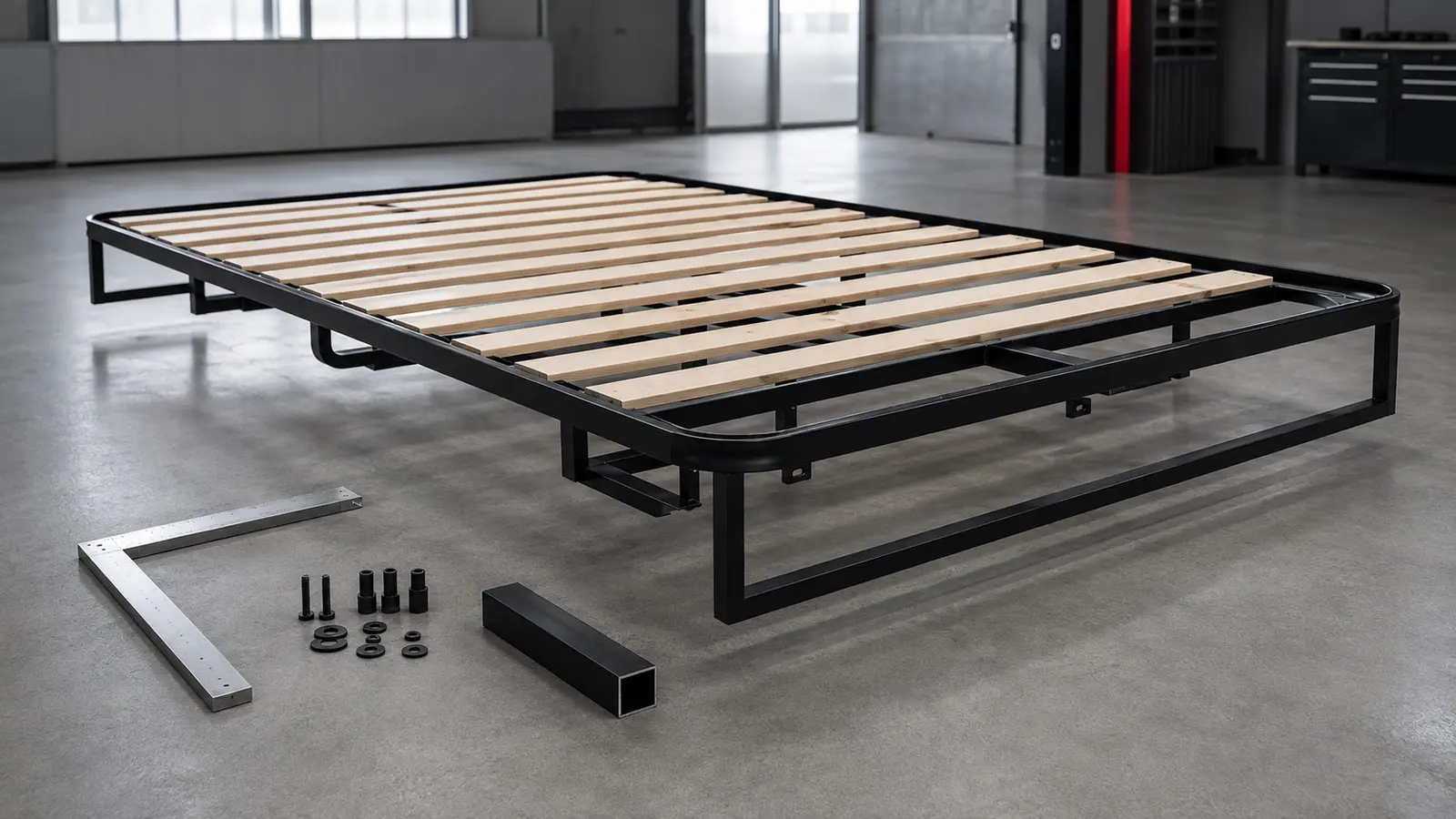
Direct Answer: Before producing a floating bed frame for full size bed applications, freeze the mattress interface, finished-bed dimensions, hidden support geometry, load path, slat layout, connection points, tolerances, finish and inspection method. “Full size” alone is not a manufacturing specification. The approved drawing must show how the metal skeleton fits the buyer’s complete bed structure.
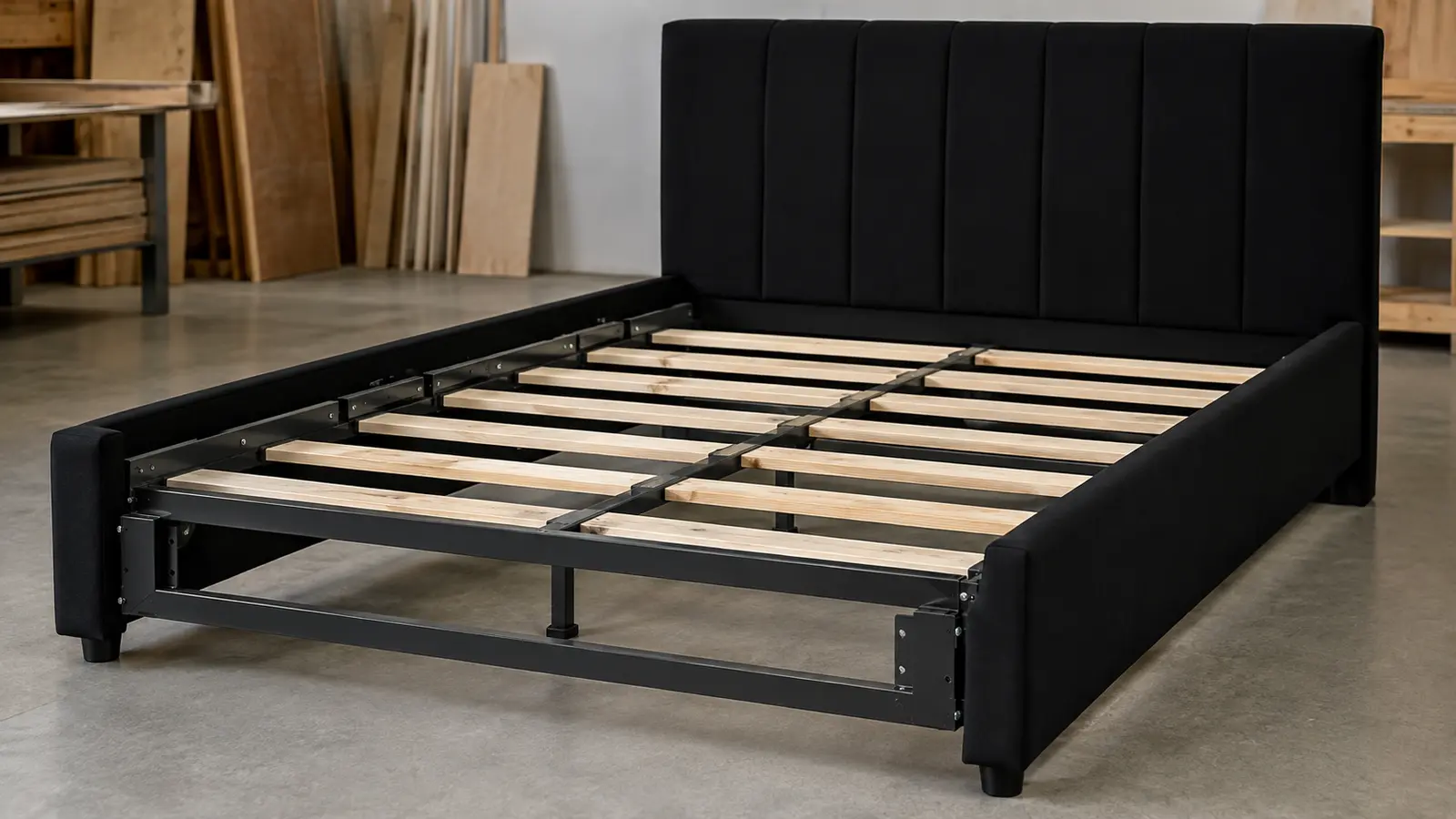
A floating or suspended bed achieves its visual effect by moving structural support away from the visible perimeter. That design decision changes more than appearance. The concealed base, mattress platform, side rails, upholstery and floor contact must work as one system. A frame can match the nominal mattress category yet still sit too high, expose the support base, interfere with upholstery or create an unstable assembly.
Furniture buyers should therefore treat size words as search and sales terminology, then convert them into controlled dimensions for production. The following specification sequence applies to the metal and steel-wood bed frame range, with special attention to a hidden-support structure.
Why is “full size” not enough for a production drawing?
A bed frame for full size bed use may be sold into markets with different nominal mattress conventions. Even within one market, a mattress, upholstered surround and removable cover can create different clearance needs. The supplier should not infer the finished opening from a keyword or retail label.
Freeze four separate dimensional layers:
- Mattress data: actual mattress length, width, thickness, corner radius and expected dimensional variation.
- Support platform: usable support length and width, slat coverage and any required mattress stop.
- Bed-body interface: clear opening inside the upholstered or wooden surround, mounting height and connection faces.
- Finished furniture envelope: overall length, width, height and required visual gaps.
These dimensions must not be collapsed into one number. If the platform is made exactly equal to the nominal mattress size, the mattress may bind against the surround or leave an unintended gap. If the surrounding upholstery thickness changes after the metal frame drawing is approved, the assembly can fail even though the skeleton itself remains within tolerance.
Which datums should control the dimensional stack?
A drawing should identify where dimensions begin. Useful datums may be the finished centerline, the inside face of a side rail, the top surface of the mattress platform or the floor-contact plane. Without a shared datum, suppliers can measure the same frame from different faces and report conflicting results.
The most important dimension is not always the overall frame width. Buyers may need tighter control over:
- Distance between the frame and the inside bed-body walls
- Height from the floor to the mattress-support plane
- Position of cross-members relative to seams, drawers or mechanisms
- Hole location from a repeatable metal edge rather than an upholstered surface
- Diagonal difference that indicates whether the frame is square
Define which dimensions are critical, which are reference-only and how each one will be measured. A tolerance without a measurement datum creates an inspection argument rather than a quality requirement.
How should the hidden support geometry be specified?
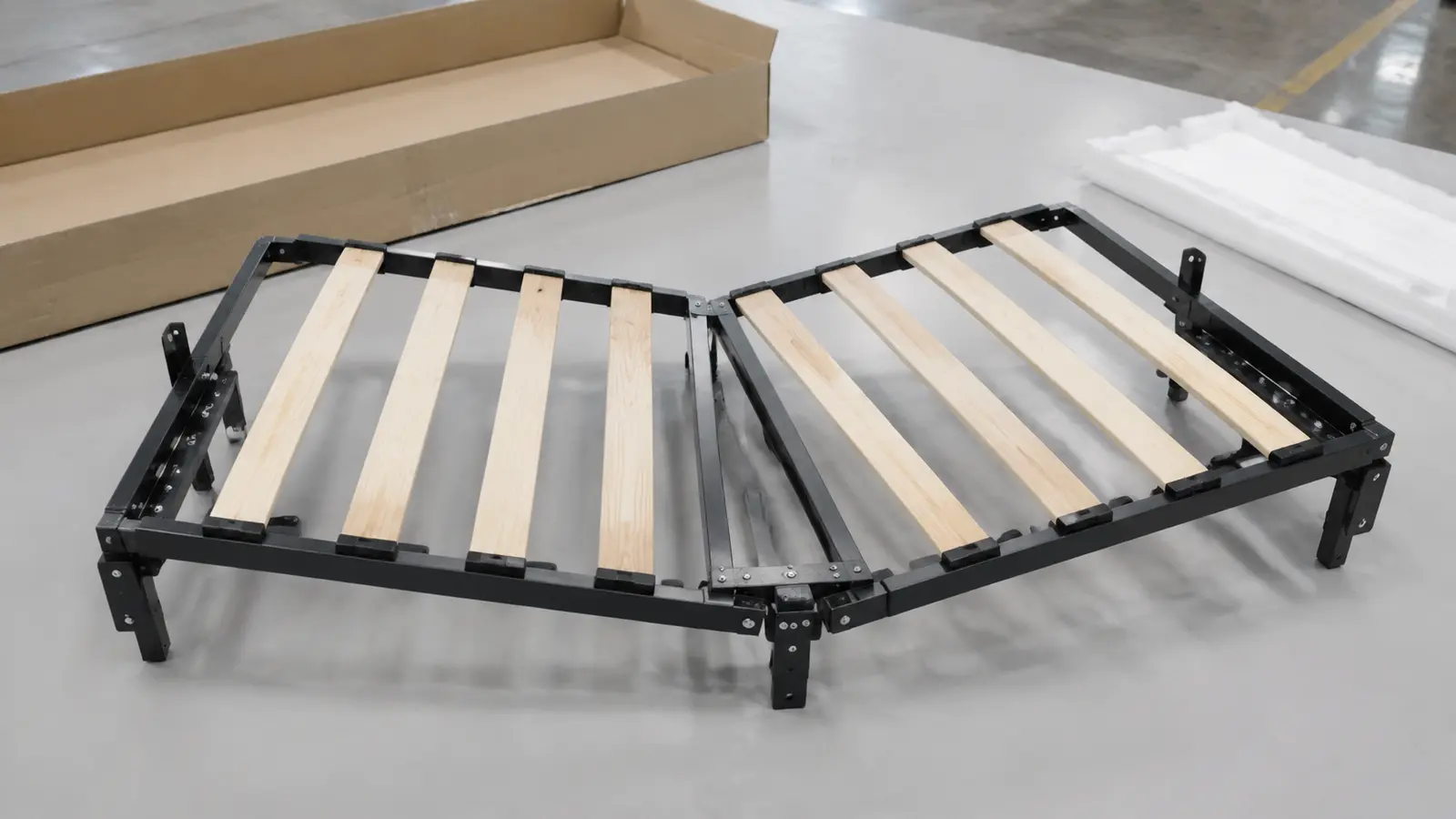
Shilong’s floating bed frame is described as a suspended metal skeleton that can be adapted to visible or hidden support layouts. For a buyer, that adaptability means the hidden base cannot remain an undefined concept. The drawing should show its footprint, setback from every visible edge, height, connection to the upper skeleton and floor-contact locations.
The base needs enough visual setback to maintain the floating appearance from normal viewing angles, but excessive setback can increase leverage on the supporting structure. Floor conditions also matter. Support concentrated on a small footprint may behave differently on a hard level floor, carpet or an uneven surface.
Buyers should specify whether adjustable feet, fixed feet, protective pads or anchoring provisions are expected. The supplier should confirm how the frame will be leveled and how the hidden support remains accessible during assembly. Do not allow a rendering to replace the underside drawing; the critical load-bearing parts may not be visible in the finished image.
What should be frozen in the load path and slat layout?
The mattress load should travel through the slats or support deck, cross-members, perimeter or center structure, hidden base and floor contacts. Every transition needs a defined component and connection. A visually clean perimeter does not remove the need for center support or local reinforcement.
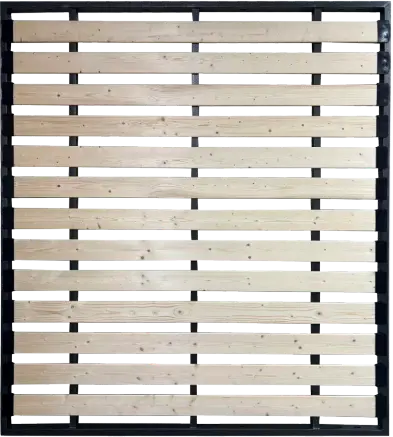
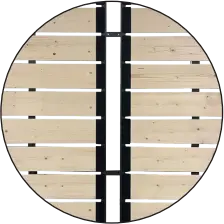
Freeze the number and orientation of major support members, slat material, slat quantity, spacing pattern, end support, center support and retention method. If wood slats are used, specify the accepted wood and surface condition in the order documents rather than relying on a product photograph. If all-metal support is required, define the contact surface and the measures used to reduce movement or noise.
A steel-wood pine bed support frame uses a different visible support approach from a suspended frame. The alternative is useful as a reference when the buyer prioritizes broad slat support or a conventional bed-base interface over the floating effect. It should not be treated as equivalent without reviewing the complete bed design.
Load claims require an agreed test boundary. The buyer should define the assembled bed condition, load placement, duration, movement or impact sequence, floor surface and pass criteria. A number without the test setup cannot be compared reliably between suppliers.
Which interfaces must appear on the approved drawing?
The skeleton rarely operates alone. It may connect to an upholstered side surround, headboard, footboard, wood panels, lifting mechanism or decorative shell. Each interface should be dimensioned from a stable metal datum.
Confirm hole diameter and shape, hole position, slot direction, bracket orientation, thread type, fastener access, tool clearance and assembly sequence. Also confirm whether fasteners are supplied with the frame or by the furniture assembler. Hole patterns copied from an old sample can create trouble when the new upholstery or panel thickness changes.
The existing article on hardware matching for functional bed frames is relevant when brackets, feet, connectors or moving components need to be evaluated with the skeleton. The interface drawing should identify both sides of every connection, not only the metal part.
How should materials, joints and finish be controlled?
“Metal bed frame” does not define section shape, wall thickness, grade, joint design or finish. The released bill of materials should identify the approved tube or profile dimensions, relevant material designation, slat material, brackets, feet and fasteners. If a supplier proposes an equivalent material or section, the change should be reviewed against weight, stiffness, joining and corrosion requirements.
Weld requirements should focus on function and acceptance. Mark which joints are welded, bolted, riveted or designed to fold. Define unacceptable conditions such as sharp projections, incomplete attachment at specified joints, interference, distortion or visible finish defects in agreed areas. Demanding a cosmetically ground weld everywhere may add cost without improving concealed structural joints; leaving visible joints undefined can create inconsistent appearance.
For a coated frame, freeze the color reference, gloss expectation, visible surfaces, permitted touch-up area and corrosion-protection boundary. Surface samples should be assessed under agreed lighting and on the same substrate and preparation route intended for production.
Which tolerances and acceptance checks belong in the specification?
| Control item | What to define before production | How to verify |
| Overall frame fit | Finished dimensions and measurement datums | Dimension report from identified frame edges |
| Squareness | Permitted diagonal difference or geometric requirement | Compare both diagonals on a supported level frame |
| Support plane | Flatness or height relationship at key contact points | Check on the defined assembly surface |
| Hidden-base location | Setback, footprint and floor-contact positions | Measure against the approved underside drawing |
| Connection interfaces | Hole, slot, bracket and thread locations | Gauge or mating-part assembly check |
| Slat layout | Quantity, spacing, end support and retention | Visual and dimensional inspection |
| Finish | Color, gloss, coverage and visible defect boundary | Approved sample and defined viewing conditions |
Critical dimensions deserve a practical tolerance based on the assembly, not the smallest number a drawing tool can display. Overly tight tolerances raise cost and rejection risk. Loose interface tolerances shift fitting work to the furniture assembly line. The buyer should identify which features truly affect mattress fit, appearance, stability or interchangeability.
How should the approved sample become a production standard?
A sample approval should produce a controlled record: drawing revision, bill of materials, finish sample, hardware list, assembly result, dimension report, test condition and approved deviations. Photographs help, but they cannot replace measurements or revision identification.
Before batch production, confirm which sample details are mandatory and which may be optimized. A supplier may improve a hidden bracket or manufacturing sequence without changing function, but that decision needs a change-control rule. The article on common B2B bed frame sourcing problems provides additional context on why unclear drawings, hardware mismatches and sample-to-batch differences create disputes.
Packaging also belongs in the frozen specification when parts can rub, shift or become mixed between sizes. Identify each frame size and revision, protect coated contact points, separate hardware and provide a packing layout that the receiving team can verify.
Representative Scenario — Not a Claimed Customer Case
Business Background: An upholstered-bed brand is developing a full-size floating bed for flat-pack distribution.
Problem: The prototype supports the mattress, but the hidden base becomes visible from the foot of the bed. Two side-rail holes also miss the upholstered surround during assembly.
Cause: The buyer approved only the top-view frame dimensions. The drawing did not freeze the viewing setback, finished upholstery thickness, hole datum or assembly clearance.
Solution: The team releases an underside view, section through the finished bed, interface drawing and assembly gauge. The revised specification distinguishes mattress-platform size from the finished bed-body opening and records the hidden-base footprint.
Buyer Decision Value: Production inspection can now measure the features that control appearance and assembly rather than approving the frame solely by its nominal full-size label.
What should buyers submit for specification review?
- Actual mattress dimensions and intended finished-bed envelope
- Bed-body, upholstery and headboard interface drawings
- Top, side, section and underside views with clear datums
- Hidden support concept and acceptable visibility boundary
- Slat, cross-member, foot, bracket and hardware requirements
- Material, joint and finish requirements
- Critical tolerances and measurement methods
- Assembly sequence, test boundary and packaging expectations
Send the drawing set and application details through the Shilong project enquiry page. Ask for a marked-up drawing that shows assumptions, proposed changes and unresolved interfaces before requesting a production quotation.
Frequently Asked Questions
Is a full-size mattress label enough to order a bed frame?
No. Provide the actual mattress dimensions, tolerance, corner shape and required clearance. Also distinguish the mattress platform from the finished bed-body opening and exterior size.
What makes a floating bed frame look suspended?
The main support is set back from the visible perimeter so it is less apparent from normal viewing angles. The setback, base footprint, bed height and surrounding furniture geometry must be evaluated together.
Which drawing view is most often missed?
The underside view is frequently critical because it shows the hidden base, feet, floor contacts and connections to the upper skeleton. Section views are also necessary to explain height and upholstery relationships.
Should every bed-frame dimension have the same tolerance?
No. Interface holes, support height and squareness may need different control from non-critical concealed dimensions. Tolerances should reflect assembly, interchangeability, appearance and inspection capability.
How should a buyer define a load requirement?
State the assembled condition, load positions, duration, movement or impact sequence, floor surface and pass criteria. A load value without a test setup is incomplete.
Can the supplier change hidden components after sample approval?
Only under the agreed change-control rule. The buyer should define which material, geometry, interface and functional changes require notification, renewed testing or a new sample approval.
What should be checked before batch shipment?
Verify revision identity, critical dimensions, interfaces, slat layout, finish, assembly, hardware quantity, labeling and packing. Inspection points should trace directly to the approved specification.