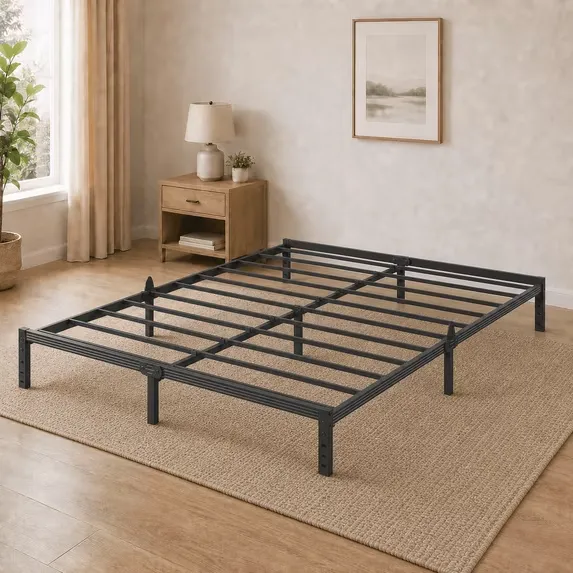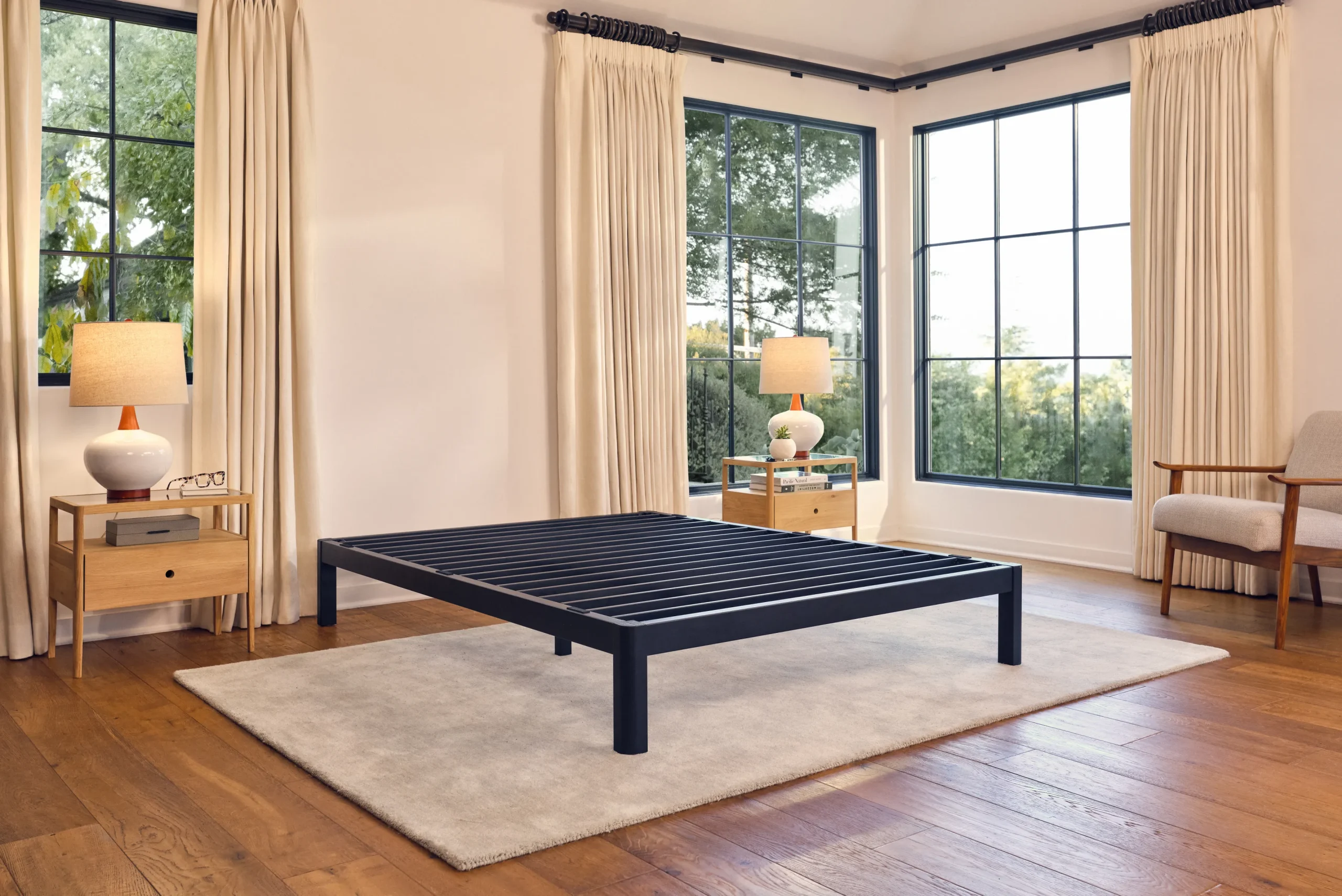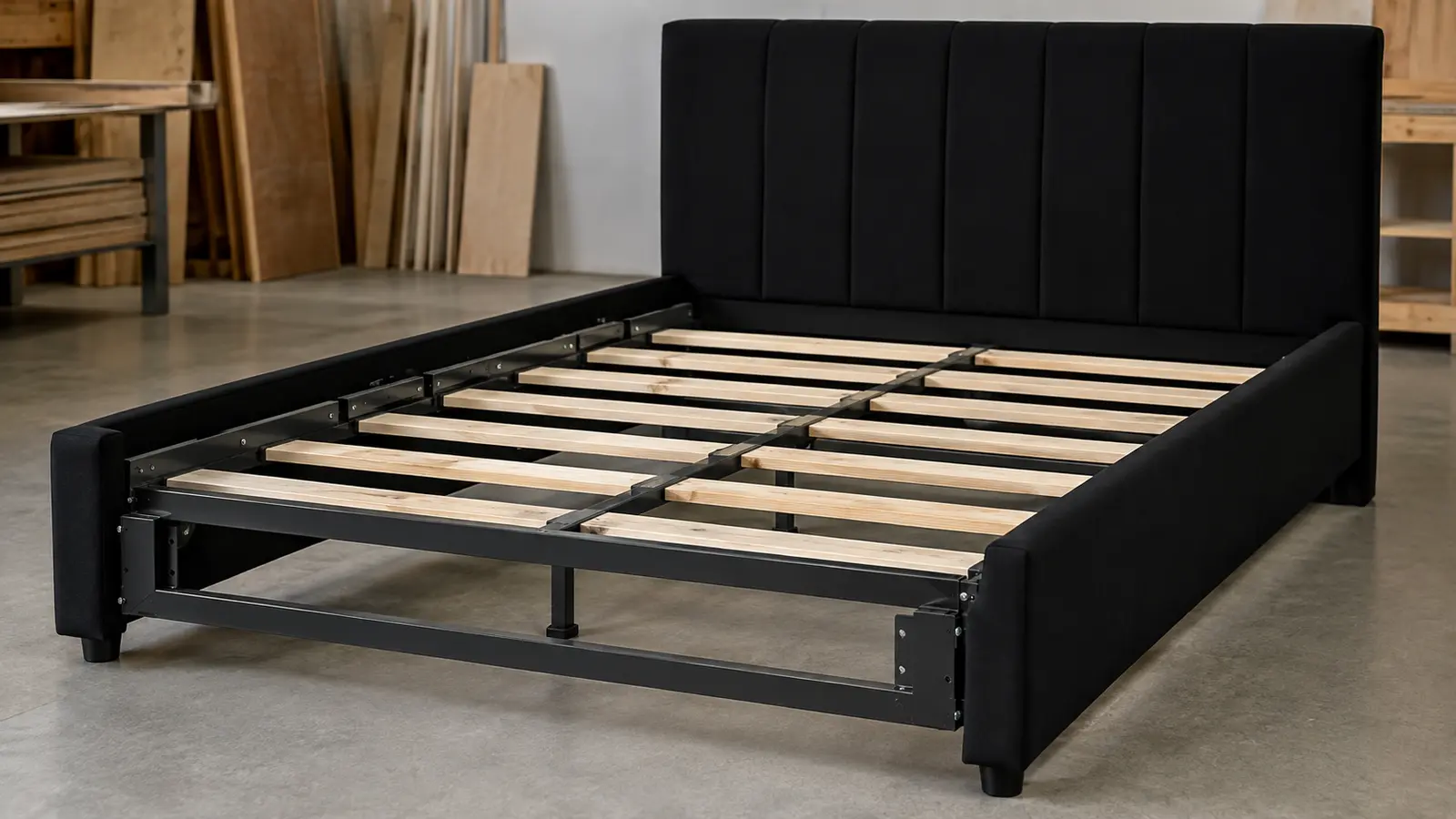
Which Folding Double Row Bed Frame Specifications Should Buyers Freeze Before an RFQ?
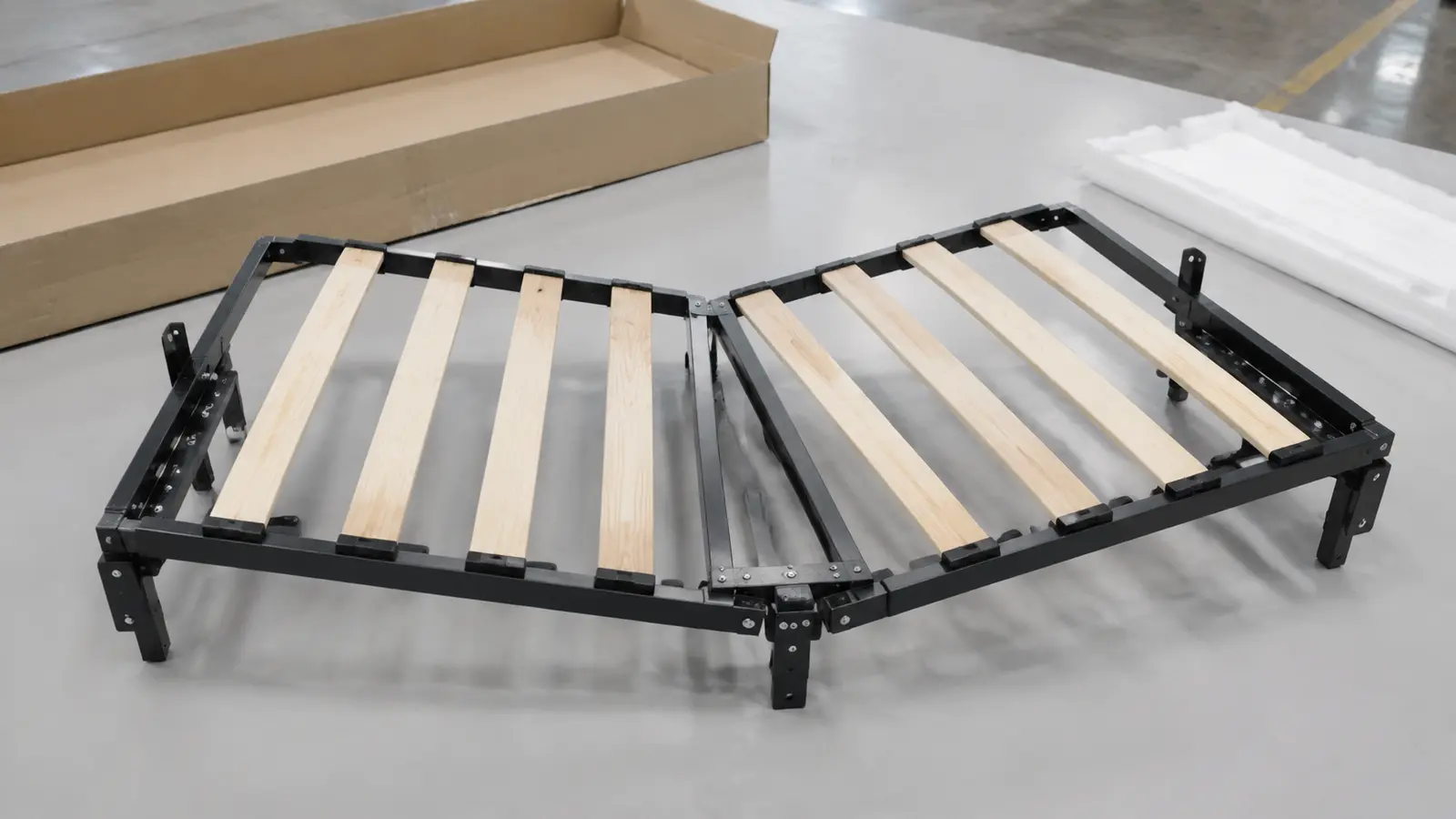
Before requesting a quotation, buyers should freeze the folding double row bed frame’s open and folded dimensions, finished-bed interface, double-row layout, wood-slat quantity and spacing, folding angle, hinge and connector positions, feet and bracket arrangement, hardware scope, surface treatment, packaging orientation, and acceptance evidence. A request described as a “storage bed frame queen size” still needs a precise scope: a folding support frame does not automatically include drawers, a lift-up mechanism, or a universally sized queen platform. Those functions and dimensions must be confirmed in the project drawing.
An RFQ that says only “queen folding frame” leaves the most expensive questions unanswered. Suppliers may quote different footprints, hardware scopes, hinge designs, or packing methods while each believes it has met the request. A specification freeze makes the quotations comparable and protects the buyer from redesign after sampling.
Define What the Product Is—and What It Is Not
A folding double row bed frame is a support component designed around a double-row metal structure, wood slats, foldable geometry, and practical assembly or storage. It may be installed in upholstered, soft, solid-wood, or customized bed systems. It should not be described as a complete storage bed unless the quoted scope actually includes the relevant storage function.
“Storage bed” can mean several different products in the market:
- a bed with drawers below the sleeping platform;
- a lift-up platform with gas springs or other lifting hardware;
- a bed with open compartments or a cabinet base; or
- a bed whose support frame folds for transport or temporary storage.
These descriptions are not interchangeable. If the finished bed has drawers or a lift system, the buyer must provide the mechanism, travel path, mounting zones, and obstruction envelope. The folding support frame then has to be designed around those interfaces. If the only folding function is for compact shipment and assembly, the RFQ should say that directly.
Freeze Size With a Measurement Schedule
Buyers can first review the available bed frame configurations, but a product-family page cannot define the project size. “Queen” varies by market and by the layer being measured. A mattress label does not identify the clear opening, outer upholstered dimensions, or support-frame envelope.
Create a measurement schedule that names every dimension and its reference points. At minimum, it should distinguish:
| Dimension group | What to freeze | Why it affects the quote |
| Open frame | Overall length, width, height, squareness, and support-plane level | Controls fit and material layout |
| Folded frame | Folded length, width, thickness, and permitted protrusions | Controls carton, handling, and storage space |
| Bed interface | Rail, headboard, footboard, bracket, and foot positions | Controls connection geometry and assembly |
| Slat field | Slat quantity, width, thickness, spacing, and end support | Controls mattress support and component count |
| Folding system | Pivot axis, folding angle, clearance, connector locations, and stop position | Controls hardware and mechanical feasibility |
| Optional storage interface | Drawer or lift-mechanism envelope, mounting points, and travel path | Prevents interference with the finished bed function |
Current international measurement guidance for adult beds and mattresses emphasizes defined measurement methods and recommended fit tolerances between components. Buyers can use the same discipline for a custom project: specify the measured part, datum, tool, and tolerance rather than relying on a regional size name.
Lock the Double-Row Layout and Folding Geometry

The double-row description needs a drawing. The supplier must know how the two rows are arranged, how the center region is supported, where the frame separates or folds, and whether both halves carry the same interfaces. A center line that appears symmetrical in a sketch may not remain symmetrical after brackets, upholstery clearances, or under-bed features are added.
The folding double row bed frame can be customized for size, double-row layout, slat quantity, folding angle, connector position, feet, and brackets. For an RFQ, each chosen option should be converted into a dimension or controlled feature. Avoid phrases such as “standard hinge position” or “normal slat spacing” unless both parties have identified the same drawing revision.
Folding geometry should be reviewed in three states:
- fully open: the frame must reach its intended support position and connect to the bed system;
- during movement: components need clearance from slats, brackets, hardware, upholstery, and optional storage mechanisms; and
- fully folded: the frame must fit the agreed packaging or storage envelope without uncontrolled contact or protrusion.
If the folding joint has a transport lock, assembly fastener, stop, or removable connector, identify who supplies it and when it is installed. The hardware list should match the assembly instructions and the sample. An omitted fastener may appear inexpensive but can interrupt the buyer’s packing line or installation process.
Separate Material Specifications From Functional Acceptance
Material descriptions are necessary but cannot replace functional approval. The RFQ should state the steel structure, wood-slat requirements, surface treatment, and hardware scope at the level supported by the buyer’s drawing and market needs. It should then define how the assembled sample will be judged.
For pine slats, freeze dimensions, quantity, spacing, retention, surface expectations, and the agreed condition for inspection. Because wood responds to moisture, a close fit that works in one environment may change during transport or service. The buyer and supplier should agree on inspection timing and allowable variation rather than copying a moisture value from an unrelated project.
For steel and folding hardware, record member positions, joint geometry, hole locations, fasteners, feet, brackets, and finish. If the finished bed has a lift-up function, the lifting system introduces loads and motion that are outside a simple folding-frame description. The complete assembly—not just the support component—needs an appropriate validation plan.
Functional acceptance can include dimensional checks, opening and folding operation, connection fit, assembly-tool access, slat retention, support-plane level, noise observations, and project-specific strength or durability testing. The buyer should identify the applicable finished-product requirements for the destination market. A supplier should not be expected to infer the legal or retailer test program from the words “queen storage bed.”
Convert Packaging From an Estimate Into a Controlled Output
Folding can reduce the shipping envelope, but the saving cannot be confirmed from frame geometry alone. The packed result depends on folded dimensions, protective materials, hardware placement, carton strength, quantity per carton, pallet pattern, handling method, and acceptable surface contact.
For quotation comparison, ask each supplier to return the same packaging data: packed configuration, carton outside dimensions, gross and net weight basis, contents per package, hardware location, and pallet assumption if applicable. Final values should be approved from a representative packed sample.
Where distribution performance is important, the packaging plan should reflect the actual shipping route and hazards. Laboratory distribution tests use sequences that can represent handling, compression, vibration, and shock, but a standard name alone does not choose the correct test level or acceptance criteria. The buyer should define the route, unit load, handling method, and damage limits before approving the plan.
Use a Two-Way RFQ Return Sheet
A strong RFQ does more than list buyer requirements. It also tells the supplier what to return, making omissions visible before purchase.
| Buyer provides | Supplier confirms or returns | Acceptance basis |
| Finished-bed and interface drawings | Marked frame drawing and exclusions | Approved revision |
| Open and folded envelopes | Measured dimensions and tolerance proposal | Sample measurement record |
| Slat and support requirements | Slat layout, retention, feet, and brackets | Layout drawing and sample |
| Folding purpose and assembly sequence | Joint details, hardware list, and instructions | Pilot assembly |
| Packaging and shipping route | Packing proposal and packed data | Approved packed sample or agreed test |
| Destination requirements | Available documents and declared boundaries | Buyer-approved compliance plan |
This return sheet prevents a low headline price from hiding a narrower hardware, finish, packaging, or verification scope.
Keep the commercial comparison on the same revision. If a folding angle, connector position, slat layout, or packaging limit changes during clarification, request a revised marked drawing and quotation together. Otherwise, the buyer may approve a technically updated sample while the purchase order still reflects the earlier scope. Revision control is especially important when several teams handle furniture design, sourcing, packaging, and installation.
Frequently Asked Questions
Does a folding double row bed frame automatically make a storage bed?
No. Folding may support compact shipping, assembly, or temporary storage of the frame itself. Drawers, lift-up platforms, gas springs, compartments, and their hardware are separate functions that must be identified in the product scope and drawings.
Is queen size the same in every market?
No. Regional mattress labels and actual product dimensions can differ. The RFQ should state the mattress dimensions, required clearance, frame envelope, and finished-bed dimensions with named reference points.
Which dimensions should be checked when the frame is folded?
Check the overall folded length, width, thickness, joint or hardware protrusions, protected contact points, and the locations of loose parts. These dimensions should be compared with the carton and handling limits, not only with warehouse space.
Can packaging savings be guaranteed before a packed sample is made?
Only as a preliminary estimate. Final packed volume and protection depend on hardware placement, protective materials, carton construction, pallet pattern, and handling requirements. A representative packed sample provides the better approval basis.
Is a component strength check enough for the finished storage bed?
No. The completed bed may include upholstery, rails, drawers, lifting hardware, feet, and other interfaces that change its behavior. Component checks are useful, but finished-product validation should reflect the destination market and the full assembly.
Prepare the RFQ for Technical Review
Before sending the inquiry, attach the finished-bed drawing, open and folded frame envelopes, slat layout, folding purpose, joint and connector details, feet and bracket locations, surface-treatment requirement, hardware scope, optional storage-mechanism interfaces, packaging limits, destination, quantity, sampling requirement, and acceptance plan. State which files are preliminary and which are frozen.
Shilong supports customized bed support frames based on drawings, samples, and project requirements. Buyers can submit the specification package through the custom bed frame RFQ form. Asking the supplier to return a marked drawing, hardware boundary, packing proposal, and sample evidence plan will produce a more comparable quotation than sending a size name and product photo alone.
Conclusion
A folding double row bed frame RFQ should freeze geometry, interfaces, movement, materials, hardware, packaging, and acceptance as separate but connected decisions. The most important safeguard is clear scope: “storage bed frame queen size” must not be allowed to imply an unquoted storage mechanism or an undefined regional dimension. When both parties work from the same drawing revision and return sheet, pricing becomes more comparable and sample approval becomes faster.