Which Bed Frame Dimensions Should Buyers Define for a 10CM Silent Bed Frame RFQ?
The most important bed frame dimensions question for a 10CM board wide silent bed frame is not the general mattress-size name. It is the exact meaning of “10CM” in the buyer’s drawing. The RFQ should identify the part, the two measurement faces, the unit, the datum, the permitted variation and the installed condition. It should also show how that feature relates to the support slats, connector positions, hardware and surrounding bed body.
Without those definitions, two suppliers may read the same product name in different ways. One may treat 10CM as the width of a named support member, while another may assume it describes the frame height, rail depth or another vertical dimension. The quotations may therefore look similar while covering different structures. The correct procurement step is to turn the product wording into one marked, inspectable dimension before price or sampling is discussed.
Buyers can first review Shilong’s bed frame product range to confirm the relevant structural direction. The selected product then needs a project-specific drawing rather than a category name alone.
The First RFQ Question: What Does “10CM” Identify?
The wording “10CM board wide” points to a board- or member-related width, but the product name alone does not identify the controlled part or measurement faces. The buyer should ask the supplier to mark the feature on a plan view or cross-section and give it a clear drawing name.
It should not be assumed to mean the overall frame height, side-member depth, mattress recess, under-bed clearance or support-plane height. These dimensions control different interfaces and must be inspected from different datums. Using one phrase for several possible measurements creates avoidable disagreement during drawing review and sample approval.
| Possible Interpretation | Why It Is Not Interchangeable | Required Supplier Response | Buyer Decision |
|---|---|---|---|
| Width of a named board or support member | Controls the size and position of a specific component | Mark the component and the two measurement faces on the drawing | Continue after the part, datum and tolerance are confirmed |
| Overall frame height | Controls the complete vertical envelope rather than one member | Rename the dimension and show the top and bottom reference planes | Do not accept “10CM” as a substitute |
| Side-member or rail depth | Affects the visible or structural section and its interfaces | Provide a cross-section with the actual member identified | Review as a separate controlled dimension |
| Mattress recess | Depends on the relationship between the rail top and support surface | Show both points in one side section | Use a dedicated recess dimension |
| Under-bed clearance | Is measured from the floor to a defined lower part of the bed | Name the lowest controlling component and installed floor plane | Replace the product phrase with a clearance requirement |
| Support-plane height | Controls mattress position and the interface with the finished bed | Measure from the agreed floor plane to the support surface | Specify independently from the 10CM member width |
A quotation should be held when the supplier repeats “10CM” without showing what is measured. It can move forward when the drawing names the component, marks the faces, states the actual offered value and explains any difference from the buyer’s requirement.
Use One Marked Drawing to Control the 10CM Relationship
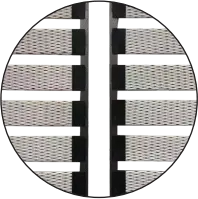
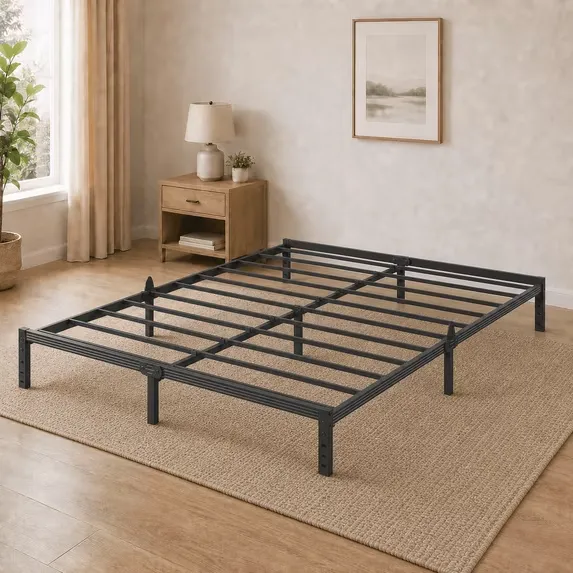
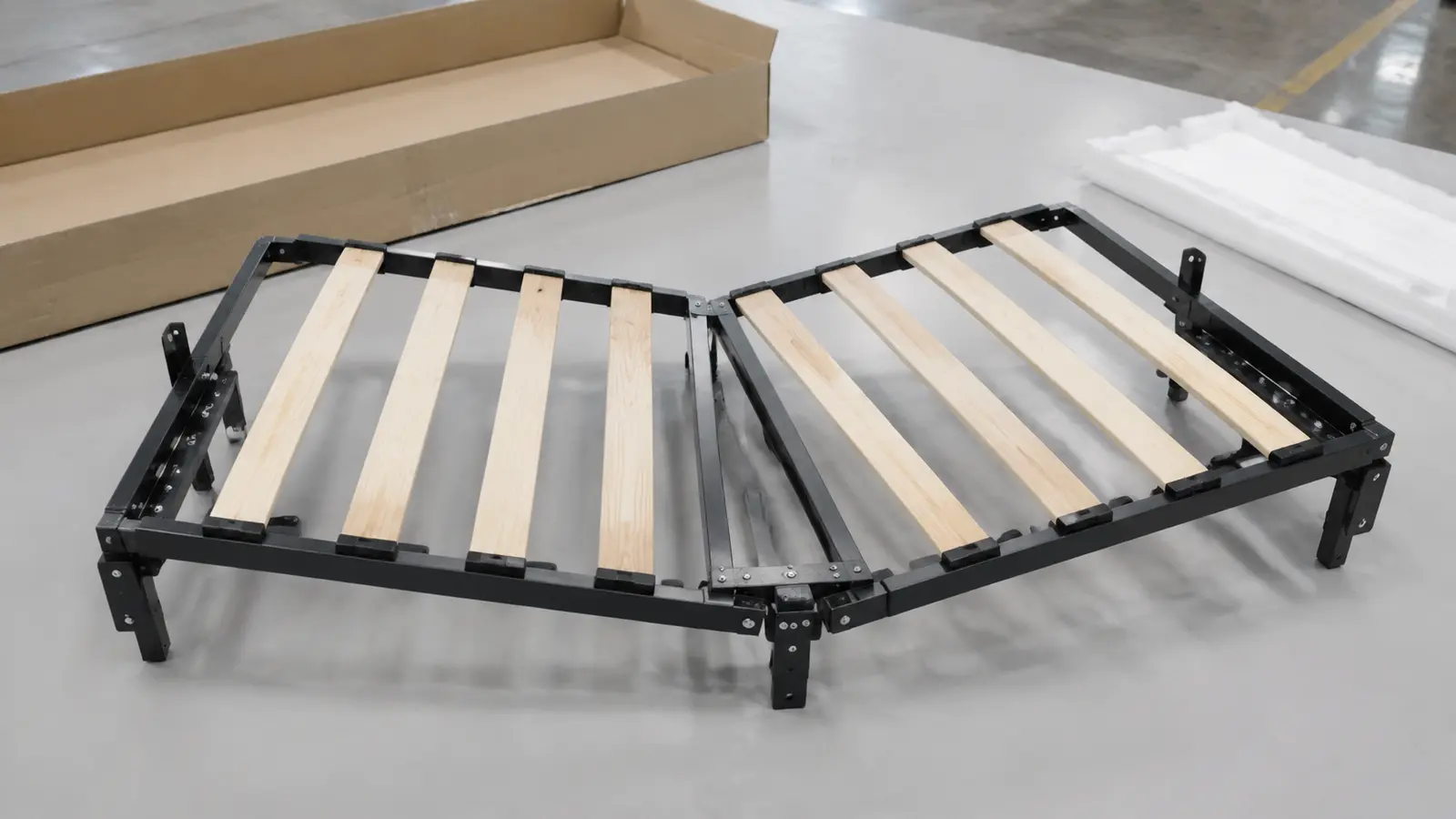
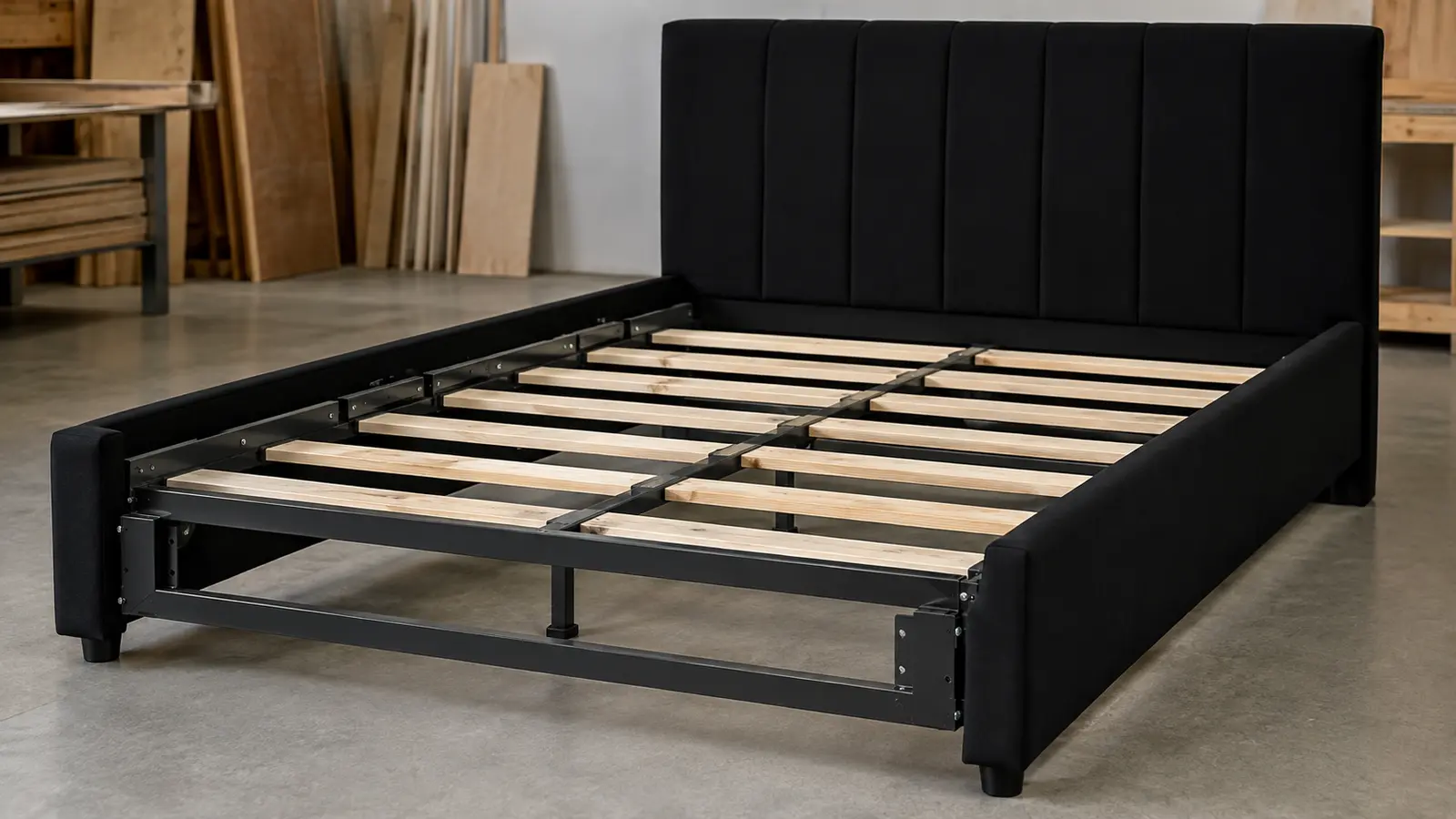
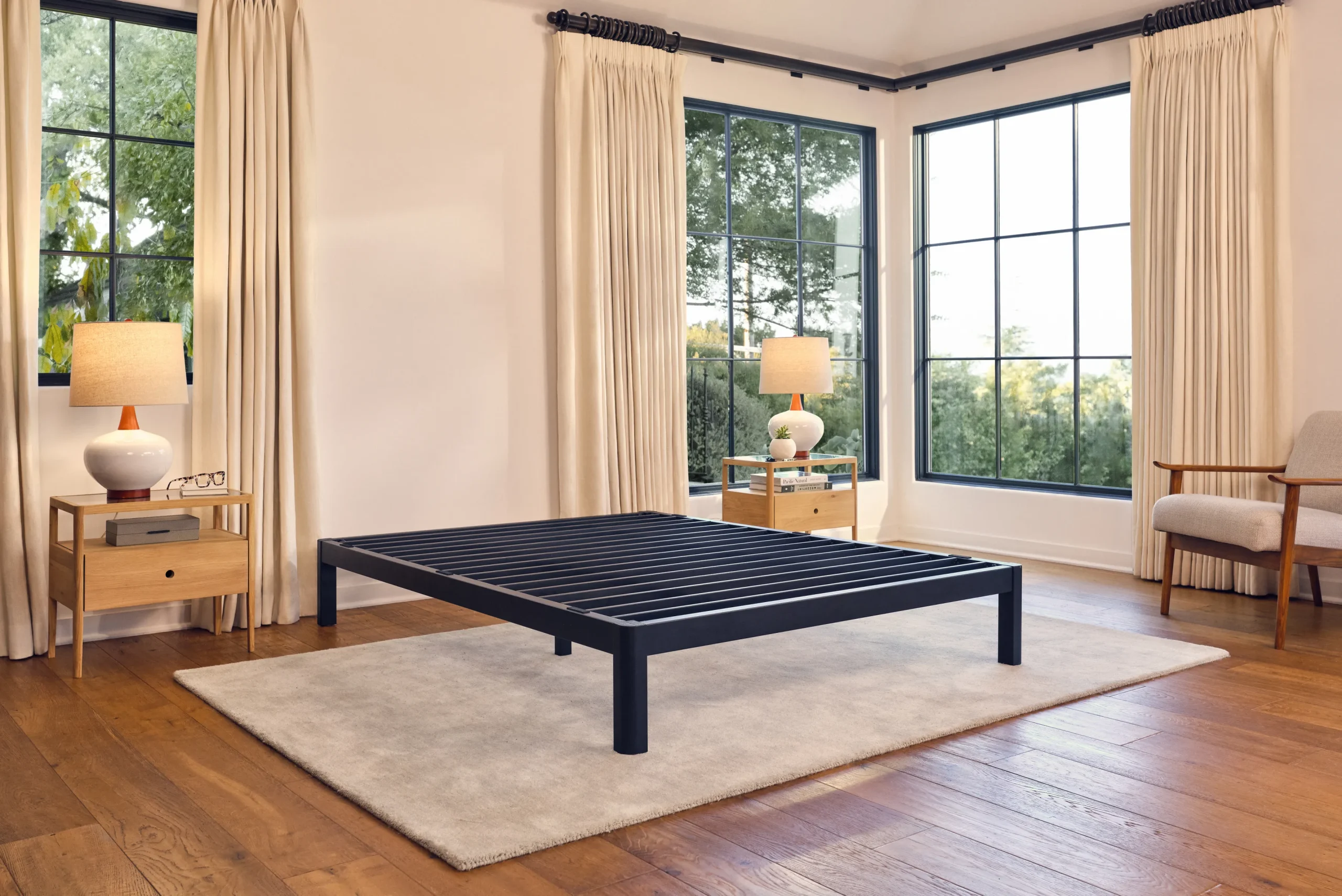
Shilong’s 10CM board wide silent bed frame is presented as a metal bed support frame with evenly arranged support slats. The available product information also supports customization of dimensions, support layout, slat arrangement, connector positions and hardware accessories. These options make a drawing-based discussion possible, but they do not create one universal geometry for every furniture project.
Name the part before setting the number
The drawing should use a component name that both parties can follow through the quotation, sample record and production revision. “Board A width,” “support member width” or another project-specific name is clearer than a loose note that only says “10CM.” The same name should appear in the bill of materials or component schedule when one is supplied.
Choose a datum that remains clear after assembly
The measurement should start and end at identifiable surfaces. A finished edge, metal face, component centerline or assembly reference can be used when it is clearly marked, but the parties should not switch between them. The datum must also remain usable during sample inspection. A dimension that can only be guessed from a product image is not ready for approval.
Show the linked support and connector geometry
The 10CM feature should not be reviewed by itself. A change to a support member may also change slat seating, spacing at the frame edge, connector position, hardware clearance or the fit between the metal skeleton and the surrounding bed body. These effects do not mean that every change is unacceptable. They mean that the supplier should return the affected views instead of changing one number without updating the rest of the drawing.
A useful drawing package normally includes a plan view, one relevant cross-section and enlarged interface details. The plan view locates the 10CM feature within the support layout. The cross-section shows its relationship with the support surface and surrounding components. The interface details identify holes, brackets, fastener access and mating faces where the feature influences assembly.
Separate Fixed Dimensions from Targets and Supplier Proposals
Not every bed frame dimension needs the same status. The RFQ should classify important values before the supplier prepares a final offer:
- Fixed: a dimension that must match the buyer’s approved furniture interface or controlled drawing.
- Target: a preferred value that may be adjusted after the supplier explains the effect on fit, support layout or assembly.
- Minimum or maximum: a boundary that the offered value must satisfy, with the actual value still stated in the quotation.
- Supplier-proposed: a value the supplier may recommend after reviewing the bed body, mattress interface, support layout and hardware.
This classification prevents silent substitutions. If 10CM is fixed, the supplier should quote the exact controlled feature and declare any deviation. If it is only a target, the supplier may propose another value, but the proposal should show what else changes. If the buyer has not yet decided, the RFQ should say that the value is open for proposal rather than presenting it as an approved specification.
Control the “Silent” Requirement Without Making an Absolute Claim
The product information describes the frame as supporting quieter use, but “silent” should not be treated as a guarantee of zero noise in every installation. Movement can be affected by the assembled condition, slat contact, connector fit, hardware tightening, surrounding furniture, mattress or applied load, and the floor on which the bed is tested.
The buyer should therefore define a repeatable sample check instead of relying on the product name. The review can state:
- which frame revision and hardware set are assembled;
- which mattress or approved substitute is installed;
- which floor condition is used;
- how the fasteners are tightened and recorded;
- which movement or load sequence is applied; and
- what observation is recorded and who approves it.
This check does not replace any project-specific performance or test requirement. It creates a common review condition for the buyer and supplier and helps identify whether movement is related to an interface, a connector, a support contact or another assembly condition.
Inspect the Sample at the Same Points Used in the Drawing
The sample should be checked against the approved drawing revision, not against an email description or product-page wording. First confirm the identity of the 10CM feature. Then measure it from the agreed faces and record the actual result. The same inspection should verify the related support layout, connector positions and included hardware when those items are part of the project scope.
The buyer should also review assembly fit. A correct 10CM component does not by itself prove that the skeleton fits the surrounding bed body. The sample should be assembled with the intended interface parts or approved gauges so that edge clearances, fastener access and contact points can be checked in the same condition expected for production.
Any accepted deviation should appear in the drawing or approval record. If the supplier later changes the relevant member, slat layout, connector location or hardware, the buyer should decide whether the affected measurement and assembly checks must be repeated. A new product photo is not a substitute for a controlled revision.
What Should the RFQ Send, and What Should the Supplier Return?
After the 10CM feature and its related interfaces are defined, the RFQ should convert the approved direction into a project-specific dimension package.
Buyer inputs
- the product or furniture application;
- the bed-body opening and mattress-support interface;
- a marked view showing exactly what “10CM” identifies;
- the value status: fixed, target, minimum, maximum or supplier-proposed;
- the unit, datum and required variation or approval boundary;
- the support and slat layout that must be retained or reviewed;
- connector, hole, bracket and hardware interfaces;
- the intended assembly condition; and
- the drawing and sample evidence required for approval.
Supplier return
- the offered product and drawing revision;
- the named 10CM feature and its measurement faces;
- the actual offered value, unit, datum and tolerance or declared production range;
- the linked support, slat and connector layout;
- the included hardware and any excluded interface parts;
- all assumptions and deviations;
- the proposed sample and inspection method; and
- any buyer information still required before the quotation can be finalized.
Where This Recommendation Does Not Apply
If the buyer’s real objective is overall frame height, mattress recess, under-bed clearance or the height of a finished upholstered or wooden rail, the requirement should be renamed and measured directly. The phrase “10CM board wide silent bed frame” should not be used to control an unrelated dimension.
The same limit applies when another furniture component or mechanism controls the available space. In that case, the controlling interface should appear in the drawing, and the supplier should review the frame around that interface. The product page can support selection of a structural direction, but the project drawing and approval record control the order.
A useful inquiry is therefore not “Please quote a 10CM bed frame.” It is a marked dimension package that explains the feature, the interface and the required evidence. Buyers can submit that package through Shilong’s bed frame project inquiry form so the supplier can return a quotation based on the same controlled bed frame dimensions.