How Should Buyers Specify a Bed Frame Rail Height of 3 Inches or More?
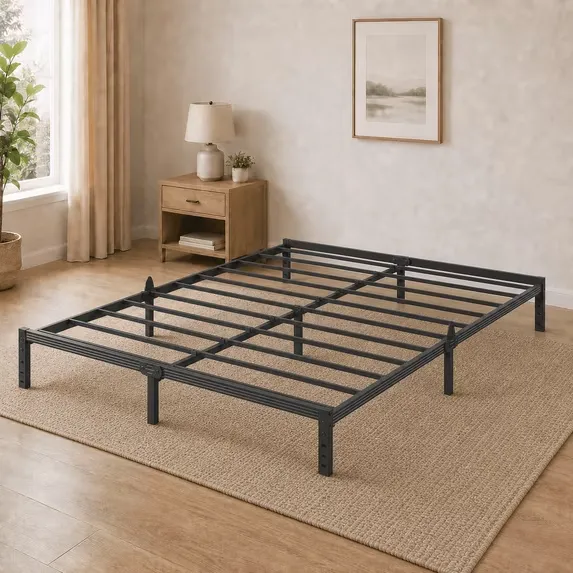
A request for a 3 in or more bed frame rail height is incomplete until the buyer defines the two measurement points, the installed condition and whether three inches is a fixed value, a target or only a minimum. In a floating-bed project, “rail height” may be used for a rail-section depth, a floor-to-rail measurement, the support-deck elevation, under-bed clearance or mattress recess. These are different dimensions and lead to different product decisions.
The buying question is therefore not whether three inches is generally suitable. It is whether the controlled height creates the intended mattress position and floating appearance, fits the support and installation layout, and can be verified on a drawing and representative sample. The supplier should not be asked to confirm the phrase alone; it should return an actual value and a marked side section.
Buyers can use Shilong’s bed frame product category to confirm that a floating metal skeleton is the relevant product direction before defining the vertical geometry.
Step 1: Name the Dimension Before Selecting the Value
Three inches equals 76.2 mm, but a correct conversion does not solve an unclear definition. The RFQ must first state what is being measured. A rail-section depth is measured across the rail itself. An installed rail height is measured from an agreed reference plane to a rail point. Mattress recess is measured between the support surface and the rail top. Under-bed clearance starts at the floor and ends at a named lower component.
The following decision table prevents the keyword phrase from moving into a quotation without an engineering definition.
| Project Condition | Status | Required Action |
|---|---|---|
| “3 in or more” is stated, but no start and end points are marked | HOLD | Ask for a side section and name the two measurement points |
| The buyer actually means under-bed clearance or mattress recess | CHANGE DIMENSION NAME | Replace “rail height” with the dimension that controls the objective |
| Three inches is a minimum, but the supplier does not state the offered value | HOLD | Require the actual offered dimension and any tolerance or production range |
| The rail section and measurement faces are clearly marked | CONTINUE | Review the value inside the complete vertical stack |
| The height is correct, but the hidden support becomes visible from an agreed view | REVISE VERTICAL STACK | Review the rail, deck and hidden-support relationship before approval |
| The side section, actual value, viewing boundary and sample method are confirmed | READY FOR QUOTATION REVIEW | Compare the offered scope and declared deviations |
This structure creates a clear stop point. A buyer should not compare price while the offered dimension is still described only as “3 in or more.”
Step 2: Build the Complete Vertical Stack in One Side Section
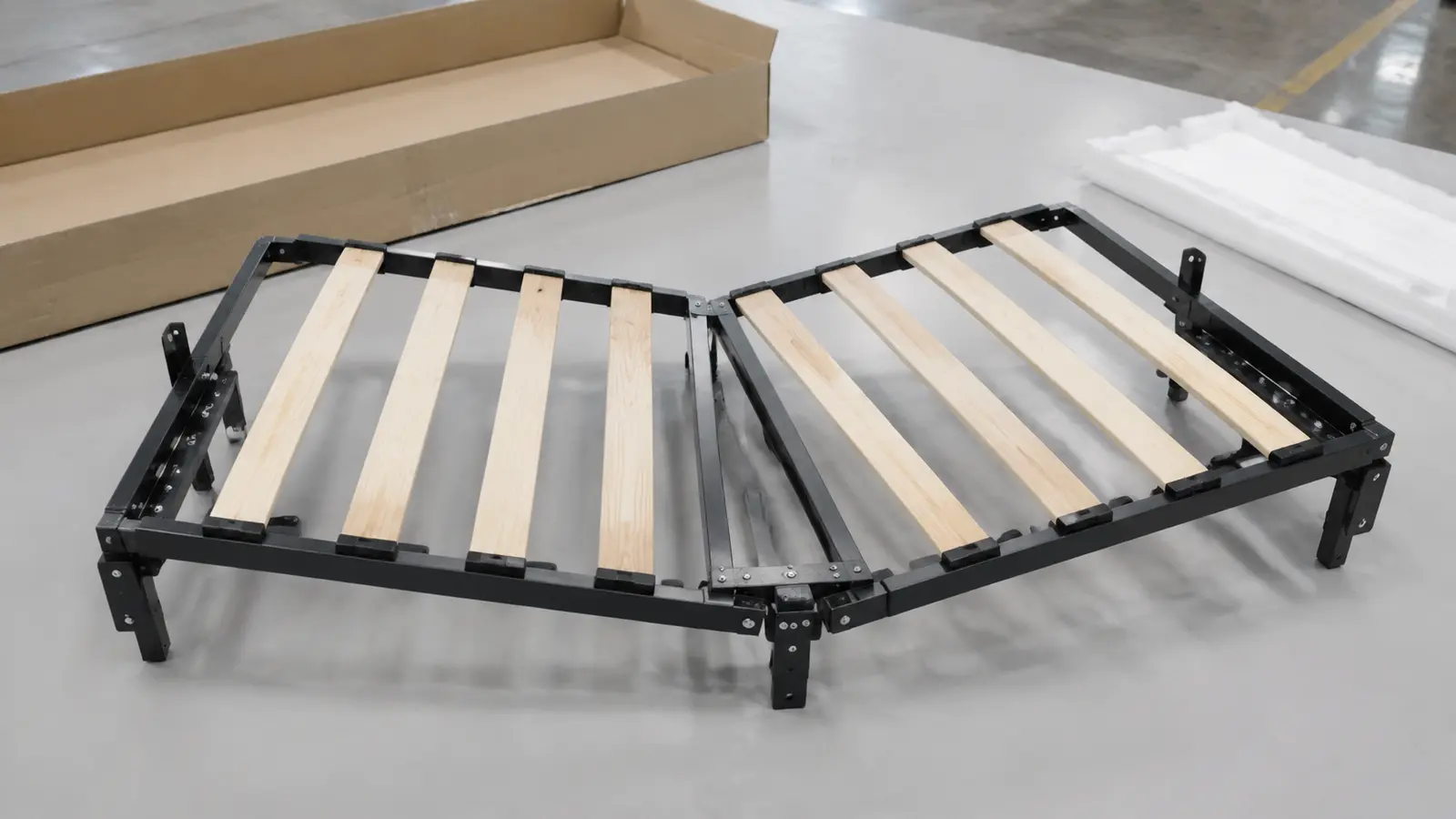
A floating-bed rail does not work independently from the rest of the bed. One side section should show the floor plane, hidden support, visible rail, support deck and mattress position. When these points are separated across different drawings, a change to one level can be missed by another reviewer.
The section should identify at least:
- the installed floor reference;
- the bottom and top of the controlled rail or member;
- the support-deck or mattress-support surface;
- the lowest visible or structural point relevant to clearance;
- the hidden support position and setback; and
- the intended mattress thickness or approved dimensional substitute.
These dimensions interact. Raising the support deck changes mattress exposure and may change the recess above the deck. Increasing the visible rail depth can alter the proportion of the finished bed and the amount of the support system screened from view. Changing the hidden-support height can alter both the floating gap and the support-deck elevation. The buyer should therefore approve the complete stack rather than one isolated number.
If the buyer specifies in inches and the production drawing uses millimetres, the controlled document should show the agreed converted value and rounding rule. The same value should appear in the RFQ, quotation, drawing and sample record.
Step 3: Review Rail Height Together with the Floating Appearance
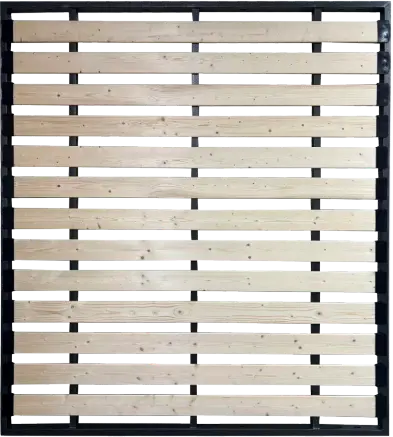
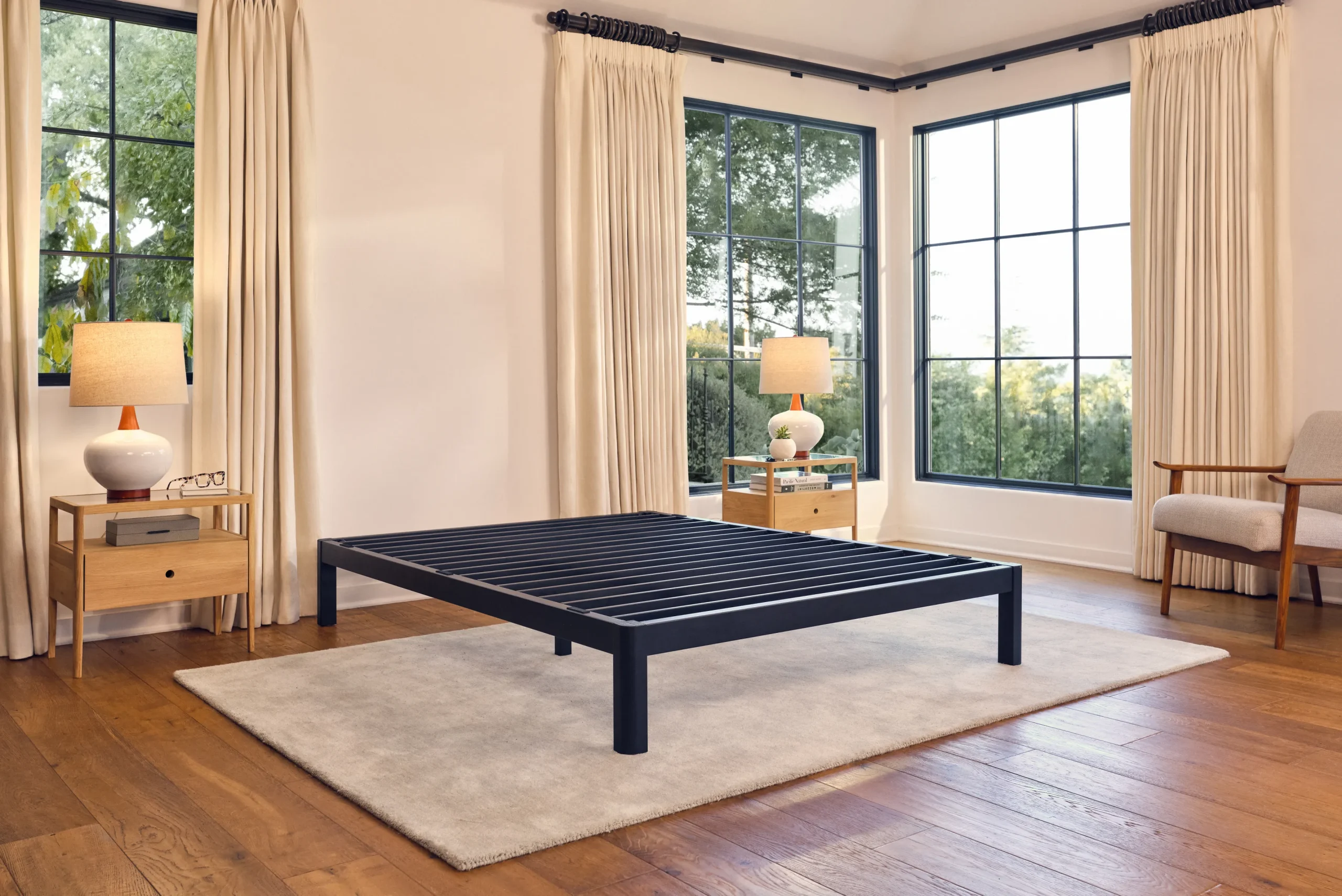
Shilong’s Floating bed frame is presented as a suspended metal bed skeleton with customizable frame size, support structure, installation points, visible or hidden support layout, hardware accessories and surface finish. These options are relevant to a rail-height decision because the visual result depends on where the support sits in relation to the perimeter.
The buyer should define the views from which the floating effect must be maintained. These may include the front, both sides, the foot end or another agreed viewing position. The drawing should also state whether a recessed base, feet, brackets or other support parts may be visible from those views.
A deeper visible rail may screen more of the underside from one direction, but it can also change mattress exposure and the overall proportion of the bed. A smaller visible section may create a lighter appearance while making the hidden support easier to see. Neither result is automatically correct. The accepted result depends on the buyer’s visual brief and the installed geometry.
The underside view and side section should be reviewed together. The side section controls vertical relationships. The underside view controls support footprint, setback, floor contacts and installation points. Approving only the side photograph can hide a support-layout conflict that becomes obvious after assembly.
Step 4: State Whether the Height Is Fixed, Targeted or Open to Proposal
The phrase “3 in or more” describes a lower boundary, not a complete offer. A supplier could return several values that all satisfy the phrase but create different mattress positions and visual results. The RFQ should therefore state how the requirement is controlled:
- Fixed value: the exact dimension is controlled by an approved furniture interface or drawing.
- Minimum value: the supplier may offer a larger value, but it must state the actual dimension and explain the effect on the vertical stack.
- Target value: the supplier may propose a nearby value after reviewing appearance, support and installation conditions.
- Supplier-proposed value: the buyer defines the commercial objective, and the supplier returns a dimensioned recommendation for approval.
This distinction also improves quotation comparison. Two offers cannot be treated as equivalent when one uses the minimum value and another uses a much larger section or installed height. The buyer should compare the actual offered geometry, not only whether both suppliers answered “yes” to the keyword requirement.
Step 5: Approve the Height in a Representative Installed Condition
A drawing controls the intended geometry, while a representative sample shows whether that geometry appears and assembles as expected. The sample should be built to the approved revision, assembled and leveled in the defined condition, and checked with the intended mattress or an approved dimensional substitute.
The approval record should capture:
- the named rail-height dimension and its actual measured value;
- the floor, rail, support-deck and mattress reference points;
- the visible underside from the agreed viewing positions;
- the hidden-support location and floor contacts;
- connector access and installation-point alignment; and
- the drawing revision and any accepted deviations.
An early appearance mock-up can help review proportion and visibility, but it should be labelled according to what it proves. A visual mock-up does not automatically prove the complete support, assembly or project performance. The approval scope should be clear before the buyer relies on it.
When “3 Inches or More” Is the Wrong Requirement
The requirement should be rewritten when the real objective is different from rail height. If the buyer needs space below the bed, specify under-bed clearance. If the buyer needs a certain mattress position, specify support-deck elevation, mattress recess or finished sleep height. If the concern is hiding the support, specify the allowed visibility boundary and viewing directions.
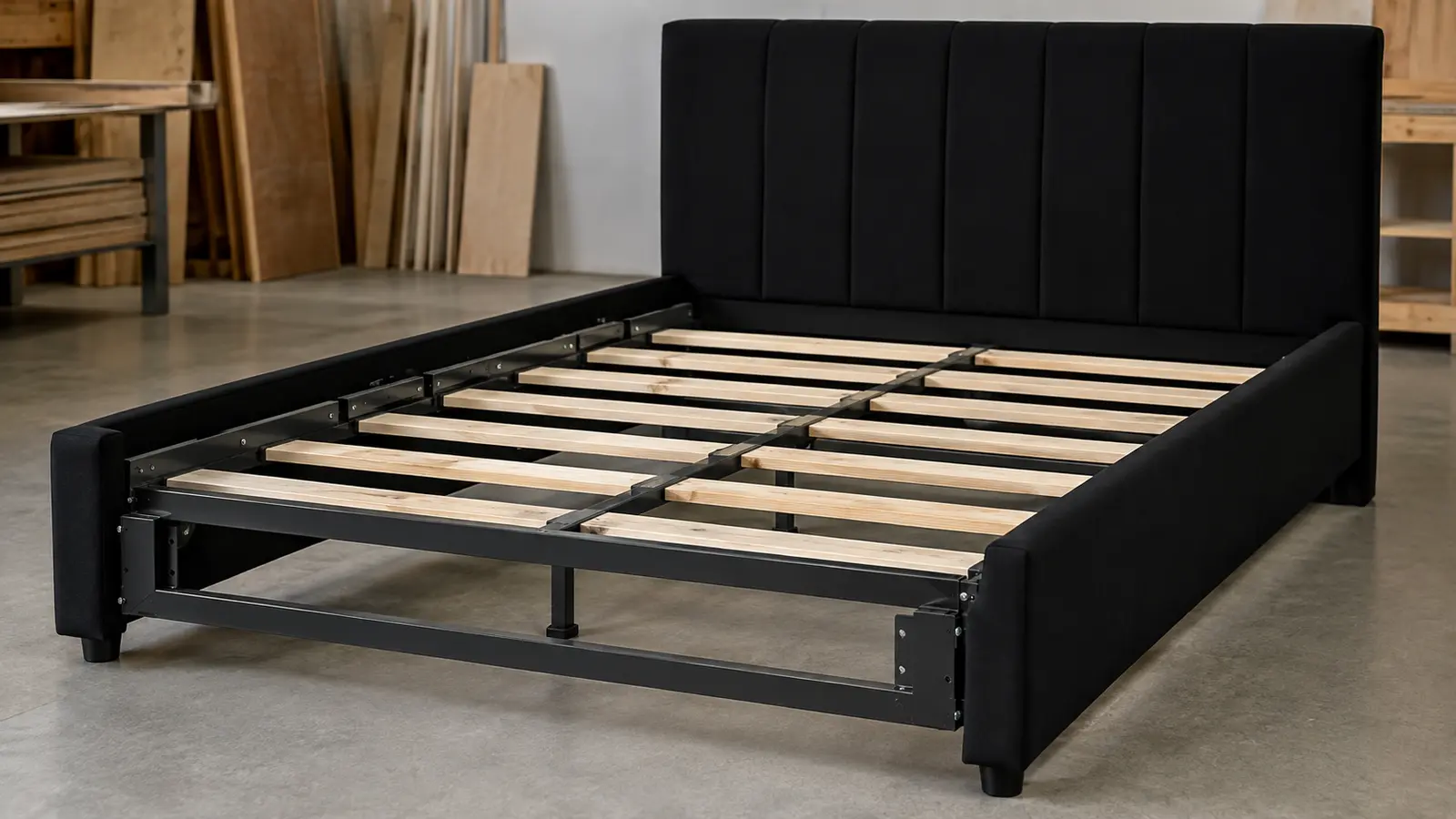
The phrase may also be unsuitable when the visible rail is controlled by a separate upholstered or wooden furniture part while the metal skeleton remains concealed inside it. In that case, the buyer should define the finished furniture interface and the metal-frame envelope separately. A single rail-height value cannot control both components unless the drawing explicitly connects them.
When another component or mechanism controls the vertical space, that interface should be added to the side section before the supplier proposes a rail height. The commercial objective can remain the same, but the controlled dimension must match the part that actually creates the result.
RFQ Package for a Floating Bed Frame Rail-Height Decision
Once the floating-bed direction and controlled height are clear, the project RFQ should provide:
- the exact name of the rail-height dimension;
- the marked start and end points;
- whether the value is fixed, minimum, target or open to proposal;
- the controlled unit and any conversion rule;
- a finished-bed side view;
- the support-deck elevation and intended mattress position;
- the required floating views and allowed support visibility;
- the required installation points and hardware interfaces; and
- the drawing and sample evidence needed for approval.
The supplier response should return the actual offered value, rail cross-section, complete side section, hidden-support or underside view, installation-point scope, included hardware, assumptions, deviations and proposed sample confirmation method. Missing information should be identified rather than silently assumed.
Submit the marked vertical-geometry package through Shilong’s bed frame project inquiry form. A clear side section and an actual offered dimension give the buyer a reliable basis for deciding whether a 3 in or more bed frame rail height fits the floating-bed project.